

Virtual Try-On vs. Size Charts: Why They're Not the Same Thing
Virtual try-on and size charts solve completely different problems on your product page. Here's what each one actually does and why confusing them costs you conversions.

Most merchants treat virtual try-on and size charts as variations of the same feature. They’re not. Here’s what each one actually does.
The core difference
A size chart asks something of your customer. It asks for their height, their weight, their bust measurement, whether their stomach is flat or not. These are not things people casually share. Nobody flips their phone around at dinner and says “hey look at this size quiz I just filled out.” It’s a private transaction, and it feels like one.
Virtual try-on gives something to your customer. It shows them what they look like wearing your product.
When someone sees a photo of themselves looking like a model on a brand they admire, that’s a moment they want to share. That’s the phone flip moment. That’s the screenshot. That’s the DM to a friend saying “should I get this?”
The underlying mechanics are completely different, but more importantly, the feeling they create is completely different. Size charts reduce errors. Virtual try-on creates desire.
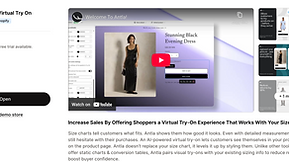
What virtual try-on actually does for your store
Virtual try-on is not a sizing tool. Sizing can be a byproduct, but it isn’t the point. The point is belonging. When a customer sees themselves in your product, styled the way your brand styles it, they stop wondering if it’s for someone like them. They see the answer.
That moment converts at a different rate than a size chart recommendation ever will, because it’s not solving a logistics problem. It’s solving an identity question.
Antla is built around this. It works seamlessly alongside any size chart a merchant uses, but it isn’t trying to replace size charts or do their job. Antla’s job is to show your customers how good they look. That’s it.
Why Antla doesn’t do AI-based sizing recommendations
This comes up a lot, so it’s worth being direct about. AI-based sizing from a single photo is not accurate enough to trust at our merchants scale. Reading body measurements from an image involves too many variables: angle, clothing worn in the photo, lighting, posture.
Any recommendation built on those inputs is going to have a meaningful error rate.
Here’s the problem: a sizing mistake the customer makes is recoverable. A sizing mistake the store makes is a trust problem. If Antla recommends a size and it’s wrong, that’s a return, a support ticket, and a merchant whose customer had a worse experience because of the tool they installed.
The standard for accuracy required to make that recommendation doesn’t exist yet in the industry. When it does, Antla will add it. Until then, size recommendations are handled by your existing size charts and quizzes, which is exactly what they’re designed for.
Two tools, two jobs
If you’re evaluating virtual try-on and wondering how it fits with your current size guidance setup, the answer is: they sit next to each other and do different things.
Size charts reduce return rates by helping customers pick the right size before they buy. Virtual try-on increases conversion rates by helping customers commit to a product they can see themselves in.
One is practical. One is emotional. Both matter. Neither replaces the other.
The merchants seeing the strongest results from Antla are the ones who kept their size guidance in place and let virtual try-on do what it’s built to do: make customers want to buy, want to come back, and want to share.