

Re-Engage Shopify Shoppers Who Did Not Convert
Non-converters are not dormant subscribers. Re-engage Shopify fashion shoppers who showed intent, including leftover virtual try-ons, without win-back blasts.

The Monday CRO report has a row called “non-converters.” Inside it are a shopper who tried on a satin dress last night, another who checked a trouser size guide twice, and a subscriber whose last meaningful action was in 2024. The spreadsheet has made them equal. Their intent has not.
That mistake usually ends in a large win-back send. A live purchase decision receives the same 90-day treatment as a dormant relationship.
Non-converters are recent shoppers who showed measurable purchase intent but did not place an order. Re-engaging them means continuing that specific decision with the product, fit detail, or saved experience they left behind. It is different from waking a dormant subscriber whose relevant shopping intent may have expired months ago.
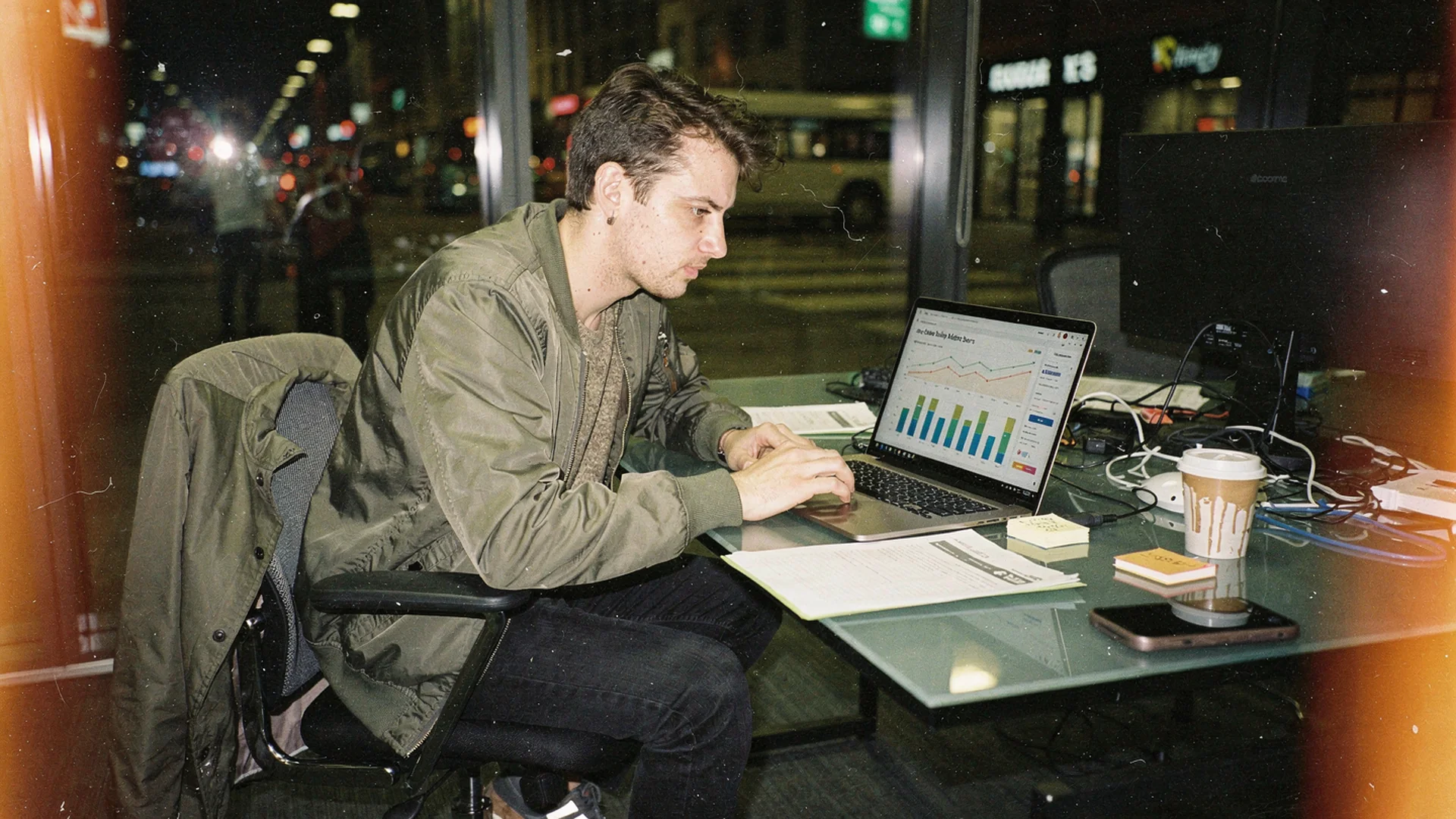
The useful question is not who failed to buy, but which product decision is still open. Editorial image in Classic Antla disposable-camera style.
Separate an unfinished decision from an inactive relationship
A dormant subscriber segment begins with absence: no opens, clicks, sessions, or orders for a defined period. The operational questions are list health, current interest, and whether continued contact is still welcome.
A non-converter segment begins with action. The shopper viewed a specific SKU repeatedly, used the size guide, changed variants, completed a virtual try-on, added an item to cart, or started checkout. The CRO question is not “Can we get this person interested again?” It is “What stopped this active decision from becoming an order?”
The distinction changes almost everything:
- Recency means something different. Yesterday’s try-on is live consideration. A profile with no activity since 2024 is historical identity.
- The product should survive the handoff. A useful event retains the garment, variant, timestamp, and action.
- Success has a narrower definition. Non-converter work should produce incremental purchases from a recent eligible cohort. Dormant win-back also has list-health goals.
- The message has unfinished work to do. It should resolve fit, appearance, fabric, coverage, stock, delivery, or checkout friction. A generic “we miss you” has no evidence that anyone was missed.
This is the practical boundary in customer re-engagement for ecommerce: preserve known intent and bring it back into a useful decision. Do not turn every person who left without buying into a long-lapsed subscriber by changing the segment name.
Count Shopify events that contain decision evidence
A pageview is technically an event, but not every event deserves a message. Shopify stores need an intent ledger that records what happened without pretending each action has equal predictive value.
Start with events the CRO team can explain in plain language:
- Repeated product views: The shopper returned to the same SKU or close variants. One view can be a wrong tap. Repetition is harder to dismiss.
- Size-guide or fit-detail use: The shopper actively investigated measurements, rise, inseam, stretch, shoulder placement, length, or coverage.
- Variant comparison: Several color or size selections show evaluation, especially when the same product remains in focus.
- Completed virtual try-on: The shopper created a self-referenced product preview and stayed long enough to inspect the result.
- Add to cart or checkout start: The product moved from evaluation toward purchase, although shipping, payment, stock, or distraction may still have interrupted it.
- Purchase: This is an exclusion event. The recovery journey should end as soon as the relevant order appears.
For each event, retain product ID, variant when available, timestamp, session or customer reference, inventory state, consent status, and later purchase state. An event named engaged_shopper with no product attached is a label looking for a strategy.
Shopify’s conversion-rate guide is careful about universal benchmarks because category, device, traffic source, price, and purchase cycle all change conversion. Apply that discipline here. Judge each event against your own comparable cohort rather than declaring that every size-guide opener is high intent because a dashboard arrow turned green.
Identity and channel consent remain separate from intent. An email address does not make every event eligible for email, and a phone number does not turn a browse into permission for SMS.
A leftover try-on is more useful than a leftover browse
A browse says the shopper saw a garment. A completed try-on says she selected it, supplied or reused a photo, waited for a generated result, and evaluated the garment on a representation of herself. In apparel, that sequence gets much closer to the unresolved question.
Consider a fitted blazer. A pageview does not reveal whether the shopper cared about it or left the tab open during a meeting. A try-on shows deliberate evaluation of shoulder line, waist shape, sleeve proportion, and color.
That does not make a try-on a guaranteed purchase signal. Some people experiment or discover that the product is wrong for them. The event is valuable because it contains more decision evidence.
Across more than 500,000 Antla try-ons, users who completed a preview converted at 3.8%. That is the conversion rate among try-on users, not the store-wide rate. The non-buying remainder is commercially interesting because those shoppers performed a specific, effortful action and still left a visible question open.
Baymard’s apparel and accessories UX research documents how product imagery and category-specific detail support remote evaluation. Virtual try-on adds a personal visual to that system. It does not replace measurements, fabric composition, model dimensions, varied product photos, or honest fit notes.
Shopify’s virtual shopping overview treats interactive behavior as measurable input for merchandising and customer experience. The preview can improve the session, while an incomplete journey creates a precise cohort for a later experiment.
The narrower campaign mechanics belong in try-on remarketing for Shopify fashion. The important distinction here is simpler: a leftover try-on contains a shopper, a product, a recent visual decision, and a missing order. A leftover browse may contain only a loaded page.
Build one recovery experiment around the open question
Do not begin with a 90-day calendar and fill its empty boxes. Begin with one recent event that your team trusts, then design one controlled response.
Define the eligible cohort. For example: identified shoppers who completed a try-on for an in-stock dress, did not purchase that product, and still have the required email permission. Keep anonymous and non-consented sessions out of the owned-message cohort.
Suppress conversion before sending. Join Shopify orders back to the event and remove purchasers promptly. Also remove unavailable variants, staff sessions, and broken generations. Recovery built on stale eligibility is automation moving faster than judgment.
Choose the unresolved question. For a satin dress, the useful follow-up might clarify lining, bust coverage, length, or delivery before an event. For wide-leg trousers, it could surface rise, inseam, fabric weight, and a private route back to the shopper’s look. “Still thinking?” delegates all the work back to the customer.
Use the least interruptive suitable channel. Email can carry fit detail and a return path when identity and consent exist. SMS requires explicit permission and unusually clear, current intent. Onsite state can restore a product or private try-on without sending anything. The email versus SMS re-engagement guide handles that choice in depth.
Set intent expiry from the product decision. A limited drop, event dress, replenished staple, and winter coat do not share one useful window. Expiry should follow stock, season, price, and normal consideration time. It should not inherit 90 days merely because an old win-back flow already has that number in it.
Keep a holdout. Randomly exclude a share of eligible shoppers and compare completed orders, contribution margin, and time to purchase. Without a holdout, the campaign gets credit whenever a shopper returns naturally after thinking overnight.
This logic is easier to maintain when events, identity, channel permissions, creative inputs, exclusions, and expiry work as one Shopify re-engagement engine. A collection of flows can send messages. An engine also knows why the shopper entered and when she must leave.
Review the decision, not just the send
The weekly CRO review should begin upstream of clicks. Ask whether the cohort represents current product intent, then whether the treatment produced incremental, profitable orders without avoidable pressure.
Use a compact scorecard:
| Measure | CRO question |
|---|---|
| Eligible intent events | How many trustworthy open decisions did the store create? |
| Identified and consented share | How much of that cohort can receive the chosen owned channel? |
| Purchase-suppression delay | How long can a new buyer remain eligible by mistake? |
| Recovered conversion vs holdout | Did the treatment create additional orders? |
| Contribution margin | Did recovery remain worthwhile after offers and channel cost? |
| Negative response rate | Did complaints, unsubscribes, or opt-outs rise? |
Break the result down by event, product family, price band, and message premise. Fit details may help denim while occasionwear responds to coverage and delivery reassurance. A blended rate can hide both lessons.
The broader fashion shopper re-engagement guide covers how different interest signals can be handled without collapsing them into one group. For this CRO exercise, keep the unit of analysis narrow: one recent event, one open product decision, one treatment, and one honest comparison.
Antla’s conversion engine gives Shopify fashion teams try-on events they can connect to Klaviyo, Postscript, ad audiences, and custom workflows. The value is not another blastable segment. It is a better record of why a shopper was interested before she left.
Questions CRO teams ask
How do I re-engage shoppers who were interested but did not convert?
Choose a recent Shopify event that contains real decision evidence, retain the product and variant context, and exclude anyone who purchased. Follow up through a permitted channel with information that resolves the likely friction, such as fit, fabric, stock, delivery, or a private route back to a try-on. Measure incremental orders against a holdout.
Is a try-on leftover different from a browse?
Yes. A browse confirms that a product page loaded, while a completed virtual try-on records a deliberate, self-referenced evaluation of a specific garment. The try-on can reveal a stronger open decision about appearance, proportion, color, or styling. It is not a guaranteed purchase signal, but it carries more evidence than a single pageview.
What Shopify events count as non-conversion intent?
Useful events include repeated product views, size-guide use, fit-detail engagement, variant comparison, completed virtual try-on, add to cart, and checkout start when no relevant order follows. Each event should include a timestamp and product reference. Purchase is the essential exclusion event, and identity or channel consent must be evaluated separately.
Keep nearby guidance within reach
- Fashion re-engagement without discount fatigue shows how to answer hesitation before spending margin.
About the author: Aaron is the founder of Antla. He gets irritated when a try-on that happened yesterday is filed under the same list as a subscriber who went quiet in 2024.
Start with yesterday’s strongest non-conversion event and inspect what context survived. If the answer is only “visited,” add Antla to your Shopify store and turn apparel evaluation into a signal your CRO team can actually use.