

Sell More With the Same Ads Budget
Stop burning ad budget on a generic website. Learn how personalization increases conversions by 35% and makes every marketing dollar work harder.

Sell More With the Same Ads Budget
Everyone makes the same move when sales are flat.
Turn up the volume on Google Ads. Pump more into Meta. Add another platform to the mix. The logic feels airtight: more ad spend equals more traffic equals more sales.
And then the spreadsheets come in. Traffic is up. Cost per click is stable. The campaigns look healthy on paper. But revenue? Flat. Conversion rate? Maybe even declining. You’re paying more to bring more people to a site that still can’t turn them into customers.
This is the most expensive mistake in ecommerce. Not bad ads. Not wrong targeting. A website that doesn’t know who’s visiting it.
Before you increase your ad budget by another dollar, there’s a conversation you need to have about your site. Because the problem probably isn’t traffic. It’s what happens after they arrive.
Key Takeaways
- 71% of consumers expect personalized interactions from brands, and 76% get frustrated when they don’t receive them (McKinsey)
- Average time on a generic website is just 47 seconds (Contentsquare), meaning most paid traffic leaves without engaging
- Behavioral personalization increases revenue by 15-20% for Shopify Plus merchants without changing products or ad spend
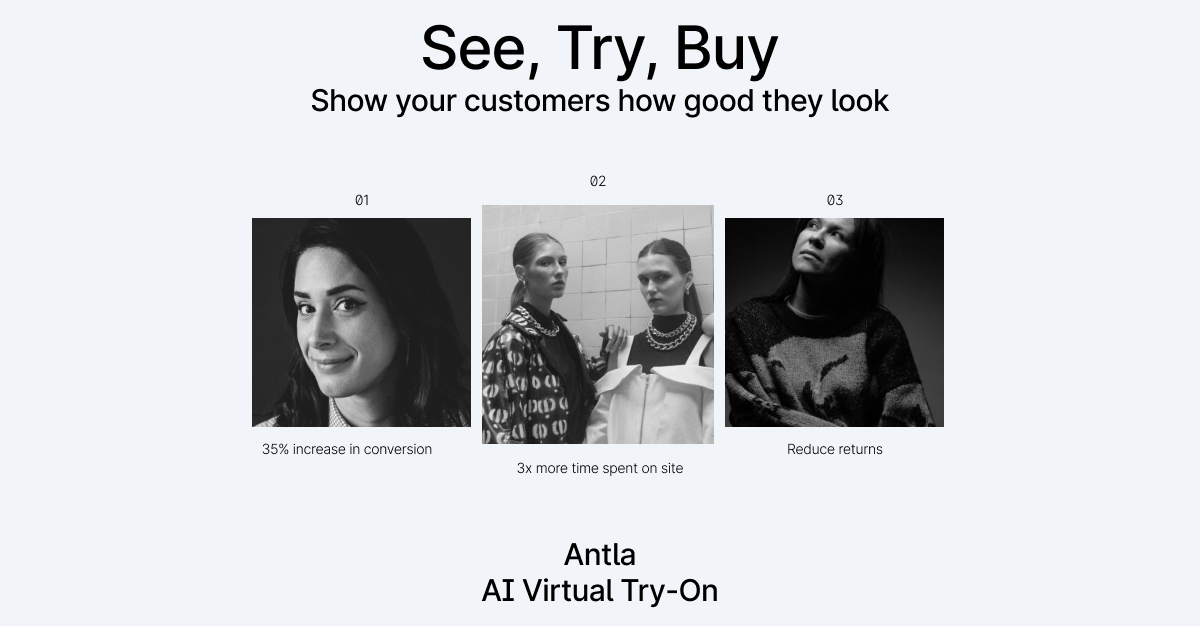
- Virtual try-on increases conversion rates by 35% among customers who use it, tripling engagement metrics
- 66% of customers expect brands to understand their needs (Salesforce), making location and behavior-based personalization table stakes
- 48% of customers who experience personalization become repeat buyers (Deloitte), reducing long-term acquisition costs
The Real Cost of an Impersonal Website
Here’s what traffic to a generic website looks like:
A potential customer clicks your ad. They land on a homepage that looks exactly the same as it did for the last thousand visitors. Same featured products. Same hero banner. Same generic copy. They browse for 47 seconds (the average time on site, according to Contentsquare research), find nothing that speaks directly to them, and leave.
You just paid for that click. And you got nothing from it.
Multiply that by thousands of visitors per month, and you start to see the real cost of a one-size-fits-all approach.
According to McKinsey, 71% of consumers expect personalized interactions from brands, and 76% get frustrated when they don’t receive them. This isn’t about preference. It’s about expectation. Your customers have been trained by Amazon, Netflix, and Spotify to expect websites that know them. When your site doesn’t, it feels broken.
Signs your website lacks personalization:
- High bounce rates (visitors leave quickly because nothing hooks them)
- Low return visitor percentage (no reason to come back)
- Random geographic distribution with no regional patterns
- Flat engagement metrics across different customer segments
- High ad spend with stagnant revenue
If any of these describe your analytics, you’re probably running a generic site in an era where customers expect personalization.
Why Increasing Ad Spend Makes It Worse
Here’s the uncomfortable math.
Let’s say your site converts 2% of visitors. You’re spending $10,000 a month on ads and generating $50,000 in revenue. Reasonable return.
You want to grow, so you double your ad spend to $20,000. But you haven’t fixed the site. If anything, you’ve made the problem worse, because now you’re bringing in more traffic from broader audiences who are even less qualified than your original visitors.
Your conversion rate drops to 1.5%. Your revenue goes up to $75,000 instead of the $100,000 you expected. You’ve spent an extra $10,000 to make an extra $25,000 in revenue. Not terrible, but nowhere near the return you projected.
Meanwhile, your competitor with the same $20,000 budget put $5,000 of it into personalization technology and kept $15,000 for ads. Their conversion rate went from 2% to 3.5%. They’re making $131,250 on less ad spend than you.
This is why the smartest ecommerce operators are shifting budget from acquisition to conversion. It’s not that ads don’t work. It’s that ads work better when your site can close.
How Personalization Changes the Equation
When someone feels seen by a brand, something shifts in the relationship.
They stop being a visitor. They start being a customer. And eventually, if you do it well, they become a fan. Fans buy more, return less, and tell their friends. They’re not just better customers. They’re cheaper customers, because you don’t have to keep paying to re-acquire them.
This is what personalization unlocks. Not just higher conversion rates on individual visits, but a fundamentally different relationship with your customer base.
Let’s get specific about what this looks like:
Level 1: Location-Based Personalization
This is the entry point, and it’s shockingly underused.
Every visitor arrives with a location attached. Most sites do nothing with this information. But there’s so much you can do:
For a visitor from France: “Good news: Free shipping to France on orders over €50.”
For a visitor from a country with expensive shipping: “Shipping to Brazil can be pricey. Here’s how to save: orders over $100 ship free.”
For a visitor during their local evening hours: “Late night shopping? Your cart saves automatically until tomorrow.”
This isn’t creepy. It’s helpful. And it signals immediately that your site pays attention.
According to Salesforce’s State of Marketing report, 66% of customers expect companies to understand their unique needs and expectations. Location is the most basic signal you can respond to, and most brands completely ignore it.
Level 2: Behavioral Personalization
Now we’re getting somewhere.
What device is the visitor using? An iPhone might suggest different purchasing patterns than an Android. What pages have they visited before? A returning visitor who always looks at dresses doesn’t need to see your accessories featured prominently.
Shopify Plus merchants who implement behavioral personalization see an average revenue increase of 15-20%, according to Shopify’s research. That’s without changing anything about the products they sell or the ads they run. Just showing the right things to the right people. Segment’s State of Personalization report adds further color: 49% of consumers say they’ve made an impulse purchase after receiving a personalized recommendation.
Behavioral signals you can act on:
- First-time vs. returning visitor (different messaging for each)
- Pages visited in previous sessions (surface related products)
- Cart contents from previous visits (remind them what they were looking at)
- Time spent on specific categories (that’s interest signaling)
- Device type (optimize experience accordingly)
Level 3: Visual Personalization Through Virtual Try-On
This is the highest form of personalization in fashion ecommerce, because it answers the question customers are actually asking: “How will this look on me?”
Not on the model. Not on the flat lay. On me.
Virtual try-on technology like Antla lets customers upload their photo and see themselves in your products. This is personalization at its most literal: the website content is literally personalized to show each individual customer.
The impact is significant. Retailers implementing virtual try-on see 35% higher conversion rates among customers who use the feature. Engagement metrics triple. Return rates drop because customers know what they’re getting.
But here’s what’s often overlooked: virtual try-on also generates data. You now know which products each customer was interested enough to try on. You know their approximate size based on their photo. You know their style preferences based on what they chose to visualize.
This data feeds back into everything else. Your email campaigns can show products similar to what they tried on. Your retargeting ads can feature the exact items they visualized. Your site can surface relevant products on their next visit.
The personalization compounds.
The Personalization Data Flywheel
Here’s where this gets strategic.
Every personalization touchpoint generates data. Every data point improves future personalization. This creates a flywheel that gets more effective over time:
- Visitor arrives and you capture basic signals (location, device, source)
- You personalize their experience based on those signals
- They engage more deeply because the site feels relevant
- Their engagement generates more data (products viewed, time spent, items tried on)
- Next visit, you have even more to personalize with
- They convert, and now you have purchase data too
- Future visits and emails use all of this information
The brands that start building this flywheel now will have a massive advantage in two years. They’ll know their customers so well that their personalization will feel almost predictive. Competitors starting from scratch won’t be able to catch up.
This is why thinking of personalization as a one-time project is a mistake. It’s not something you install. It’s something you build over time, and the sooner you start, the larger your data advantage becomes.
A Framework for Your Ad Strategy
Let’s bring this back to where we started: your ad budget.
The goal isn’t to stop running ads. The goal is to make every ad dollar work harder by improving what happens after the click.
The key question:
Before increasing ad spend, ask: “If I doubled my traffic tomorrow, would my site convert that traffic at the same rate?” If the answer is no, that’s where your next dollar should go.
For most merchants, the order of operations looks like this:
-
Fix the basics. Site speed, mobile experience, checkout friction. If these are broken, nothing else matters.
-
Add location personalization. This is low-hanging fruit that signals you’re paying attention.
-
Implement behavioral personalization. Returning visitors should see a different site than new visitors.
-
Layer in visual personalization. Virtual try-on for fashion, AR visualization for home goods, whatever makes sense for your category.
-
Build the data infrastructure. Make sure all this personalization data flows back into your marketing platforms.
Only then does it make sense to significantly increase ad spend. Because now, every new visitor you bring in has a much higher chance of converting, and generates data that makes future conversions even more likely.
Quick Wins for Website Personalization
Not ready for a full personalization overhaul? Start here:
-
Add a shipping banner by location. “Shipping to [Country]? Here’s what to expect.” Takes an afternoon to implement.
-
Create two versions of your homepage. One for new visitors (brand introduction, trust signals, popular products). One for returning visitors (recent views, new arrivals in categories they’ve browsed, loyalty perks).
-
Install virtual try-on. Apps like Antla work on any Shopify theme with no code required. You can be live in a day.
-
Set up a returning visitor email flow. “Welcome back. Here’s what’s new since your last visit” based on their previous browsing.
-
Review your analytics by device type. Are iPhone users converting differently than Android? Desktop vs. mobile? This might reveal personalization opportunities.
Beyond Transactions: Building Customer Loyalty
There’s a version of this conversation that’s purely about conversion rates and revenue per visitor. And that matters.
But personalization does something bigger than improve metrics. It changes how customers feel about your brand.
When someone visits a site and everything feels relevant to them, they notice. Maybe not consciously, but it registers. “This brand gets me.” That feeling is the foundation of loyalty.
Deloitte research found that 36% of consumers expressed interest in purchasing personalized products or services, and among those who have experienced personalization, 48% say they’re more likely to become repeat customers.
Repeat customers cost less to acquire (you already have them), spend more per order (they trust you), and are more likely to recommend you to friends (they feel connected to your brand).
This is the real ROI of personalization. Not just better conversions on today’s traffic, but better customers for years to come.
Your ads bring people to your door. Your site decides whether they become customers or strangers. Invest accordingly.
Frequently Asked Questions
Why doesn’t increasing ad spend always increase sales?
Increasing ad spend brings more traffic to your website, but if your site doesn’t convert visitors effectively, you’re just paying more for the same poor results. A website that converts at 2% will still convert at 2% (or worse) with doubled traffic. The math only works when your site can close.
What percentage of consumers expect personalized experiences?
According to McKinsey research, 71% of consumers expect personalized interactions from brands, and 76% get frustrated when they don’t receive them. Salesforce data shows 66% of customers expect companies to understand their unique needs and expectations.
How much does personalization increase conversion rates?
The impact varies by type: location-based personalization signals attentiveness, behavioral personalization increases revenue by 15-20% for Shopify Plus merchants, and visual personalization through virtual try-on increases conversion rates by 35% among users who engage with it.
What is the personalization data flywheel?
The personalization data flywheel is a self-reinforcing cycle where each personalization touchpoint generates data that improves future personalization. As customers interact with personalized experiences, they generate more data, which enables better personalization, which drives more engagement, creating compounding returns over time.
How can I personalize my website without a big budget?
Start with quick wins: add location-based shipping banners, create separate homepage experiences for new vs. returning visitors, install virtual try-on apps like Antla (which require no code), and set up returning visitor email flows. These can be implemented in days, not months.
Does personalization improve customer retention?
Yes. Deloitte research found that 48% of customers who experience personalization say they’re more likely to become repeat customers. Personalization creates emotional connections that generic experiences cannot, building the foundation for long-term loyalty.