

Abandoned Cart Email With Virtual Try-On for Fashion
Recover fashion carts with abandoned cart email virtual try-on: timing, creative, offer tests, and Klaviyo flow patterns for fit-heavy SKUs.

Cart abandonment in fashion is rarely about forgetting payment details. Shoppers pause when the mental mirror fails: the dress might pull across the bust, the jeans might gap at the waist, the coat might swallow their frame.
Abandoned cart email with virtual try-on sends recovery messages that show shoppers their cart items rendered on themselves, or links them back to a saved PDP preview, instead of repeating the same flat product thumbnail. For Shopify apparel brands, it attacks the last-mile fit objection that static cart reminders cannot touch.
Timing, template structure, offer tests, and Klaviyo wiring below. Read the overview for background and Klaviyo flows guide for property setup. If the cart SKU is fit-heavy, lead with preview before you reach for a ten percent code.
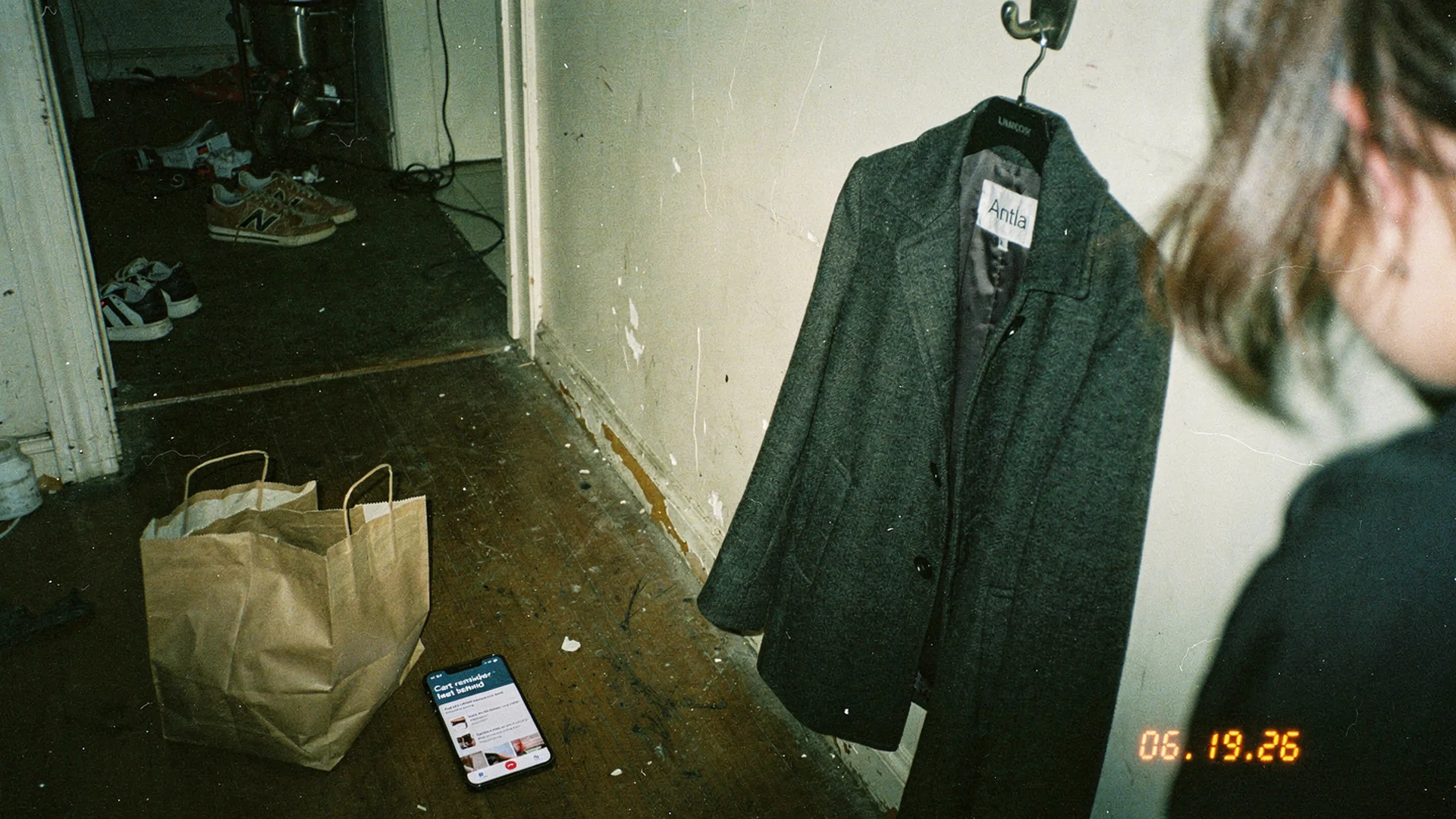
Cart recovery emails convert better when the hero shows the abandoned item on the shopper, not on a generic model.
Why Static Cart Emails Underperform On Apparel
Campaign Monitor benchmarks and Klaviyo retail data show abandoned cart flows among the highest revenue per email in ecommerce. Fashion leaves money on the table when the creative repeats the PDP model shot that already failed to close the sale.
Baymard product image research documents how shoppers use visuals to judge proportion. Cart email is a second evaluation moment. Preview creative aligns with that job.
Timing Matrix For Fashion Carts
| Delay | Use when |
|---|---|
| 1 hour | High-intent single-SKU cart, sale ending |
| 4 hours | Default for multi-item apparel |
| 24 hours | Consider try-on generate CTA if no preview yet |
| 48 hours | Social proof plus preview, optional offer |
Do not send six cart emails in forty-eight hours. Two well-crafted preview emails beat four generic pings.
Template Structure: Preview-Led Recovery
Line 1: Name the item left behind, not “your cart misses you.”
Hero: Dynamic try-on of primary cart SKU, or collage if two items max.
Fit reassurance: One PDP fact (stretch, return window, size tip).
CTA: Return to cart with preview restore.
Secondary: Customer service for sizing questions.
If no try-on URL exists, CTA text shifts to “See it on you” and opens modal on landing. try-on across channels uses the same click-to-generate pattern in promos.
Offer Testing Without Training Bad Habits
Holdout structure:
- A: Preview only
- B: Preview + free shipping threshold
- C: Preview + ten percent code
Measure net revenue after returns, not gross recovery. Shopify returns overview reminds merchants that recovered orders that bounce back erase win.
Antla customers have seen returns fall by up to 30% when try-on precedes purchase. Cart email that restores preview continues that path.
Multi-Item Carts: Show The Anchor SKU
Pick the highest AOV or highest return-risk item for try-on hero. List other cart lines as text links with thumbnails. Trying to preview four items confuses mobile layout and dilutes CTA.
Technical Notes For Shopify Checkout Abandonment
Ensure Klaviyo or Shopify Email receives cart line images and variant IDs. Map last_tryon_image_url to cart product ID before send. Mismatched colorway destroys trust faster than no preview.
Antla embed on PDP generates session-linked previews merchants can match to cart events via try-on feed review.
Engagement lift on PDP try-on often hits 2-3x longer onsite sessions; cart email should promise continuity, not a new experience.
Guest Checkout And Identifier Matching
Guest carts lose profile history unless you capture email early. Shopify checkout abandonment triggers still fire, but try-on URL matching requires email capture on PDP or post-try-on modal. Prompt for email after first generation with clear value: “Save your preview to finish checkout later.”
Merge guest try-on events to Klaviyo profile on first identified cart event. Without merge logic, dynamic heroes stay blank and teams blame creative instead of identity resolution.
Category-Specific Cart Copy Angles
Denim: Reference rise and leg line in preview email subhead, not only product title.
Dresses: Call out length on your height when PDP notes include petite or tall variants.
Outerwear: Mention layering room; preview reduces “swallowed by coat” fear.
Sets: Preview the set anchor piece; link matching items as secondary thumbnails.
Tailoring one sentence of fit copy per category lifts CTR without new technology. Pair with segmentation by try-on behavior so denim abandoners do not receive dress-generic copy.
Social Proof Blocks That Help (Not Hype)
One verified review mentioning fit (“true to size in shoulders”) outperforms five-star generic praise. Pull from Judge.me or Okendo if integrated.
Avoid fake urgency countdowns on every send. Fashion shoppers recognize theater.
Measurement Dashboard
Track weekly:
- Cart recovery rate by variant
- Revenue per abandoned cart email
- Preview click rate vs checkout completion
- Return rate on recovered orders within thirty days
Compare to email product images vs try-on CTR benchmarks when reporting up.
Conversion among try-on users sits around 35% higher on average across Antla merchant stores, a useful secondary metric when cart flows drive generation on landing.
When Not To Use Try-On In Cart Email
- Gift cards or non-apparel lines in cart
- SKU without try-on coverage on PDP
- Cart older than fourteen days (move to win-back)
Frequently Asked Questions
Does virtual try-on in abandoned cart email increase recovery?
Fashion merchants typically test preview-led cart emails against static heroes and measure recovery rate and revenue per send. Try-on addresses fit hesitation, the main apparel abandonment driver, so lifts are common on categories with high visualization variance when preview URLs are accurate.
How soon should I send the first cart recovery email?
Four hours after abandonment is a solid default for apparel. One-hour sends work for high-intent single-SKU carts during promotions. Always cap frequency to avoid training shoppers to abandon for discounts.
What if the shopper never tried on before abandoning?
Use a click-to-generate CTA that opens the PDP try-on modal with cart line pre-selected. The email hero may stay static until they generate; subject line can still promise preview on click.
Should I include a discount in every cart email?
No. Test preview-only first emails. Reserve offers for second touch or high-inventory moments. Measure net margin after returns, not recovery rate alone.
Which internal guide covers Klaviyo setup?
See Klaviyo virtual try-on fashion flows in these guides for profile properties and dynamic templates. Personalization guide covers creative rules shared across abandonment types.
Nearby Abandonment And Recovery Reads
- Email re-engagement virtual try-on
- Post-purchase cross-sell try-on
- Best virtual try-on Shopify fashion
About the author: Aaron is the founder of Antla. After years of frustrating returns, never looking like the supermodels on product pages, he set out to make fashion personal by helping shoppers see themselves in the outfits they want to buy. He treats cart recovery as a fit-confidence problem first and a coupon problem second.
Add a try-on hero to your highest AOV cart flow for one week. Compare recovery rate to your control, then scale with Antla on the SKUs in that cart.