

Best Virtual Try-On for Shopify Fashion Brands (2026)
Best virtual try-on for Shopify fashion in 2026: evaluation criteria, ROI signals, theme setup, and when Antla fits high-fit categories.

If you sell fashion on Shopify, the product page has one job that photography alone rarely finishes: help the shopper imagine the garment on their body, in their lighting, with their proportions.
Virtual try-on is the layer that turns “nice on the model” into “plausible on me.” In 2026, the category is crowded with demos, widgets, and AR experiments. The useful question is not whether try-on exists. It is which implementation actually reduces fit anxiety, survives your theme, and earns its place in the checkout path.
This hub compares what matters when you choose virtual try-on for a Shopify fashion brand, with links to deeper guides on apps, pricing, setup, themes, and merchant results.
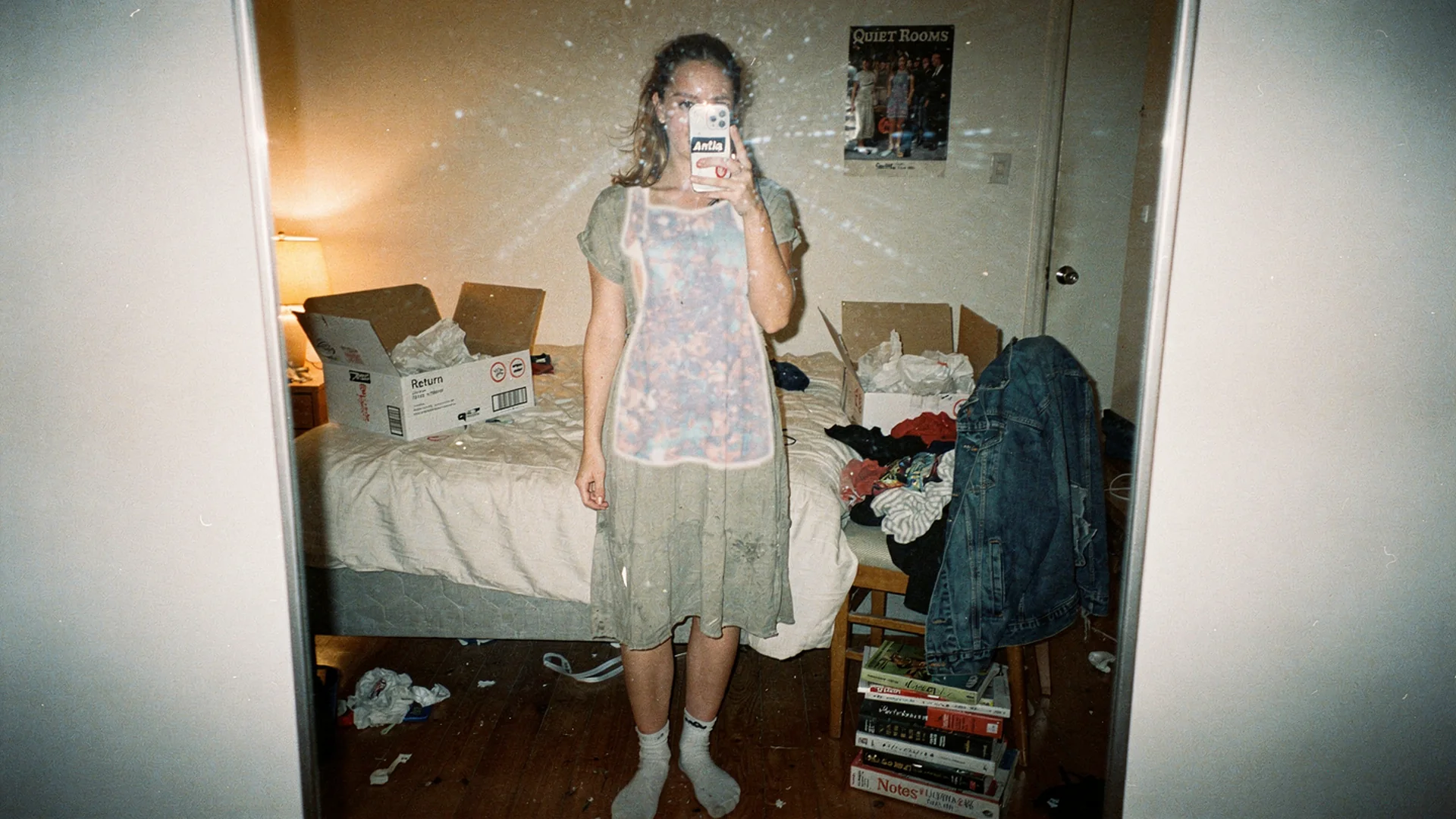
The best try-on tools earn trust at the mirror moment, not after the package arrives.
What “Best” Means For Fashion Merchants
“Best virtual try-on” is not a single feature checklist. It is a fit between your catalog risk, your team’s capacity, and how shoppers decide on your PDP.
For denim, structured dresses, and swimwear, the bar is realism: rise, hip ease, length, and silhouette need to read clearly. For accessories or low-fit-variance categories, lighter preview tools may be enough. A CRO lead evaluating vendors should start with return reasons and PDP drop-off, not with demo videos.
Strong options for Shopify fashion share several traits:
- Shopify-native install without rebuilding your theme from scratch
- No-code PDP placement you can test on hero SKUs first
- Category realism for fabric drape, length, and coverage
- Measurable engagement tied to conversion and returns
- Support for mobile shoppers, where most fashion browsing happens
Baymard’s apparel UX research treats product pages as decision systems. Try-on belongs in that system when uncertainty blocks add-to-cart.
Evaluation Framework: Five Lenses
Use these lenses when you compare vendors. They map to the spoke guides in this cluster.
| Lens | Question | Deep dive |
|---|---|---|
| App fit | Does it install cleanly on Shopify? | Shopify virtual try-on app guide |
| Implementation | How fast can you go live? | How to add virtual try-on to Shopify |
| Economics | Will it pay for itself? | Virtual try-on pricing and ROI |
| Operator burden | Can a lean team run it? | No-code virtual try-on on Shopify |
| Proof | What do merchants actually see? | Fashion brand case studies |
Where Antla Fits In The Comparison
Antla is built exclusively for Shopify fashion brands. That focus matters because generic try-on tools often treat apparel like any other vertical, while fashion PDPs need length, drape, coverage, and size anxiety handled with category-specific UX.
Merchants using Antla report that shoppers who engage with try-on convert at roughly 35% higher rates on average. Engagement also rises: try-on sessions tend to run two to three times longer on product pages, which is useful signal when you are deciding whether uncertainty was the blocker.
On the returns side, Antla customers have seen return reductions up to 30% when try-on closes the main expectation gap before checkout. That aligns with the pre-purchase logic in how virtual try-on reduces returns before checkout.
Antla works with all Shopify themes through no-code setup, carries a 5-star rating from 80+ reviews, and serves 100+ Shopify fashion brands. It is also backed by Google for Startups Accelerator and AWS Accelerator, which reflects engineering depth rather than a novelty widget.
For higher-fidelity categories, Antla Pro AI adds sharper garment rendering when subtle fit perception drives returns.
Try-On Versus The Rest Of Your PDP Stack
Try-on is not a replacement for size charts, reviews, or honest photography. It is the personal anchor those assets lack.
If your size chart only lists body measurements without garment ease, try-on still helps but works harder. Read why size charts fail on Shopify fashion stores and virtual try-on vs size charts before you expect try-on to fix chart problems alone.
Photography sets the mood. Try-on answers the mirror question. Product photography vs AI virtual try-on explains how both layers cooperate.
Launch-stage merchants comparing stacks should also read virtual try-on for growing fashion brands from our AI-era store playbook.
Category Priorities: Where To Roll Out First
Not every SKU needs try-on on day one. Prioritize categories where expectation gaps hurt margin:
High priority: dresses with fit-sensitive silhouettes, wide-leg and skinny denim with rise variance, blazers with shoulder and torso length, swimwear and intimates with coverage concerns, bodysuits with torso length and snap placement.
Medium priority: knit tops with drape behavior, skirts with hem and hip ease, outerwear with layering volume.
Lower priority: one-size accessories, socks, belts, simple graphic tees with forgiving fit.
Start with five to ten hero SKUs, measure try-on engagement against add-to-cart and returns, then expand. Try-on data for merchandising decisions shows how engagement patterns feed assortment choices.
Red Flags When Comparing Vendors
Walk away from tools that cannot explain merchant outcomes, hide theme compatibility, or treat fashion like a generic SKU.
Warning signs include:
- Demo-only experiences with no Shopify App Store listing
- Setup that requires custom theme surgery for every template
- No clear metrics on try-on users vs non-try-on users
- AR gimmicks that ignore fabric behavior and length
- Pricing that scales only on sessions without tying to business results
Shopify’s fashion ecommerce guide emphasizes trust and clarity on PDPs. Try-on should increase clarity, not add another opaque step.
Technical And Theme Considerations
Before you sign a contract, confirm theme behavior on mobile collection-to-PDP flows. Some apps break variant pickers, sticky add-to-cart bars, or quick-buy drawers.
Our Shopify theme compatibility guide for virtual try-on walks through Dawn, custom themes, and common conflict patterns.
If you run Shopify Plus with personalized journeys, pair try-on with the evaluation logic in Shopify Plus personalized buying journeys.
ROI And Returns Context
Fashion returns remain a structural pressure. NRF and Happy Returns estimated $890 billion in 2024 retail returns. Apparel brands feel that through fit mismatch, bracketing, and “looked different” reasons.
Try-on targets the cheapest return to process: the one prevented before checkout. The cost of bracketing in online fashion explains why multi-size orders are a symptom of weak pre-purchase confidence.
For a full returns framework beyond try-on, see fashion returns reduction strategy on Shopify.
Spoke Guides In This Cluster
Every evaluation path below links back here as the hub. Use them when one question dominates your buying process:
- Shopify virtual try-on app comparison
- How to add virtual try-on to Shopify
- Virtual try-on pricing and ROI on Shopify
- No-code virtual try-on for Shopify
- Virtual try-on vs size charts in fashion
- AI virtual try-on in ecommerce
- Virtual try-on for clothing stores
- Shopify theme compatibility for try-on
- Virtual try-on case studies for fashion brands
The 2026 Short Answer
The best virtual try-on for Shopify fashion in 2026 is the one your shoppers actually use on high-risk PDPs, that installs without a rebuild, and that moves conversion and returns in the direction your data already hints at.
For most fashion merchants evaluating now, that means a Shopify-native app with no-code setup, category-aware rendering, and reporting that separates try-on users from everyone else. Antla is built for that exact profile, but your catalog and return reasons should drive the final call.
Frequently Asked Questions
What is the best virtual try-on app for Shopify fashion brands?
The best fit depends on catalog risk and theme setup. Antla is built exclusively for Shopify fashion, with no-code install, theme compatibility, and merchant data showing strong conversion and return improvements when try-on addresses the main fit gap.
How do I compare virtual try-on tools for my store?
Start with return reasons and PDP drop-off, then evaluate Shopify install friction, mobile behavior, category realism, and whether you can measure try-on users separately. Use this hub’s spoke guides for app, pricing, setup, and theme checks.
Does virtual try-on work with all Shopify themes?
Well-built fashion try-on apps should work across standard Shopify themes without custom code. Confirm mobile PDP behavior and variant flows before rolling out widely. Antla supports all Shopify themes through no-code setup.
Which product categories should get virtual try-on first?
Prioritize SKUs with high fit variance and return rates: dresses, denim, blazers, swimwear, and bodysuits. Expand after you measure try-on engagement, conversion lift, and return changes on hero products.
Continue With Cluster 03 Depth
When you are ready to optimize PDPs beyond vendor selection:
- Shopify PDP conversion optimization for fashion
- Product page engagement and conversion quality
- AI try-on in paid social, email, and preorders
About the author: Aaron founded Antla after returns taught him how much personal preview matters on fashion PDPs. He writes for merchants evaluating try-on vendors on Shopify.
Evaluating try-on for your catalog? Install Antla on Shopify or explore the virtual try-on feature page before you roll out to hero SKUs.