

Virtual Try-On Pricing and ROI for Shopify Fashion Stores
Virtual try-on pricing and ROI for Shopify fashion: session models, conversion lift, return reduction, and payback math for apparel brands.

Virtual try-on pricing on Shopify is usually a monthly app subscription plus your team’s time to roll out and measure. ROI is rarely mysterious. It is the sum of conversion lift on try-on users, returns avoided, bracketing reduced, and support hours saved, minus subscription and ops cost.
This guide is written for finance-minded operators and founders who need a payback story before they add another line item to the stack.
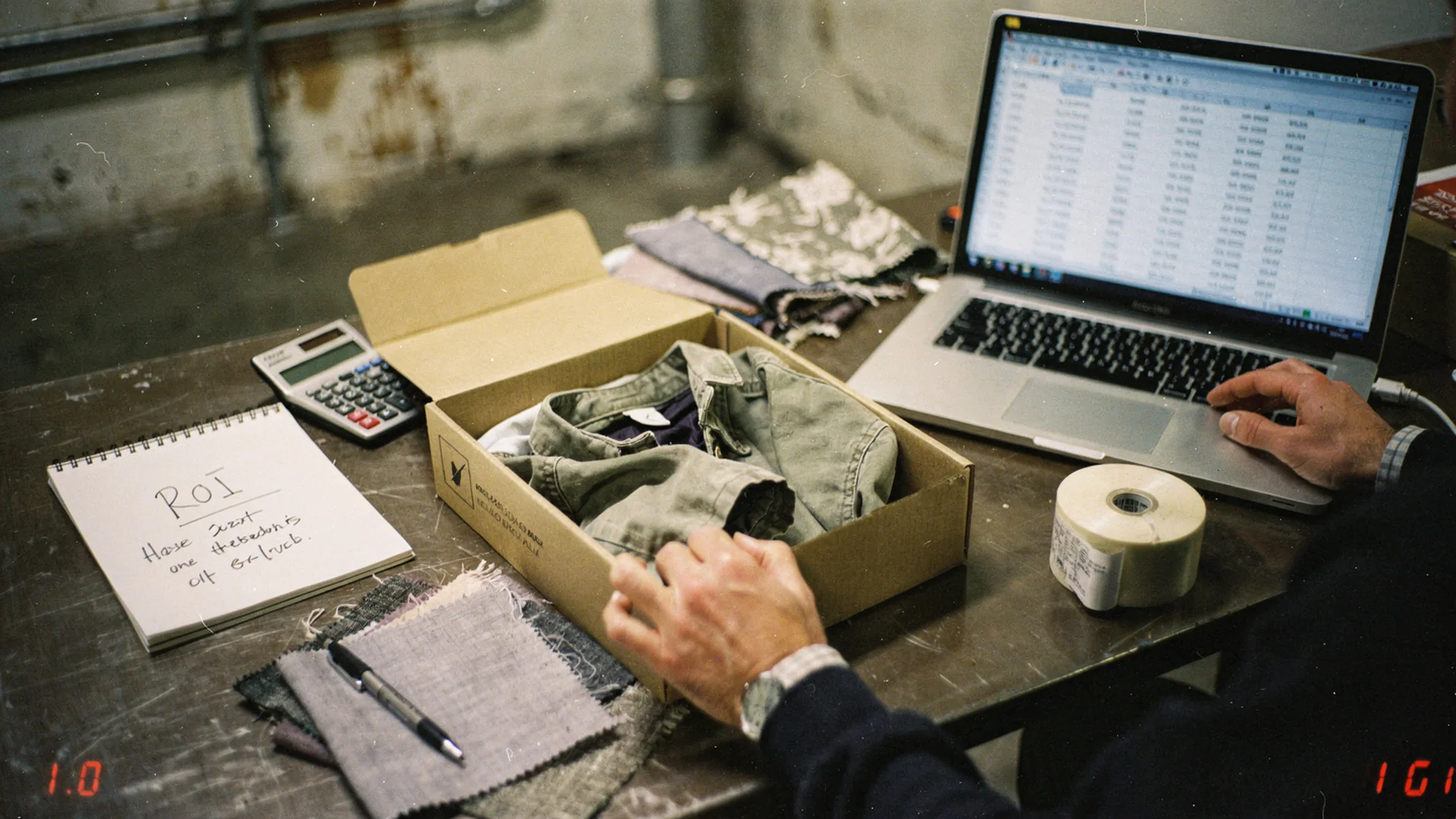
ROI math should tie try-on users to conversion and returns, not session counts alone.
Why Pricing Conversations Get Stuck
Merchants compare apps by monthly fee alone because session-based pricing feels tangible. That is the wrong unit for fashion.
Fit tools change order quality, not only order volume. A slightly lower conversion rate with dramatically fewer returns can be a win. A conversion spike that increases bracketing can be a loss.
Shopify’s conversion rate guide reminds merchants to optimize for profitable conversion, not raw clicks. Try-on belongs in that frame.
External pressure matters too. NRF and Happy Returns reported $890 billion in 2024 retail returns. Apparel merchants subsidize a large share through restocking, shipping, and lost margin. Try-on pricing should be weighed against that baseline, not against zero.
Common Pricing Models
| Model | How it works | Watch for |
|---|---|---|
| Flat monthly | Fixed fee by plan tier | SKU or session caps |
| Per session | Bill by try-on starts | Campaign traffic spikes |
| Revenue share | Rare in Shopify apps | Margin surprise |
| Tiered by catalog | More SKUs, higher plan | Paying for inactive SKUs |
| Pro rendering add-on | Higher fidelity tier | Needed for detail categories |
Ask vendors for annualized cost at your traffic, not list price on a landing page. Map plans to hero SKU count first, storewide later.
The ROI Equation (Simple Version)
ROI = (Incremental gross profit from better orders) - (App cost + rollout time cost)
Incremental gross profit usually comes from:
- Higher conversion among try-on users
- Lower return rate on try-on orders
- Less bracketing (fewer multi-size shipments)
- Fewer fit support tickets
You do not need perfect attribution on day one. You need directional cohort truth.
Worksheet: Estimate Monthly Payback
Use your numbers. Example structure:
Assumptions
- Monthly sessions on hero SKUs: 20,000
- Try-on start rate: 8% → 1,600 try-ons
- Baseline conversion: 2.0%
- Try-on user conversion lift: 25-35% (Antla average 35%)
- AOV: $95
- Gross margin: 55%
- Baseline return rate on fashion SKUs: 28%
- Return processing cost: $18 per return (shipping + handling)
Conversion upside (try-on cohort only)
If try-on users convert at 2.7% vs 2.0% on 1,600 sessions, incremental orders ≈ 11 per month on that cohort alone. At $95 AOV and 55% margin, that is roughly $575/month gross profit from conversion alone on a narrow slice. Scale hero SKUs and marketing traffic and the number moves fast.
Returns downside protection
If try-on users return at 18% vs 28% baseline on 500 orders/month from try-on-influenced SKUs, you avoid ~50 returns. At $18 processing plus lost margin on some units, savings can exceed $1,000/month depending on resellability.
Antla customers have seen returns fall up to 30% when try-on fixes the main expectation gap. Your mileage depends on category mix.
Bracketing reduction
Cost of bracketing in online fashion shows how multi-size orders burn margin even when items eventually sell. If try-on cuts bracketing by a few points on denim, shipping and restocking savings belong in the ROI memo.
Hidden Costs To Include
- Merchandising time to pick hero SKUs
- CX training on how try-on works
- Creative updates to mention try-on in email or ads
- Optional Antla Pro AI tier for high-fidelity categories (feature page)
Hidden savings:
- Fewer “which size” chat tickets
- Cleaner return reason data
- Better PDP engagement signals for merchandising decisions
Benchmarks Without Fantasy Numbers
Vendor case studies should show cohort comparisons, not site-wide conversion after a redesign.
Antla merchant patterns merchants report:
- Try-on users convert 35% higher on average
- Engagement 2-3x longer on PDPs during try-on
- Returns down up to 30% when fit expectation was the main issue
Use those as hypothesis ranges, not guarantees. Prove your store with four weeks of data.
More narrative proof: virtual try-on fashion brand case studies.
When ROI Is Fast vs Slow
Fast payback profiles
- High return rate categories (denim, dresses, swim)
- Strong mobile traffic on hero SKUs
- Visible try-on placement near images
- Honest size and fabric copy supporting try-on
Slow payback profiles
- Low traffic new stores (fix discovery first)
- Catalog dominated by one-size accessories
- Try-on buried below fold
- Size charts inaccurate
Launch-stage merchants should read first 90 days fashion store metrics before expecting instant payback.
Pricing vs Alternatives
Some teams ask whether try-on costs more than better photography or fit quizzes.
Photography helps mood and detail. It does not answer “on me.” Product photography vs AI virtual try-on compares layers.
Fit quizzes add friction without visual proof. Virtual try-on vs size charts shows charts plus try-on beat charts alone.
Free AR filters rarely include Shopify order-level analytics. A paid app with cohort reporting is easier to defend.
Building The Internal Memo
One page for your leadership team:
- Problem: return reasons + bracketing on hero SKUs
- Solution: try-on on those SKUs via Antla
- Cost: annualized subscription + rollout hours
- Measurement: 4-week cohort test
- Success thresholds: conversion lift, return drop, try-on start rate
- Rollback plan: disable app block on underperforming templates
Link the vendor evaluation hub: best virtual try-on for Shopify fashion.
After Payback: Reinvest
ROI positive try-on is not static. Reinvest savings into:
- Expanding try-on to adjacent categories
- AI try-on in email and paid social
- PDP copy tests informed by try-on drop-off
- Returns prevention in fashion returns reduction strategy
Frequently Asked Questions
How much does virtual try-on cost on Shopify?
Most apps use monthly plans, sometimes with session or SKU tiers. Model annual cost at your real traffic and hero catalog size, not list price alone.
How long until virtual try-on pays for itself?
High-fit-risk catalogs with strong mobile traffic often show directional ROI within four weeks on hero SKUs. Low traffic stores should fix PDP basics and traffic before expecting fast payback.
What ROI metrics should I track?
Compare try-on users vs non-users on conversion, return rate, bracketing, and support tickets. Add try-on start rate to verify placement visibility.
Is virtual try-on worth it if my return rate is already low?
If returns are low because you sell forgiving categories, try-on may be optional. If returns are low but conversion is suppressed on fit-sensitive SKUs, try-on can still lift confident orders.
Related Commercial Reads
- Shopify virtual try-on app evaluation
- Add virtual try-on to Shopify
- Virtual try-on for clothing stores
- Shopify returns and exchanges (Shopify Enterprise)
About the author: Aaron is Antla’s founder. He writes about try-on ROI, pricing models, and return economics for lean Shopify fashion teams.
Run the worksheet on your hero SKUs. Start a trial with Antla on Shopify and read virtual try-on fashion case studies for benchmark ranges.