

AI Virtual Try-On for Ecommerce: How It Works for Fashion
Learn how AI virtual try-on works in fashion ecommerce: image processing, PDP placement, privacy, quality tiers, and what Shopify merchants should expect in 2026.

AI virtual try-on uses machine learning to map a garment onto a shopper’s photo or camera feed so they can preview fit and style before buying. In fashion ecommerce, that preview targets the gap between studio photography and the mirror at home.
This explainer is for brand strategists and operators who need accurate vocabulary for vendors, agencies, and leadership, without drowning in hype.
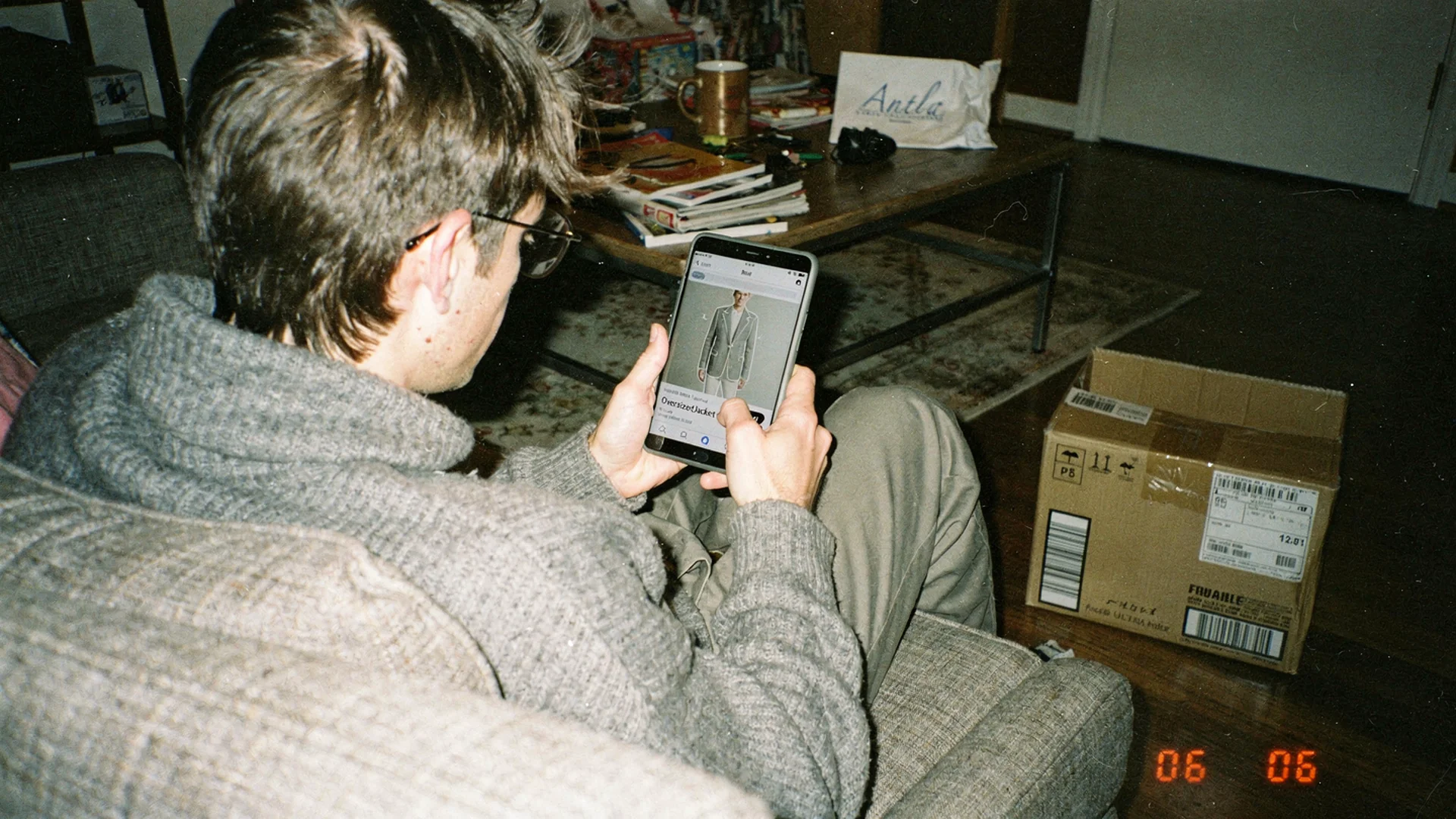
AI try-on translates garment photos into personal preview on everyday PDPs.
Definition: AI Virtual Try-On In Plain Language
AI virtual try-on is software that combines product imagery (flat lay, model shot, or 3D garment data) with a shopper-supplied image to generate a personalized preview on the product detail page.
It is not the same as:
- Virtual fitting rooms in-store with depth sensors
- Static avatar builders where shoppers pick a body type unrelated to their photo
- AR filters optimized for social sharing without purchase intent
- Size recommendation quizzes with no visual output
For Shopify fashion, the useful version lives on the PDP, close to size selection, and ties to order outcomes.
How The Pipeline Works (Merchant View)
Most fashion try-on stacks follow four stages:
- Garment ingestion: Vendor pulls product images or feeds from Shopify
- Body or photo capture: Shopper uploads a photo or uses front camera
- Alignment model: AI estimates pose, scale, and occlusion
- Render: Garment overlay with drape, length, and color adjustments
Quality differences show up in step four. Cheap overlays look like stickers. Strong systems adjust for shoulder angle, torso depth, and hem gravity.
Antla Pro AI targets higher-fidelity rendering when subtle drape and detail drive purchase and return outcomes.
Why AI Replaced Pure AR Hype
Early AR demos impressed in conferences but broke in messy bedrooms. AI image models improved garment segmentation, pose estimation, and lighting normalization enough for mobile web.
Fashion merchants care because returns are an AI problem now too. Large retailers cite AI-powered sizing and try-on as part of the next decision layer. Your PDP can participate without building a research lab.
Connect to strategy in best virtual try-on for Shopify fashion and AI try-on in paid social and email.
Fashion-Specific Requirements
Generic ecommerce AI treats all SKUs alike. Apparel needs:
| Variable | Why AI must handle it |
|---|---|
| Fabric weight | Changes drape and cling |
| Stretch | Alters size tolerance visuals |
| Length | Dresses, coats, pants differ |
| Coverage | Swim, intimates, necklines |
| Layering | Open jackets over tops |
| Color under warm light | Reduces “shade mismatch” returns |
If a vendor demo only shows t-shirts on uniform avatars, expect weak results on structured dresses or denim.
Data, Privacy, And Trust Copy
Shoppers ask what happens to their photo. Merchants should ask the same.
Questions for vendors:
- Is the image processed on device or server?
- Retention period?
- Used for model training or only order session?
- GDPR and CCPA disclosures ready?
Clear privacy copy increases try-on starts. Hidden policies kill completion rates.
Google Search Central helpful content guidance applies: pages should not trick users into uploading images without purpose.
Quality Tiers Merchants Should Know
Tier 1: Overlay preview
Fast, lower fidelity. OK for forgiving categories.
Tier 2: Garment-aware render
Adjusts scale, pose, basic drape. Good for most DTC fashion.
Tier 3: High-fidelity AI
Better fabric behavior and detail for premium or fit-sensitive SKUs.
Match tier to return risk. Do not pay for Tier 3 on socks.
AI Try-On And The Rest Of Your AI Stack
Fashion stores already use AI for copy, ads, and support. Try-on is decision AI, not generation AI for its own sake.
Complementary tools:
- Photo reviews (social proof)
- AI search visibility audits
- Email personalization
Launch merchants: online fashion store in the AI era.
Try-on differs because it directly touches margin via returns and conversion.
Performance Metrics That Matter
AI vendors love session counts. Merchants need:
- Try-on completion rate
- Conversion lift on try-on cohorts
- Return rate delta
- Engagement time with sanity checks (engagement vs quality)
Antla’s merchant base reports 35% average conversion lift for try-on users and 2-3x onsite engagement during try-on sessions. Returns can drop up to 30% when visual expectation was the blocker.
Limitations To State Honestly
AI try-on does not:
- Guarantee perfect size recommendation every time
- Replace garment measurements
- Fix bad supplier sizing consistency
- Eliminate returns entirely
It reduces avoidable mismatch when used with honest PDPs. See virtual try-on vs size charts.
Implementation On Shopify
You do not build this model yourself. You install a fashion-focused app, place it no-code, measure cohorts.
Steps: add virtual try-on to Shopify.
Theme notes: Shopify theme compatibility.
Antla is Shopify-only fashion, no-code, all themes, backed by Google for Startups and AWS Accelerator, with 80+ five-star reviews.
Industry Context
Fashion ecommerce growth still runs through mobile PDPs. Shopify fashion ecommerce trends emphasize discovery and trust. Returns pressure remains heavy; NRF 2024 returns data frames the macro cost.
AI try-on is one lever in a returns strategy, not the whole program. Read fashion returns reduction on Shopify.
2026 Buyer FAQ For Leadership
When your CEO asks “Is this real or gimmick?”, answer:
- Real for fit-sensitive categories with measurable cohort lift
- Gimmick when buried on PDP, fed bad photos, or sold without analytics
- Requires the same merchandising honesty as size charts and reviews
Point to case studies spoke for merchant-pattern proof.
What Merchants Should Ignore In Demos
Ignore novelty filters, generic AR hats, and beauty-only pipelines when you sell apparel. Ask whether the tool shows garment length and drape on the shopper photo, whether it runs on mobile Safari, and whether you can measure try-on users separately from other traffic.
Frequently Asked Questions
What is AI virtual try-on in ecommerce?
Software that maps apparel onto a shopper’s photo using machine learning so they can preview fit and style on the product page before purchase.
How is AI virtual try-on different from AR filters?
Fashion try-on on PDPs optimizes purchase decisions with garment-aware rendering and analytics. Social AR filters prioritize sharing, not conversion and returns tracking.
Do shoppers need special hardware?
No. Modern Shopify apps use mobile camera or photo upload in the browser. No headset required.
Will AI try-on replace size charts?
No. Charts document garment measurements. AI try-on shows appearance and length on the shopper. Use both.
Related Explainer And Hub Links
- Best virtual try-on for Shopify fashion
- Shopify virtual try-on app evaluation
- No-code virtual try-on setup
- Product photography vs AI virtual try-on
About the author: Aaron founded Antla out of frustration with unrealistic product imagery. He explains AI try-on for fashion merchants without AR gimmick language.
See AI try-on on a live Shopify PDP. Explore Antla virtual try-on or install from the Shopify App Store.