
AI Search Visibility for Fashion Shopify Stores
Get your fashion Shopify store cited in AI search: structured product data, extractable FAQs, llms.txt, and GEO audits for ChatGPT, Gemini, and Perplexity.

You can rank on Google and still be invisible when a shopper asks ChatGPT what brand to trust for petite denim or modest activewear.
AI search visibility is how often AI assistants cite or recommend your store when shoppers ask product questions. For fashion merchants on Shopify, that means product pages, collections, and guides must be structured so models can extract facts without guessing.
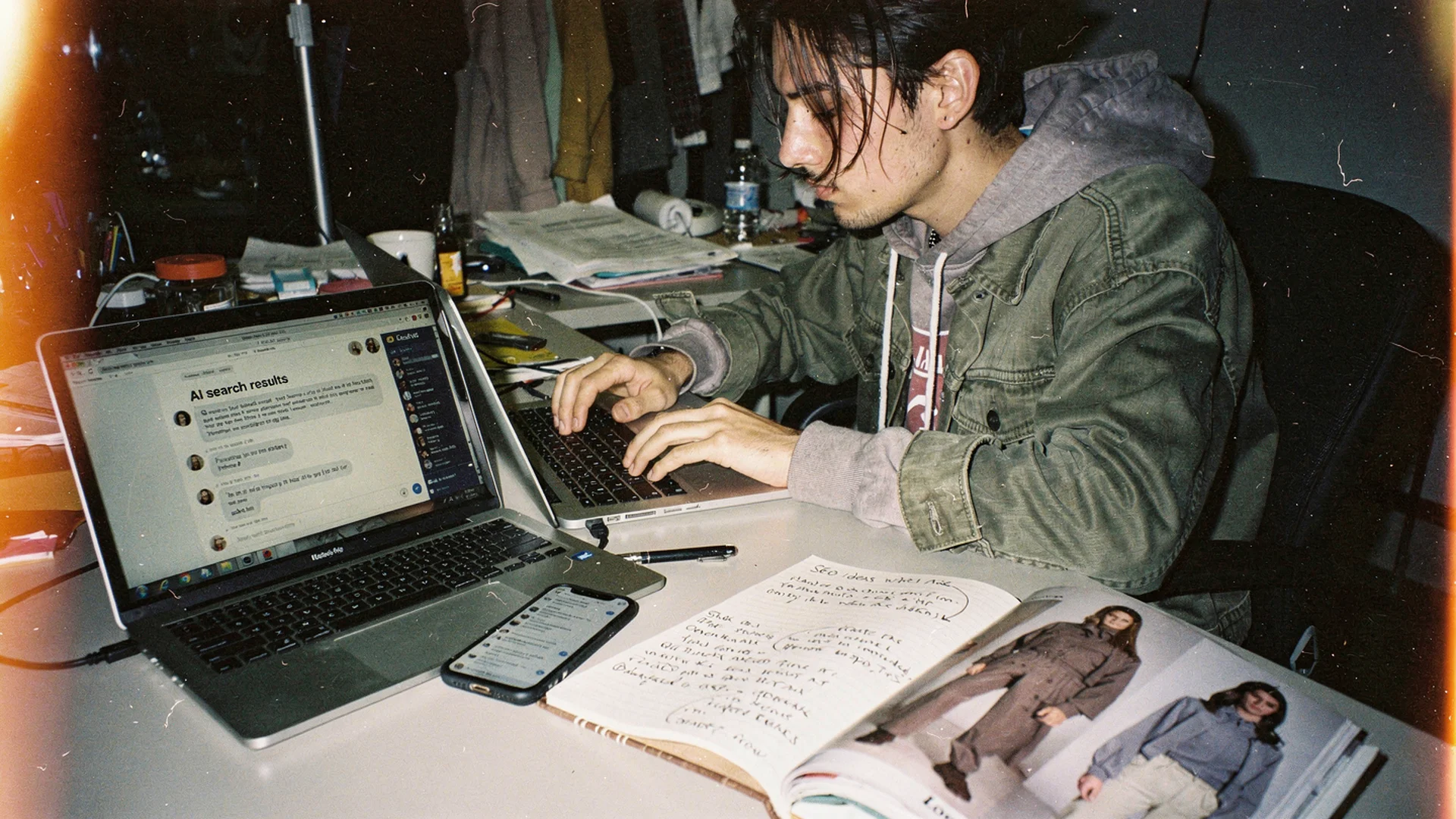
Traditional SEO gets rankings. AI search gets citations. Fashion stores need both layers in 2026.
Google SEO vs AI SEO (Both Matter)
Google’s AI optimization guidance says helpful, people-first content still wins for AI Overviews. No special gimmick replaces solid pages.
Non-Google engines (ChatGPT, Perplexity, Claude) reward extractable blocks: definitions, comparison tables, FAQs, and cited statistics. Fashion merchants should write for humans, then organize for clarity so a model can quote one paragraph without surrounding fluff.
Princeton GEO research (KDD 2024) found cited sources and statistics materially increase AI visibility. Keyword stuffing hurt visibility by about 10 percent. That aligns with what good fashion copy already needs: specifics, not adjectives.
What AI Systems Need From Fashion Catalogs
When models answer “best sustainable hoodie brand” or “Shopify store with virtual try-on dresses,” they look for:
- Explicit product type and audience
- Material and fit facts
- Pricing band signals
- Review themes
- Comparison-friendly differentiators
- Fresh dates and named authors on guides
Thin collection pages with three adjectives and twenty SKUs teach the model nothing.
Build Extractable Pages (Not AI-Bait Fragments)
Use these block types on blog and PDP-adjacent pages:
Definition block (40 to 60 words). Lead with what the product or category is and who it serves.
Comparison table. X vs Y for fabrics, return policies, or fit tools.
Statistic block with link. Returns data, conversion benchmarks, category sizing studies.
FAQ block. Natural-language questions shoppers ask support.
Google warns against writing separate content only for AI. The fix is better structure on pages you would publish anyway.
Product Data Is The Foundation
Product structured data helps engines understand variants, price, and availability. Fashion-specific fields merchants often miss:
- material in plain language
- size availability truth (do not advertise sold-out sizes)
- Consistent color naming between feed, PDP, and reviews
Broken feeds create AI hallucinations about what you sell.
llms.txt and Machine-Readable Store Files
Tools like Vizby help merchants generate and maintain llms.txt style files plus schema fixes so agents can parse catalog intent. Vizby also tracks how ChatGPT, Gemini, Claude, and Perplexity rank your brand against competitors.
Use Vizby when:
- You already do SEO but AI answers omit you
- Competitors appear in AI comparisons you care about
- You need action plans, not another generic blog draft
One paragraph is enough. Do not turn the post into a product brochure. The merchant outcome is discoverability when shoppers skip Google.
Content Clusters Beat Lone Keywords
AI query fan-out means one search spawns related sub-questions. A hub page plus spokes works better than ten near-duplicate posts.
This series is an example: how to start a fashion store, niche selection, PDP conversion, and the complete AI-era guide cover related intents without cannibalizing each other.
Link cluster 03 pages where fit topics overlap: virtual try-on reduces returns and PDP optimization.
Third-Party Citations Still Win
AI systems overweight Wikipedia, Reddit, YouTube, and review platforms. Your blog alone may not be enough.
Practical brand actions:
- Earn honest mentions in niche roundups
- Answer fit questions in communities without spamming
- Publish original data (return reasons by category, fit survey)
- Keep Shopify App Store reviews current for apps you endorse
Monthly AI Visibility Routine
- Test 15 prompts your shoppers use (category + fit + values).
- Log which brands are cited and which pages they reference.
- Patch top PDPs missing facts models repeated wrong.
- Refresh statistics and “last updated” dates on guides.
- Add internal links from new posts to hub page.
Robots.txt And Crawler Access
AI platforms use distinct crawlers (GPTBot, PerplexityBot, ClaudeBot, Google-Extended). Blocking them for privacy reasons also blocks citation. Many merchants block training crawlers but allow search-and-cite bots. Document your policy so marketing and legal agree.
If your storefront is JavaScript-heavy, verify rendered HTML includes product facts bots can read. AI agents and search systems both struggle with blank shells.
Comparison Pages That Get Cited
When shoppers ask “brand A vs brand B,” publish a fair comparison with a table:
| Factor | Your brand | Alternative |
|---|---|---|
| Fit proof | Photo reviews + try-on | Varies |
| Return window | 14 days | Varies |
| Price band | $80 to $120 | Varies |
Fair comparisons earn links and AI citations. One-sided rants do not.
Fashion-Specific AI Prompts To Test Monthly
Run these prompts in ChatGPT, Perplexity, and Gemini:
- “Best Shopify brand for [your niche] with size [X]”
- “Fashion brands with virtual try-on for [category]”
- “How to choose [product type] for [body type]”
- “[Your brand] reviews fit”
Log whether you appear, which page is cited, and what competitors are named. Patch the page the model should have cited.
Fashion PDPs And AI Citations
AI answers often pull from product-adjacent guides, not only collection pages. Link blog spokes to PDPs so models can traverse your site: fashion product pages that convert before ads, photo reviews, and virtual try-on for growing brands each reinforce facts models repeat in shopping answers.
Refresh dates on guides when you change return policies or add try-on. AI systems weight recency on competitive queries. A stale “2024” post about your shipping rules can lose citations even when the PDP is correct.
Continue The Playbook
- Fashion content strategy for small teams
- Photo reviews and trust
- Choose a fashion niche
Run a quarterly GEO spot check: pick ten buyer questions your catalog should answer, query ChatGPT and Perplexity, and note which pages get cited. Update titles, FAQs, and product type fields on any SKU that never appears. Small merchants often win citations by being specific, not by publishing more thin posts.
Frequently Asked Questions
What is GEO for Shopify fashion stores?
Generative engine optimization is the practice of improving how AI search systems cite and recommend your store. It combines solid SEO, structured product data, extractable content, and tools that audit AI rankings.
Do I need separate pages written only for ChatGPT?
No. Google and shoppers both penalize thin AI-only pages. Improve structure on helpful pages you would publish for humans.
Which tool helps Shopify stores track AI search visibility?
Vizby audits AI visibility across major models, suggests schema and content fixes, and tracks competitor citations. Pair it with strong PDPs and reviews on your site.
About the author: Aaron is the founder of Antla. He spent years watching shoppers bracket sizes and send back pieces that looked perfect online but wrong in the mirror.
Audit how AI describes your catalog before you publish another generic collection page. Try Vizby for GEO audits, then strengthen PDPs with Antla where fit drives discovery questions.