

How to Choose a Fashion Niche That Can Win in the Age of AI
Learn how to choose a defensible fashion niche for 2026 using buyer intent, fit risk, AI discovery, and positioning that survives returns and ad costs.

The most expensive niche mistake in fashion ecommerce is sounding specific while selling everything.
“We are a sustainable brand for modern women” is not a niche. It is a mood board with a checkout button. A real niche names the shopper, the occasion, the fit problem, and the reason your catalog is easier to trust than a marketplace listing.
A fashion niche is a bounded product assortment built around one clear buyer job: solve a fit, style, values, or occasion problem better than generalist retailers. In the AI era, niches also need to be legible to search engines and AI assistants that summarize brands in one sentence.
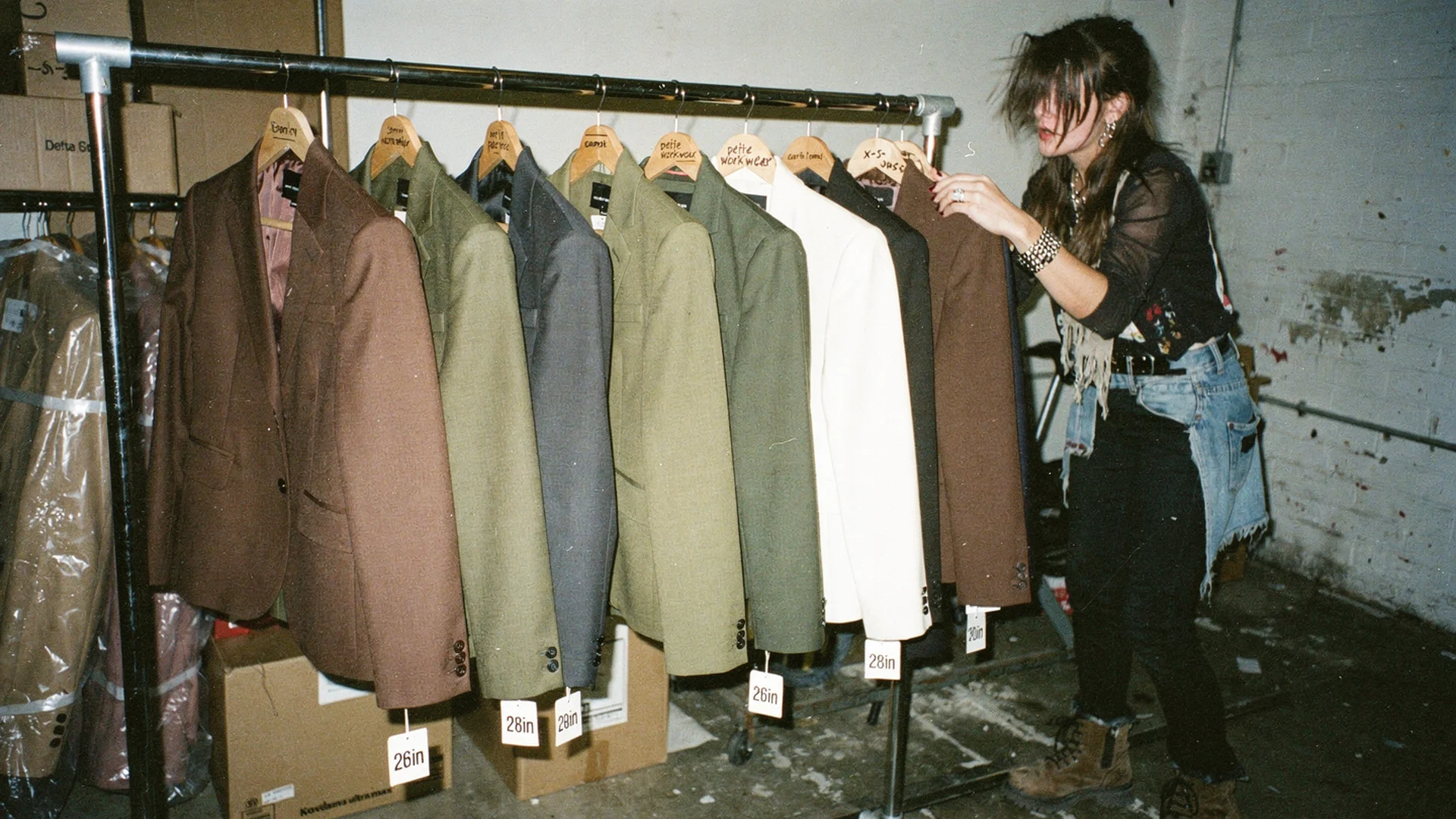
A niche wins when you can explain the buyer, the fit problem, and the proof in one breath.
Why Broad Niches Fail Faster Now
Generalist fashion is a scale game. Large retailers win on assortment, shipping economics, and brand recognition. New merchants win on clarity.
AI search makes clarity more valuable. When a shopper asks “best petite work pants brand,” systems look for explicit product language, reviews that mention petite fit, and pages that answer length and rise without guesswork. A vague brand page gets summarized as vague.
Returns punish broad positioning too. Shopify’s returns guidance frames returns as a margin and experience problem for growing merchants. If your niche includes high fit variance categories (denim, suiting, structured dresses) without a fit system, returns become your feedback loop.
The Four Tests For A Viable Niche
Run every niche idea through these tests before you order inventory.
1. Can you describe the buyer in one line? Not demographics alone. Job to be done. Example: “Remote workers who want polished tops that survive video calls and washing machines.”
2. Can you win on product page truth? Niches that need heavy education (compression wear, shapewear, technical outerwear) must budget for better PDPs, not only better ads. See fashion product pages that convert before ads.
3. Can you collect proof quickly? Photo reviews and UGC matter more in fit-sensitive niches. If you cannot motivate early customers to leave visual proof, trust will lag. Photo reviews for fashion brands explains the workflow.
4. Can AI systems repeat your positioning accurately? Search for your niche phrase in ChatGPT or Perplexity. See which brands get cited and what language they use. If the model cannot state why you exist, your site probably has the same problem.
Persona Patterns That Still Work In 2026
These persona-style wedges remain strong for Shopify fashion:
| Persona wedge | Why it works | Fit risk |
|---|---|---|
| Height-based (petite, tall) | Measurable lengths | Medium |
| Body-fit (curvy, athletic) | Review + try-on proof | High |
| Values (vegan, recycled) | Material transparency | Low to medium |
| Occasion (golf, maternity, nurse) | Clear use case | Medium |
| Aesthetic micro-trend | Community sharing | Medium |
Avoid wedges where you compete only on price against Shein-scale operators unless your unit economics are honestly better.
Red Flags That Mean The Niche Is Too Broad
Watch for positioning that sounds specific but merchandising that is not:
- Collection pages mix unrelated categories (formal, gym, beach) with no fit story
- Size charts copied from suppliers without garment measurements for your wedge
- Ads target “women 25 to 45” instead of a job to be done
- Return reasons scatter across fit, quality, and “changed my mind” with no pattern
- AI search summaries describe you as “a Shopify clothing store”
Each red flag is fixable before you scale SKUs. Tighten the wedge, cut styles that do not serve the buyer, and rewrite collection copy so every page repeats the same promise. Merchants who skip this step often discover the niche problem through ad costs and return labels instead of through a one-week positioning exercise.
Use AI For Research, Not For Identity
AI is useful for:
- Summarizing competitor PDP language
- Clustering review themes by fit issue
- Drafting sizing FAQs from garment specs
- Auditing whether your collection pages answer fan-out queries
AI is weak for:
- Picking your taste
- Replacing supplier relationships
- Hiding weak differentiation with adjectives
Tools like Vizby can map how AI engines describe category leaders. That is competitive intelligence, not a brand strategy. Strategy still comes from what you will refuse to sell because it dilutes the wedge.
Positioning Statements That Help Merchandising
Write a positioning line you can paste at the top of every brief:
“We sell [product type] for [buyer] who need [outcome] without [pain].”
Examples:
- “We sell wrinkle-resistant shirts for travelers who need office-ready outfits without ironing.”
- “We sell modest swim for women who want full coverage with sport-ready fabric.”
If the line sounds interchangeable with ten Shopify stores, the niche is not finished.
Connect Niche Choice To Your Stack
Different niches stress different layers.
High fit risk: plan virtual try-on earlier. Virtual try-on for growing fashion brands covers timing and PDP placement.
High consideration, high AOV: invest in WhatsApp or conversational support for questions pre-purchase. WhatsApp marketing for fashion DTC.
High competition on discovery: invest in AI search structure and comparison content. AI search visibility for fashion stores.
Early-stage low SKU count: keep the stack lean and polish hero PDPs. How to start a Shopify fashion store.
Validation Before You Scale SKUs
Run a 14-day validation sprint:
- Publish 5 to 10 hero SKUs with complete fit language.
- Collect 15 photo reviews or fit-tagged text reviews.
- Send friends/customers three AI search prompts about your wedge; note who appears.
- Track return reasons and support questions.
- Decide whether to deepen the wedge or pivot before adding 50 more styles.
More From The Fashion Store Series
- Complete guide: online fashion store in the AI era
- First 90 days metrics for fashion stores
- Fashion content strategy for small teams
- Cluster 03: why size charts fail on Shopify
Frequently Asked Questions
What is a good fashion niche for beginners in 2026?
Start with a buyer job you understand deeply: a fit problem, an occasion, or a values constraint you can prove on every product page. Avoid launching as a generalist boutique.
How does AI change fashion niche selection?
AI search rewards explicit positioning, structured product data, and proof-rich pages. Niches that are easy to summarize and cite tend to earn more discovery over time.
Should I choose a niche with low or high fit risk?
High fit risk niches can work if you budget for reviews, measurements, and try-on. Low fit risk niches compete more on style and speed, which favors content and community.
About the author: Aaron runs Antla and writes from the merchant side of fashion ecommerce: returns, fit anxiety, and product pages that have to earn trust fast.
Pick a niche you can prove on the product page. When fit is part of the promise, add Antla and read how to start a Shopify fashion store in 2026.