

Fashion Product Pages That Convert Before You Run Ads
Build Shopify fashion PDPs that convert before paid traffic: media sequence, fit language, reviews, structured data, and try-on where hesitation lives.

Paid traffic does not fix a product page that asks shoppers to gamble.
Fashion product pages convert when they remove physical uncertainty before checkout: fit, fabric behavior, length, color accuracy, and social proof from bodies that resemble the shopper. Everything else on the page is decoration until those questions have answers.
A converting fashion PDP is a decision environment on Shopify that combines media, fit language, variant clarity, reviews, policies, and optional personal preview so shoppers can picture the garment on themselves.
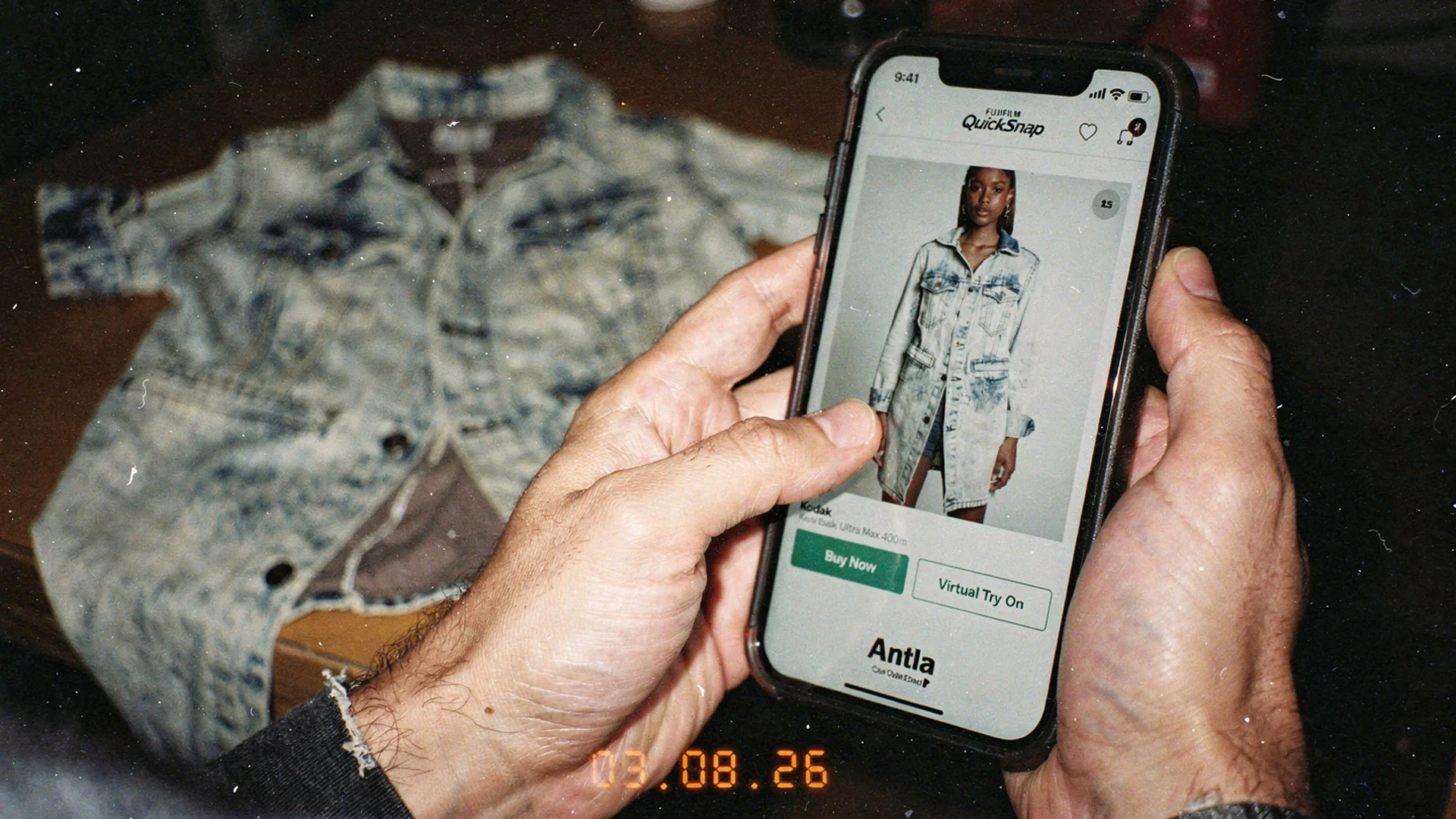
Ads amplify the page you already have. Fix fit proof and purchase confidence first.
The Pre-Ad Audit (15 Minutes Per Hero SKU)
Open your best-selling SKU on your phone. Ask:
- Do I know length and coverage without zooming forever?
- Does the fabric look stiff, sheer, or stretchy in motion?
- Is size guidance next to the variant picker?
- Do reviews mention fit for my body type?
- Would I buy this if shipping took a week?
If you hesitate, neither will a cold visitor from ads.
Strong positioning helps here too. If your niche is unclear, the PDP tries to sell everyone and converts no one. Revisit how to choose a fashion niche in the AI era before you rewrite product photos.
Baymard’s apparel UX research reinforces that apparel shoppers need enough detail to judge fit remotely. Your page is competing with a fitting room memory, not with another tab.
Media Sequence: Pretty Is Not The Same As Useful
Reorder images by decision value, not photoshoot romance.
Suggested sequence for apparel:
- Front on-body shot with neutral pose
- Side or back for length and silhouette
- Detail for fabric, hardware, or texture
- Motion or video if drape matters
- Scale reference (handbag next to model, cuff shot, etc.)
- UGC or customer photo with fit note
Video helps when stiffness, bounce, or transparency matters. A still photo can lie about knit weight. A three-second clip often cannot.
Fit Language Shoppers Actually Use
Translate merchant jargon into body language.
| Merchant term | Shopper translation |
|---|---|
| Relaxed fit | Extra room in chest and hip |
| Cropped | Ends above natural waist on average height |
| High compression | Tight, holds shape, harder to pull on |
| Semi-sheer | Needs layering in daylight |
Pair charts with garment measurements. For why charts alone fail, see cluster 03: why size charts fail Shopify fashion brands.
Reviews Belong In The Evaluation Zone
Do not hide fit reviews below three screens of brand story. Surface:
- Runs small / true / large counts
- Height and size worn in photo reviews
- Fabric feel notes (“softer than expected”)
Loox is a practical choice for fashion because photo reviews show real bodies. One paragraph is enough: if your niche is fit-sensitive, photo proof often outperforms another lifestyle shoot.
Structured Data And AI Readability
Google product structured data helps search systems understand price, availability, and variants. Clean data also feeds AI summaries on non-Google engines.
Minimum fields fashion merchants should nail:
- Product type and gender where relevant
- Material composition
- Color as shoppers name it, not only internal codes
- Size availability
- Return policy link
- Review aggregate when eligible
For AI discovery strategy beyond schema, read AI search visibility for fashion Shopify stores.
Where Virtual Try-On Earns Its Place
Try-on is not for every SKU on day one. Add it when:
- Returns mention fit, length, or “looked different”
- Shoppers ask support for photos on bodies like theirs
- AOV supports extra evaluation time
- The category is style-sensitive (dresses, outerwear, sets)
Antla sits beside the gallery so try-on feels like part of evaluation. Merchants using Antla commonly see stronger engagement on PDPs because shoppers are doing fit work, not bouncing.
Compare photography vs try-on roles in product photography vs AI virtual try-on.
Conversion Quality, Not Only Conversion Rate
Shopify’s CRO overview notes that small UX improvements compound. For fashion, measure quality:
- Add-to-cart rate on hero SKUs
- Bracketing behavior (multiple sizes in one order)
- Return rate within 30 days
- Support tickets per 100 orders
A higher rate with worse returns is borrowed revenue. Fix the page before you celebrate the spike.
PDP Build Order For New Brands
- Fix variant-image mapping
- Rewrite fit notes for top 10 SKUs
- Collect 10 photo reviews
- Add FAQ block for top three objections
- Add try-on on highest-return category
- Run mobile speed check (heavy galleries hurt)
- Only then scale ads
Mobile-First Checks Merchants Skip
Most fashion traffic is mobile. On a phone, shoppers pinch-zoom photos because they do not trust a single hero shot. Give them swipeable angles and a size module that does not jump when variants change.
Test add-to-cart sticky bars. If the button appears only after a long scroll, you lose buyers who decided early but could not find the click.
Test color swatches against real dye lots. A swatch that does not match the garment creates returns that sound like product defects but are really page accuracy problems.
Sample PDP Copy Blocks You Can Steal
Fit note example: “Runs true to size for heights 5’3” to 5’8”. Size down if you prefer a snug waist.”
Fabric note example: “Medium-weight rib knit with 4-way stretch. Not sheer indoors. May cling after long wear.”
Return expectation example: “Free exchange within 14 days on unworn items with tags. Return shipping is customer-paid except on defective items.”
These lines are boring. Boring is trustworthy.
Connect PDP Work To The Rest Of The Stack
Product pages do not live alone. When shoppers still hesitate after reading fit notes, conversational recovery matters. WhatsApp marketing for fashion DTC brands covers cart and sizing messages that point back to the same PDP truth.
Content should reinforce what the page claims. A sizing guide that contradicts the PDP creates returns that look like product defects. Fashion content strategy for small teams explains how to publish fit guides without duplicating or contradicting product data.
Measure whether fixes worked in the first quarter. First 90 days metrics and unit economics shows which numbers move when PDPs improve.
Internal Series Links
- Start a Shopify fashion store in 2026
- Choose a fashion niche in the AI era
- Photo reviews and social proof
- Virtual try-on for growing brands
- Complete AI-era fashion store guide
- Returns strategy on Shopify
Frequently Asked Questions
What should a fashion product page include before running ads?
Clear on-body media, fit language, size guidance, photo reviews, fabric notes, and mobile-friendly checkout. Shoppers should not have to infer fit from one front image.
When should I add virtual try-on to a fashion PDP?
When fit or style uncertainty shows up in returns, support tickets, or hesitation at the size selector. Try-on should sit near the gallery, not at the bottom of the page.
Do photo reviews really matter for conversion?
Yes for apparel. Shoppers trust other customers’ bodies and lighting more than studio shots alone. Photo reviews reduce abstract fit risk.
About the author: Aaron started Antla to close the gap between how clothes look on a model and how they look on you. He advises Shopify fashion brands on try-on and conversion.
If shoppers pause at the size selector, the page still has work to do. Add Antla for try-on beside your gallery and review Shopify PDP conversion optimization.