

Evidence-Based Virtual Try-On App Comparison
Compare try-on apps on your own SKUs with the logos hidden. Score speed, garment fidelity, accessibility, privacy, and a same-store pilot before you trust a deck.

Compare virtual try-on apps on your own catalog with the names hidden until the scores are written down. Use one fixed set of difficult garments and the same shopper photos in every app, then score speed and fidelity before price comes up. Read the privacy terms and whether the control is usable without a mouse. Run a same-store pilot on one template only after that. A claim you cannot reproduce on your worst dress is not evidence.
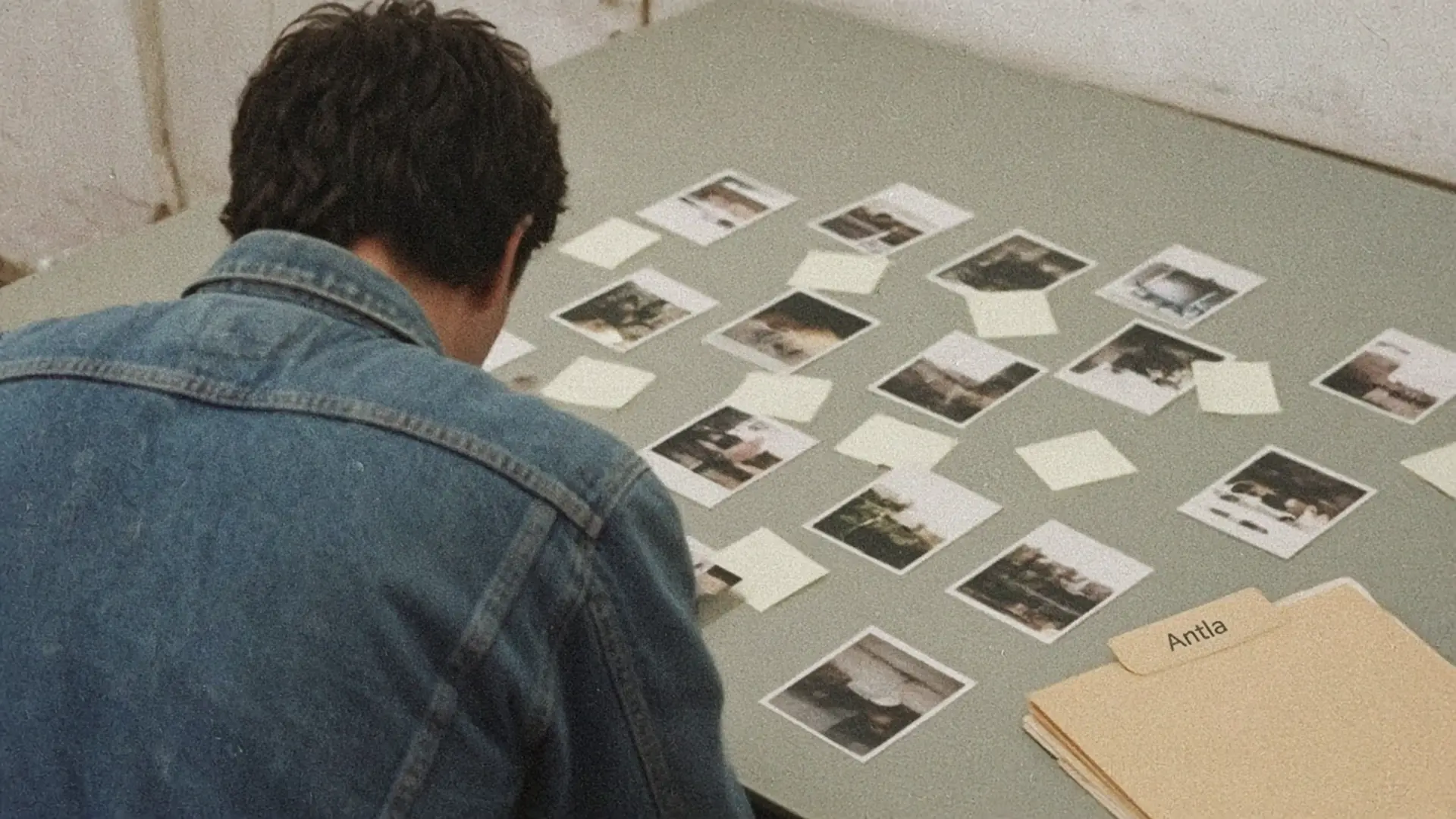
Logos stay hidden until the scores are on paper. Editorial image in Classic Antla disposable-camera style.
Vendor comparisons go soft in a predictable way. The deck uses a model with perfect light, a solid-color dress, and a loading time measured on the vendor’s office network. Your catalog is a printed midi, a black coat, and a lace trim that disappears. If you score the deck, you are scoring their stylist.
This is a protocol you run. It is not a ranking of apps, and it is not a tour of feature checkboxes. A chooser page can tell you what questions to ask. It cannot tell you which output is sharper on your print. Only your SKUs can.
Create blinded test set
Build the set before you book the second demo. If you pick SKUs after you have seen a vendor’s best work, you will unconsciously pick neighbors of that work.
Garments, eight to twelve, not fifty. You need enough to include failure, not enough to abandon the test. I would force this mix:
- One solid-color easy piece, so you have a ceiling. If an app fails here, stop.
- One all-over print where the direction of the print matters.
- One garment with a logo or text on the chest.
- One unusual neckline or strap arrangement.
- One dark piece, because black-on-black is where edges vanish.
- One piece with sheer or lace, if you sell it.
- The current bestseller, because that is the page that will pay for the tool.
- The SKU with the most “not as pictured” comments in the last quarter.
Use the front-facing product image you would actually feed the tool, not a cleaned asset you made for the test. If your live gallery starts on a back view, that is part of the test. Note it. Do not secretly swap in a better photo for the apps you like.
Shopper photos, three, used for every app. One in ordinary indoor light, one in harsh window light, one that is slightly cropped the way real uploads are cropped. Same three photos, same crop, same order. If a vendor insists on their own model photo, let them run it as an extra row. Do not let it replace yours.
Blinding. Export the results into a folder per SKU. Name the files by garment and by a letter (A, B, C), assigned by someone who will not score. The scorer should not see the app name, the price, or the sales engineer. Baymard’s apparel research is useful here only as a reminder that shoppers judge specific product information, not a brand halo. You are copying that discipline onto the vendor.
Two people should score, independently, then compare notes. A single scorer who also took the demo will remember which app felt charming.
Score speed and fidelity
Speed and fidelity get written down as numbers and checks, not as “felt fast” and “looked good.”
Speed. On a mid-range phone over cellular, record seconds from tap to a finished image, three runs per SKU, and report the median. Also record the failure time: how long until the app admits it cannot produce an image. A spinner that never resolves is worse than a fast error. Ignore the vendor’s lab number unless you can reproduce it on your phone.
Fidelity. Score each output 0, 1, or 2 on these rows. 0 means wrong, 1 means damaged but recognizable, 2 means the piece survived.
| Check | What a 0 looks like |
|---|---|
| Same garment | A pocket, hood, or strap appeared or vanished |
| Print and logo | Text mirrored, stripe bent, logo moved to the wrong side |
| Color | The shopper is in a different color than the variant you selected |
| Edges | The hem, collar, or sleeve dissolves into the background |
| Body continuity | An arm, hand, or neck is warped in a way the source photo was not |
Add the scores. Do not average them into a single “quality” number until you have looked at which row failed. An app that scores high on solid tees and zero on prints is a tee app. Your catalog may not be tees.
Product photography versus try-on explains why a weak source image caps every vendor. If all three apps fail the same logo, fix the product photo before you blame the category. If only one app keeps the logo, that is the finding.
Do this before anyone opens a pricing page. Price will color the score. I have watched a room forgive a mirrored logo because the contract was cheaper. Write the fidelity table first. What the software tends to cost can wait until you know which outputs you would actually ship.
Review accessibility and privacy
A sharp image you cannot operate, or a photo you cannot delete, is not a win. Review these with the names still hidden if you can. Privacy policies make hiding the name harder. Read them in a second pass and do not go back and “adjust” the fidelity scores after you see who was expensive.
Accessibility. WCAG is the standard to point at, not a vibe called “inclusive.” On the actual control, check:
- The try-on action has a visible name, not only an icon.
- Focus is visible if you tab, and the dialog can be closed without a pointer.
- Errors are text, not only a color change on a border.
- The result is not trapped in a canvas with no text alternative for what just happened.
- Motion, if any, can be avoided. A spinning preview is not required for a still result.
You are not certifying the vendor. You are refusing tools your own customers cannot complete. Test with one person who does not use a mouse. Ten minutes will surface more than the accessibility paragraph in the deck.
Privacy. A shopper photo is personal data. Shopify’s privacy documentation is the store side. The app adds its own processing. Before a pilot, get written answers to:
- Is the photo used only to make this preview, or also to improve a model?
- How long is the upload kept, and how does a deletion request reach the vendor?
- Where is it processed, in the sense your counsel cares about?
- Can a merchant on your team browse individual shopper photos, and who is allowed?
Shopify’s customer privacy API is how storefront code is supposed to respect consent signals. Ask whether the try-on control waits for the right consent before it fires, or whether it loads a camera the moment the page loads. Those are different products.
Antla can sit in this blinded set the same way any other app does. Upload your SKUs and your three photos, hide the name, and score the sheet. Nothing in this protocol awards it a point for being mentioned here. If you include it, use the Shopify listing only to get the install into a dev store, not as evidence. Quote the privacy policy: Images are deleted and not accessible within 72 hours. Score every other vendor against their own written window, not this sentence.
Run same-store pilot
Lab scores pick a finalist. They do not prove the product page got better. The pilot is one template, one primary placement, a defined window, and a comparison that is not “revenue went up in November.”
Scope. One product template that covers the SKUs you scored, not the whole catalog. A second template can wait. Shopify try-on and conversion is about reading that page properly once the tool is live. Use it for the metric definitions, not as a promise that your pilot will match anyone else’s rate.
Comparison. Prefer a holdout: some shoppers see the control, some do not, on the same template, same ads, same weeks. If you cannot randomize, use a before period with the same traffic mix and say out loud that it is weaker. Do not compare try-on users with everyone else and call it the effect of the app. People who bother to try a preview are already warmer. Conversion engine metrics is a useful reminder that a single rate hides the population you actually changed.
Window. Long enough for a boring week, not only a launch email. I would rather see two quiet weeks than a hero weekend. Write the stop rule now: fidelity complaints in support, a mobile layout that covers add-to-cart, or a privacy term you cannot accept.
What you record. Completion rate on the eligible template, add-to-cart on that template versus the holdout, and a handful of support tickets that mention the picture being wrong. Vanity counts of “tries” are not the decision.
The technology overview helps a teammate who still thinks every app is the same pipeline. Send it before the pilot review so the meeting stays on your sheet.
What this protocol will not prove
It will not tell you the winner for a store that does not resemble yours. It will not turn a two-week pilot into a lifetime return rate. It will not make a bad product photo look like a good one. And it will not survive if the person who scored the images is the person who wants a particular contract approved. Give the scoring pen to someone who does not attend the commercial call.
Small catalogs can still run it. Use six SKUs instead of twelve, and do not pretend the median of six is a law of physics. Say “on these six.”
Run the first blinded set
This week, pull the eight garments and the three photos into one folder. Assign letters. Book two vendors, or one vendor and the tool you already pay for, into dev stores. Score fidelity before any pricing slide is opened. Then read the privacy answers with counsel, or with the most paranoid person on the team if counsel is booked out.
Unblind the names only after both scorers have locked their tables. The app that kept the logo on the hard SKU is allowed to have a commercial conversation. The app that only looked good on the solid tee is not.
About the author: Aaron is the founder of Antla. He would rather lose a blinded test on a printed dress than win a demo on a backdrop.