

Fit Confidence in Ecommerce Fashion, Metrics and PDP Tactics
A merchant guide to fit confidence in ecommerce fashion, including product-page tactics, measurement frameworks, and where virtual try-on changes shopper behavior.

Fashion conversion is rarely blocked by one missing sentence. More often, it is blocked by a silent question the PDP never fully answers: will this actually work on me?
Fit confidence in ecommerce is the shopper’s belief that a garment will sit, drape, and flatter the way they expect before they place the order. It lives between raw size accuracy and emotional certainty, which is why merchants should measure it through shopper behavior, not only through size-chart clicks.
She may know she is usually a medium, yet still wonder whether the blazer will box her out, whether the dress will pull at the hips, or whether the wide-leg denim will swallow her frame. That gap shows up in bracketing long before finance sees the return tag.
Narvar’s State of Returns still lists fit and size among the top return drivers. NRF’s 2024 returns data shows how large the macro cost is, which helps justify PDP investment before another discount test.
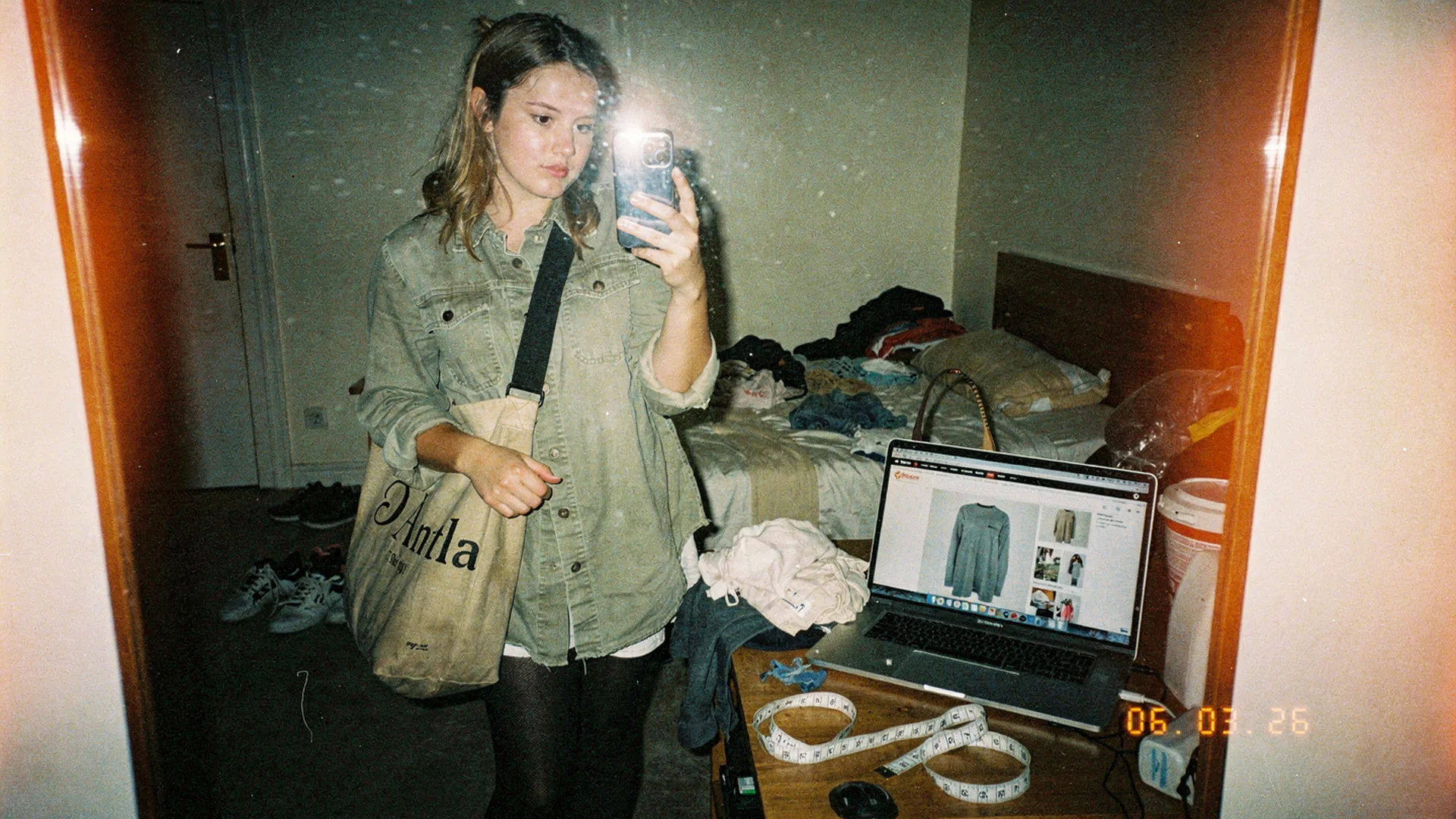
Fit confidence improves when the PDP helps shoppers predict outcome on their own body, not just pick a labeled size.
Fit Confidence Is Not The Same Thing As Size Confidence
Merchants often bundle these together. They should not.
Size confidence means the shopper thinks she can choose the correct labeled size.
Fit confidence means the shopper believes the garment will look and feel right once it is on her body.
This is why size charts alone plateau. They help with the label, but they do not fully answer silhouette, drape, proportion, or flattering effect. That gap is where abandonment, bracketing, and regret begin.
Mirror, self, and fit confidence in fashion ecommerce is a good companion read because it explains why self-referenced preview changes decision quality. A mirror does not replace measurements. It externalizes the visual simulation the shopper was struggling to do mentally.
The Merchant Signals That Usually Indicate Low Fit Confidence
You do not need a survey to spot it. Low fit confidence leaves a trail:
- Long PDP dwell time without add-to-cart
- Repeated zooming or image cycling
- High size-chart opens with weak conversion
- Bracketing, especially adjacent sizes
- Return reasons like not flattering, looked different, or not as expected
If several of those signals pile up on the same category, the PDP is not doing enough predictive work.
Shopify’s conversion research treats product-page hesitation as a clarity problem. Long dwell time with weak add-to-cart often means the shopper still cannot simulate the outcome, not that she needs another promo code.
This is also where fashion returns by category benchmarks becomes useful. Fit confidence problems do not hit every category evenly. Dresses, denim, jumpsuits, and tailored pieces tend to expose them faster than forgiving basics.
What Research Says About Virtual Fitting Support
The research base is no longer thin enough to ignore. Shopify’s virtual fitting room guide and Snap’s retail AR case studies both frame the same mechanism: when shoppers can preview products more concretely, uncertainty falls before checkout.
Shopify’s virtual shopping guide describes try-on and guided evaluation as measurable PDP behavior, not a side feature. Google and Vogue Business’s Unfolding AI study found strong consumer interest in AR try-on among values-driven shoppers, which supports preview as a normal expectation rather than a novelty bet.
The PDP Tactics That Improve Fit Confidence Fastest
Fit confidence is built through layers. Most stores need several working together.
1. Clear Model Context
State height, usual size, and the size worn. This is basic, but still inconsistently executed. It helps shoppers anchor proportion.
2. Garment Measurements, Not Just Generic Size Tables
Bust, waist, hip, inseam, rise, shoulder width, and stretch notes matter more than abstract S to XL labels.
Narvar’s apparel returns guide recommends garment measurements near the size selector and fit notes written by people who know the product, not boilerplate “true to size” copy.
3. Fit Notes Written By Merchants Who Know The Garment
“Runs small” is weak. “Structured through the ribcage, forgiving at the hip, choose your usual size unless between sizes” is useful.
4. Review Content That Mentions Real Fit Outcomes
Generic praise does not reduce uncertainty. Body-context comments do.
5. Self-Referenced Visualization
This is where Antla virtual try-on earns its place. On categories where the shopper needs to imagine silhouette on herself, try-on moves the PDP from description toward demonstration.
Why Antla Changes The Metric Conversation
Antla is built for Shopify fashion brands that want try-on live on the PDP without a custom rebuild. The key merchant value is not novelty. It is measurable behavior change:
- Try-on users often convert 35% better on average
- Stores can see up to 30% return reduction when visualization closes the main expectation gap
- PDP engagement commonly rises to 2-3x longer for shoppers who actively preview
Those numbers matter because they tie fit confidence to operating metrics, not just page interaction. If a tool increases engagement but does not improve order quality, it is entertainment. If it helps shoppers choose with more clarity, it becomes merchandising infrastructure.
For a vendor comparison lens, pair this section with best virtual try-on for Shopify fashion. For the broader return-prevention stack, read shopify apps that reduce returns in fashion.
A Practical Fit Confidence Measurement Framework
Most brands should build one simple dashboard with the following:
| Metric | Why it matters |
|---|---|
| PDP conversion rate | Core commercial outcome |
| Try-on start rate or fit-tool usage | Whether the support is visible and used |
| Conversion of fit-tool users vs non-users | Whether the support changes behavior |
| Bracketing rate | Whether shoppers still hedge with multiple sizes |
| Return reason mix | Whether uncertainty moved downstream anyway |
That dashboard is more useful than broad sentiment surveys because it lets you connect a PDP intervention to measurable commercial change.
Categories Where Fit Confidence Work Usually Pays Back Fastest
Dresses
Shoppers worry about cling, waist placement, and length. Studio photos can underspecify all three.
Denim
Rise and inseam can be technically clear yet still visually uncertain. This is where bracketing becomes expensive.
Blazers And Tailoring
Shoulder line, torso length, and structure matter enough that shoppers often hesitate even when the size chart looks adequate.
Occasionwear
Returns rise when the event standard is high and the shopper cannot afford to be wrong.
These are good first candidates for a self-preview pilot. Which fashion categories need virtual try-on goes deeper on prioritization.
What Low Fit Confidence Looks Like In Copy
Sometimes the problem is visible in the way the PDP speaks.
Weak copy says:
- Elegant and flattering
- True to size
- Must-have fit
Useful copy says:
- Skims the waist, then falls straight through the hip
- Structured at the shoulder, relaxed through the body
- Cropped on shoppers under 5’4”, full length on taller frames
Fit confidence grows when the store sounds like a merchandiser, not a mood board.
The Difference Between Prevention And Reassurance
Merchants often think about fit content as reassurance after doubt appears. Better stores think about it as prevention before doubt compounds.
If the shopper reaches checkout still unsure, you may still win the order through a discount. That does not mean you solved the problem. The uncertainty often reappears as a return, especially when the item arrives and the body-level mismatch becomes obvious.
Narvar on lowering ecommerce returns links clearer PDP evidence to fewer refunds driven by expectation mismatch. Shopify’s enterprise returns guide makes the same point from the policy side: exchanges and confidence-building belong upstream, not only in the return center.
That is why fit confidence should be read together with shopify fashion return rate benchmarks and reduce bracketing orders on Shopify fashion. These are three views of the same economics.
A 30-Day Merchant Playbook
If you want a clean test:
Week 1
Identify five SKUs with high PDP traffic, lower-than-expected conversion, and fit-related return reasons.
Week 2
Tighten fit notes, model context, and measurement presentation. Do not launch try-on on a messy PDP.
Week 3
Add Antla on Shopify to those SKUs and confirm mobile placement near core media.
Week 4
Compare try-on users vs non-users on conversion, add-to-cart, bracketing, and return reasons.
This process keeps the conversation disciplined. You are not asking whether a new widget feels modern. You are asking whether fit confidence improved enough to change business outcomes.
The Real Merchant Goal
The goal is not to make shoppers feel perfect certainty. Fashion always carries taste risk. The goal is to make the pre-purchase prediction honest enough that the order is more likely to stick.
When a shopper can picture the garment on herself with more clarity, she buys less defensively. That means fewer backup sizes, fewer regret orders, and fewer returns disguised as changed my mind.
Frequently Asked Questions
What is fit confidence in ecommerce fashion?
Fit confidence is the shopper’s belief that a garment will look and feel right on their body before they place the order. It goes beyond choosing a labeled size and includes visual certainty about silhouette, drape, proportion, and flattering effect.
How is fit confidence different from size confidence?
Size confidence is about picking the correct size label, while fit confidence is about believing the outcome will be right once the garment is worn. A shopper can understand the size chart and still feel uncertain about how the item will actually look.
Which PDP elements increase fit confidence the most?
The biggest levers are clear model context, garment measurements, merchant-written fit notes, fit-specific reviews, and self-referenced visualization such as virtual try-on on categories where silhouette uncertainty is high.
Can virtual try-on really improve fit confidence enough to affect returns?
Yes, when visual uncertainty is the main blocker. Antla merchants often see about 35% higher conversion among try-on users and can achieve up to 30% return reduction when self-preview closes the expectation gap before checkout.
How should I measure fit confidence without a survey?
Track PDP dwell time, size-chart opens, add-to-cart rate, try-on usage, conversion for fit-tool users, bracketing, and fit-related return reasons. Those behavior signals are often more useful than self-reported confidence scores.
Related reading
- Mirror, self, and fit confidence in fashion ecommerce
- Which fashion categories need virtual try-on
- Shopify PDP conversion optimization for fashion
About the author: Aaron is the founder of Antla. After years of frustrating returns, never looking like the supermodels on product pages, he set out to make fashion personal by helping shoppers see themselves in the outfits they want to buy. He treats fit confidence as a measurable merchandising variable, not a vague branding aspiration.
If shoppers linger on your PDPs but still hesitate, you probably have a fit-confidence problem. Add Antla to one silhouette-sensitive category and measure try-on user conversion, return reasons, and bracketing against your control.