

Shopify Apps That Reduce Fashion Returns, Category by Category
The Shopify fashion returns prevention stack, mapped by app category: virtual try-on, sizing, reviews, and returns portals, with a merchant-first buying framework.

Returns are where weak fashion merchandising turns into real operating cost. A shopper orders the dress in two sizes, keeps neither, and your team pays for outbound shipping, return handling, restock labor, markdown risk, and one more support conversation that never needed to happen.
Shopify fashion returns prevention is the discipline of removing the uncertainty that makes shoppers buy the wrong item, the wrong size, or backup options. The best stack combines fit visualization, sizing guidance, social proof, and exchange-first workflows so confidence improves before checkout, not after the return label is created.
Most app roundups flatten the problem. They compare star ratings, not return mechanics. I would start with return reason codes by category, then map each return pattern to an app layer, not the other way around.
Narvar’s State of Returns still puts fit and size among the top reasons shoppers send products back. NRF’s 2024 returns report puts total retail returns at $890 billion, enough scale to justify prevention spend on high-risk categories before another portal rollout.
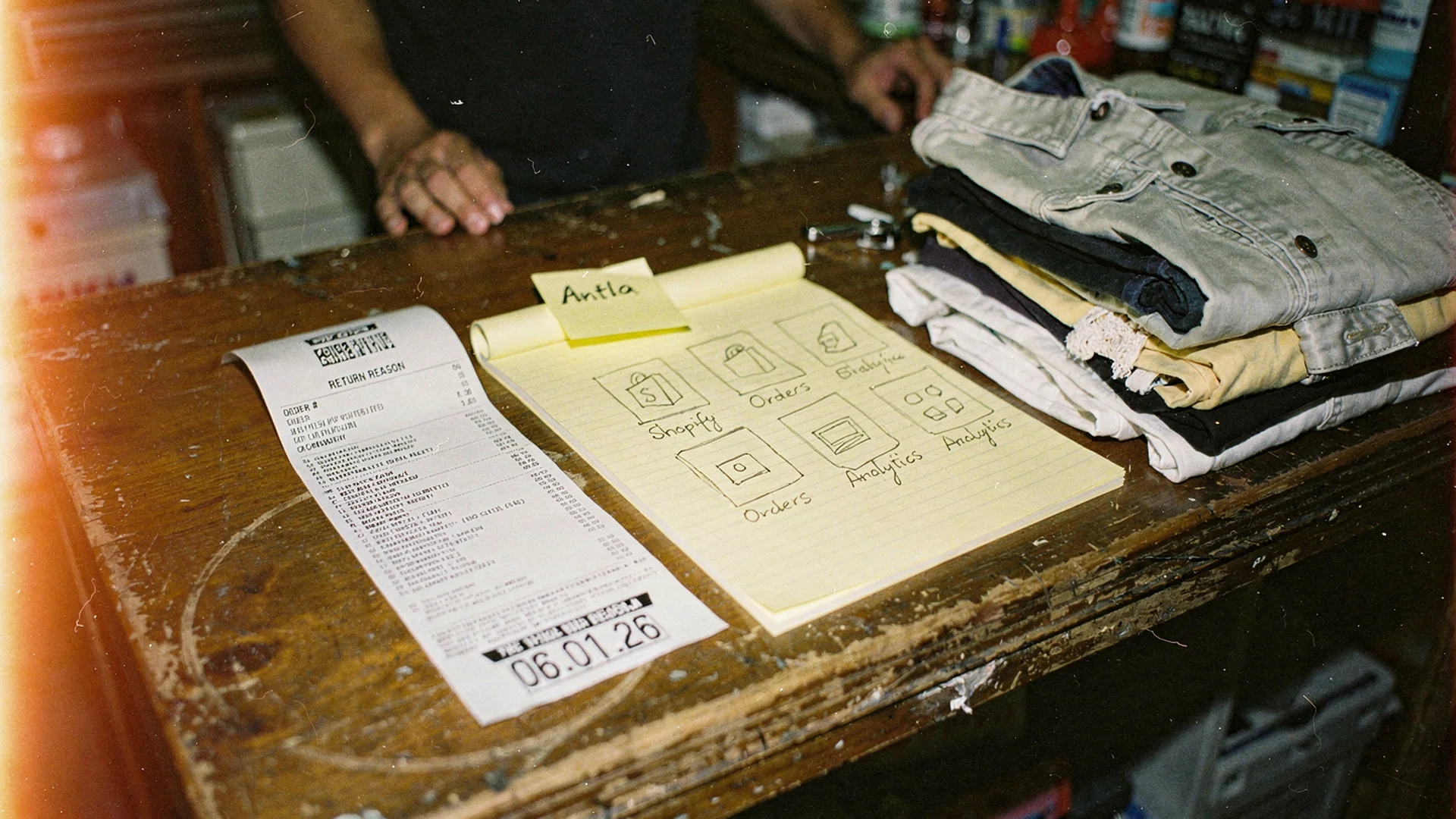
Return prevention works best when merchants choose app categories by the shopper problem they fix, not by app store hype.
The Four App Categories That Actually Move Return Rate
Fashion merchants usually buy return software too late in the funnel. The return center matters, but the most expensive returns were already created upstream on the product page.
Here is the stack in plain English:
| App category | Job | What it fixes | Where it sits |
|---|---|---|---|
| Fit visualization and virtual try-on | Helps shoppers picture the garment on themselves | ”I could not tell how this would look on me” | PDP before add-to-cart |
| Sizing and fit guidance | Clarifies size selection | ”I picked the wrong size” | PDP around variant selection |
| Reviews and fit-specific UGC | Adds peer proof and expectation calibration | ”The product looked different in real life” | PDP and email |
| Returns portal and exchange flow | Recovers margin after a return starts | ”I need a different size, not a refund” | Post-purchase |
That order matters. If you start with the portal alone, you may improve exchange rate, but you are still processing too many preventable returns. If you start with clearer decision support, fewer bad orders enter the system in the first place.
1. Fit Visualization, The Highest-Leverage Prevention Layer
This is the category most merchants under-buy because it feels newer than reviews or size charts. It should not be the last evaluation. When return reasons mention fit, silhouette, length, flattering, looked different, or not what I expected, visualization belongs near the top of the stack.
Antla virtual try-on fits in this slot. It is built for Shopify fashion brands that need shoppers to see the garment on themselves before checkout. Across Antla merchants, try-on users average a 35% conversion lift and stores can see up to 30% return reduction when visualization closes the expectation gap early enough.
This is not a replacement for size charts. It is the missing visual layer that makes those charts easier to trust. Pair it with best virtual try-on for Shopify fashion if your team is still evaluating vendors, and with fit confidence in ecommerce fashion if you need the behavioral logic behind why self-preview changes purchase quality.
What to look for in this category:
- Shopify-native setup, so merchandising does not wait on a custom build
- Clear PDP placement on mobile, where most fashion browsing happens
- Reporting that lets you compare try-on users vs non-users
- A realistic path to reuse preview behavior in email, retargeting, or support
If your store sells dresses, denim, occasionwear, or silhouette-sensitive products, start here before arguing about portal flows.
Snap’s retail AR case studies include fashion merchants who saw lower return rates when shoppers used try-on before purchase. Business of Fashion on generative try-on adds the usage point: demo polish does not matter if shoppers never open the tool on the live PDP.
2. Sizing And Fit Guidance, The Structure Around The Visual Layer
Virtual try-on answers one kind of uncertainty. Sizing guidance answers another. The best sizing apps reduce ambiguity around the labeled size, garment measurements, stretch, rise, inseam, and compare-to-brand logic.
This is where many merchants make an avoidable mistake. They buy a sizing widget and expect it to solve visual fear. It will not. A correct size recommendation can still leave a shopper wondering whether the cut will cling, crop, puddle, or flatten. That is why sizing guidance and visualization should be complementary, not competing line items.
Narvar’s guide to reducing apparel returns recommends category-specific measurements and fit notes on the PDP, not generic size tables alone.
Use sizing tools to handle:
- Numeric conversion across US, UK, and EU labels
- Measurement capture and recommendation logic
- Category-specific size education, such as inseam and rise for denim
- Returns caused by label confusion rather than silhouette doubt
This layer gets even stronger when it is paired with category context. Which fashion categories need virtual try-on and fashion returns by category benchmarks help teams separate products that mostly need better size logic from products that need both size logic and self-preview.
3. Reviews And Fit-Specific Social Proof
Reviews software is not new, but most brands still use it badly. A wall of five-star praise does very little to prevent returns unless the content helps a future shopper calibrate fit expectations.
The useful review layer includes:
- Fit comments from verified buyers
- Body-context details like height, usual size, and stretch perception
- Customer photos that show drape outside studio lighting
- Q and A that resolves repeated hesitation on the PDP
Narvar on lowering ecommerce returns ties stronger product evidence on the page to fewer expectation-gap refunds.
This category is especially valuable when combined with fit visualization. The shopper sees herself in the garment through try-on, then reads that someone with similar concerns found the waist true or the sleeves short. Confidence compounds.
Judge review quality against shopify fashion return rate benchmarks, not vanity star counts. If “not as expected” dominates, generic reviews are not doing their job.
4. Returns Portals And Exchange Flows
Returns portals do matter. They matter most after you have done the upstream work.
A strong portal can:
- Steer size-related returns toward exchanges
- Collect structured reason codes instead of vague support notes
- Reduce manual support handling
- Make store credit and instant exchange feel easier than refund
But the portal is not a prevention tool by itself. It is a recovery tool with some prevention value if its analytics feed back into merchandising. That is why fashion operators should connect portal reason codes to PDP fixes, size chart improvements, and try-on rollout decisions.
Shopify’s enterprise returns guide is useful background here, but the practical merchant move is simpler: treat portal data as diagnosis, not victory. If the portal shows repeated return reasons on the same dress family, move that family into your visualization pilot.
A Buying Framework, Match The Tool To The Return Mechanism
Do not ask, “Which app has the best reviews?” Ask, “What behavior is creating margin loss?”
Use this decision map:
| Symptom | Most likely missing layer | First app category to test |
|---|---|---|
| Shoppers order two sizes and keep one | Fit uncertainty, bracketing | Visualization plus sizing |
| High return reason: too small or too large | Numeric sizing mismatch | Sizing and fit guidance |
| High return reason: looked different in person | Expectation gap | Visualization plus reviews |
| High support volume during returns | Workflow friction | Returns portal |
| Long PDP dwell time, low add-to-cart | Hesitation before commitment | Visualization |
If bracketing shows up in your data, reduce bracketing orders on Shopify fashion is the next practical read. Bracketing is one of the clearest signals that the store has not made the decision easy enough before payment.
A Smarter Rollout Sequence For Lean Teams
Most brands should not install four new apps in one sprint. They should sequence them.
Phase 1, Diagnose
Pull 60 to 90 days of return reasons by category and SKU. Separate size issues from expectation issues. Watch for patterns like:
- Dresses with flattering-related returns
- Denim with inseam or rise confusion
- Occasionwear with high refund rates after promo spikes
- SKUs with unusually high multi-size orders
If bracketing is a big part of the damage, read the cost of bracketing in online fashion before you choose tools. The economics usually justify investment faster than teams expect.
Phase 2, Pilot The Visual Layer
Install Antla on Shopify or your chosen visualization tool on five to ten high-risk SKUs. Measure:
- Try-on engagement rate
- Conversion rate for try-on users vs non-users
- Return rate on those SKUs
- Return reasons before and after rollout
When try-on is solving a real uncertainty problem, the signal tends to appear quickly. Engagement rises, conversion improves for the cohort that uses preview, and return tags shift away from looked different or not flattering.
Phase 3, Tighten Sizing Around Winners
Once visualization proves the category is worth attention, refine size charts, fit notes, garment measurements, and recommendation logic around those same products. This is how the stack compounds rather than fragments.
Phase 4, Upgrade Review Quality
Prompt for fit-specific review content from verified buyers. Ask questions that produce useful future guidance, not generic praise.
Phase 5, Use Portal Data As Feedback
Route size-related exchanges into your portal, but make sure the data is flowing back to merchandising. A portal that never informs PDP changes becomes a very efficient way to repeat the same problem.
What Merchants Should Stop Doing
A few patterns show up over and over:
- Buying a returns portal and calling the problem solved
- Expecting a size chart to fix visual hesitation
- Treating virtual try-on as a gimmick instead of a decision aid
- Using reviews as social wallpaper instead of fit evidence
- Measuring only gross conversion instead of order quality and return rate
Fashion return prevention is not one app. It is one decision system spread across several layers. The best app stack is the one that removes the most uncertainty before the shopper presses buy.
The Shortlist Most Brands Actually Need
If you want the shortest useful version:
- A fit visualization layer for high-risk categories, which is where Antla belongs
- A sizing and fit guidance layer for numeric clarity
- A review system that produces fit-specific proof
- A returns portal that prioritizes exchanges and structured reason capture
That sequence is better than the usual “portal first” playbook because it attacks root cause before downstream handling.
More on returns prevention
| Topic | What it covers | Start here if |
|---|---|---|
| Shopify fashion return rate benchmarks | Benchmark your store | Leadership asks “are we normal?” |
| Fit confidence in ecommerce fashion | PDP decision quality | Returns cite look or expectation |
| Reduce bracketing orders | Stop multi-size orders | Bracketing shows up in ops data |
| Wrong-size returns online | Size vs look returns | Size chart is strong but returns persist |
| Virtual try-on apps compared | Vendor evaluation | You are buying visualization software |
| Fashion bracketing explained | Bracketing economics | Finance wants the bracketing story |
| Returns statistics 2026 | Cited macro numbers | You need numbers for a deck |
If the goal is fewer returns before the label is printed, read virtual try-on reduces returns before checkout.
Frequently Asked Questions
What kind of Shopify app reduces fashion returns the most?
The highest-leverage category is usually fit visualization on products where shoppers cannot confidently predict drape, proportion, or flattering fit from standard photos alone. For many fashion brands, that means trying virtual try-on before over-investing in downstream returns software.
Should I start with a returns portal or a PDP app?
Start with the PDP layer if your biggest return reasons originate from uncertainty before purchase. A returns portal improves recovery and exchange handling, but it does not stop shoppers from placing the wrong order in the first place.
Where does Antla fit in a returns prevention stack?
Antla fits in the fit visualization category. It helps Shopify fashion shoppers preview garments on themselves before checkout, which can raise conversion by about 35% on average for try-on users and contribute to return reduction of up to 30% when expectation mismatch is the main issue.
Can sizing apps replace virtual try-on?
No. Sizing tools help shoppers choose a labeled size, but they do not fully answer how the garment will sit, flatter, or look on a specific body. The strongest stores use sizing guidance and visualization together.
How should I measure whether a returns app is working?
Measure return rate by category and SKU, exchange rate, bracketing rate, and reason-code movement, not just top-line conversion or app engagement. A good tool should improve order quality, not only add more interactions to the page.
Related reading
- Best virtual try-on for Shopify fashion
- Fashion returns by category benchmarks
- Cognitive dissonance and expectation gaps
About the author: Aaron is the founder of Antla. After years of frustrating returns, never looking like the supermodels on product pages, he set out to make fashion personal by helping shoppers see themselves in the outfits they want to buy. He prefers return prevention stacks that remove guesswork before checkout, not just prettier portals after the order is already wrong.
If your team is still treating returns as a post-purchase software problem, start with the visualization layer first. Install Antla on Shopify on one high-return category, then use this guide to decide which adjacent tools actually deserve budget.