

Virtual Try-On for Dresses: Wedding and Prom Stakes
Virtual try-on for dresses helps wedding and prom shoppers preview silhouette, neckline, and hem length before a fixed event date closes reorder options.

The hem arrives two inches short. The bodice gapes at the sternum. The satin catches light beautifully on the model and strangely on her. The wedding is in eleven days. There is no calm reorder window.
Occasion dresses are not ordinary apparel purchases. They carry a calendar, a photograph budget, and a social verdict. That combination makes online fit risk expensive in ways a basic tee never will be. For the broader Shopify adoption frame, see AI virtual try-on for Shopify.
Yes, you can virtually try on wedding guest, bridesmaid, and prom dresses on many Shopify fashion stores in 2026. AI try-on shows silhouette, neckline, hem length, and drape on your uploaded photo. It does not replicate fabric hand-feel or every alteration, but it answers the question flat studio shots leave open: how will this read on me before the event?
What follows: why occasionwear is the highest-stakes fit category online, which garment variables actually drive bracketing, and how merchants can deploy try-on without turning a deadline purchase into a pressure funnel.
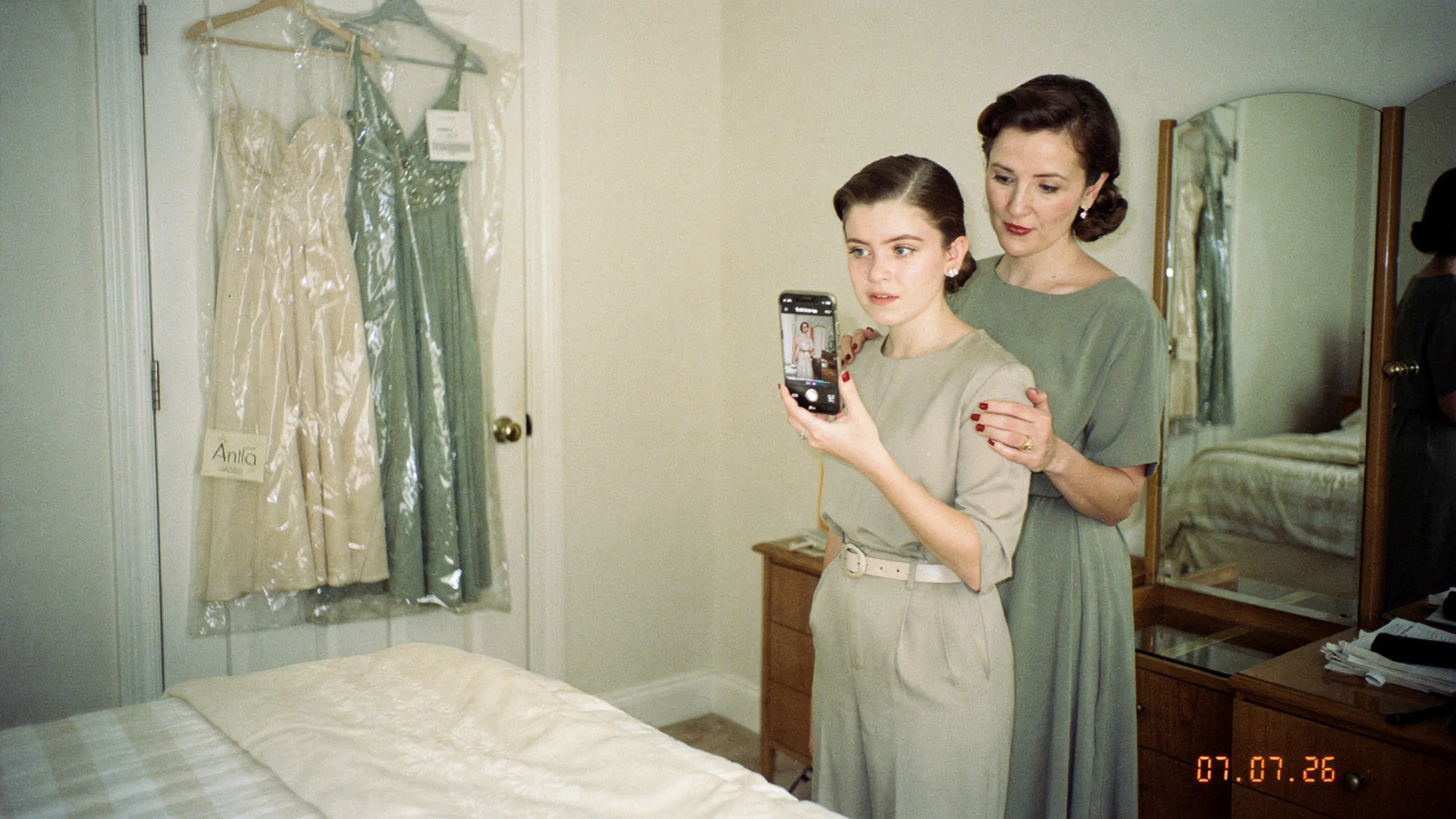
Wedding and prom shoppers need self-referenced preview because the event date removes the luxury of bracketing three sizes and returning two. Occasionwear editorial in 1950s film Antla style, for timeless dress brands where fit confidence drives loyalty.
The Deadline Changes the Economics of a Wrong Order
Basics forgive timing. Occasionwear does not.
A prom shopper ordering in April needs the correct silhouette before alterations close. A wedding guest buying for a destination weekend cannot assume a replacement ships in time. A bridesmaid coordinating dye lots and hemlines loses group cohesion when one member bracketed three sizes and kept one.
High average order value raises the stakes further. Returns on a low-cost basic hurt margin. Returns on a high-AOV floor-length gown hurt margin, logistics, and trust at once.
Narvar’s apparel returns guide recommends garment measurements, fit notes, and review context on dress PDPs because appearance mismatch drives apparel refunds even when the labeled size technically fits. Occasion shoppers are not returning abstract size errors alone. They are returning dresses that did not look like the event in their head.
That is why occasionwear belongs at the front of any virtual try-on rollout conversation. The category has the pain intensity, the AOV, and the return sensitivity to justify preview infrastructure early.
Why Dress Fit Is Harder to Judge From Flat Photos
A dress PDP can be technically complete and still visually insufficient. Occasion shoppers are evaluating a moving set of variables at once.
Silhouette and waist placement
A-line, sheath, mermaid, and fit-and-flare read differently depending on where the waist hits relative to the shopper’s natural waist or empire line. Studio shots on tall models flatten that judgment.
Neckline and coverage
Halter, cowl, sweetheart, and plunge necklines change the upper-body story. Shoppers worry about bra visibility, shoulder width, and décolletage in photos that will outlive the event.
Hem length and proportion
Midi, tea-length, and floor-length hems interact with height and heel choice. A size chart says nothing about whether the skirt clears the floor cleanly in heels.
Bodice structure
Bonings, ruching, smocked panels, and corset seams behave differently across bust and ribcage shapes. Two shoppers in the same labeled size can experience radically different bodice fit.
Drape on real proportions
Chiffon floats. Satin holds. Taffeta stands away from the body. Jersey clings. Flat photography rarely communicates how the fabric will behave on a fuller hip, a narrow shoulder, or a long torso.
Undergarment compatibility
Strapless gowns, open backs, and sheer overlays force undergarment planning. Shoppers want to know whether the dress reads polished with the bra or shapewear they actually own.
Size charts address label selection. They do not fully answer silhouette anxiety. That gap is where bracketing starts.
Wedding Guest, Bridal Party, and Prom: Same Mechanism, Different Pressure
The garment physics are similar. The emotional frame is not.
Wedding guest shoppers worry about dress code interpretation, color palette harmony, and not competing with the couple. They need confidence that the dress looks appropriate and flattering, not merely that it ships in time.
Bridesmaid and bridal party shoppers face group coordination. Hem consistency and shade matching matter. A wrong pick affects photos, not only the individual wearer.
Prom shoppers often have a single high-visibility night, tight budgets, and limited alteration access. They bracket aggressively because there is no casual redo.
Across all three, the purchase is identity-heavy. Shoppers are not buying fabric. They are buying a version of themselves in a room full of cameras.
Shopify’s AR shopping research links immersive product visualization to stronger purchase confidence because the shopper can evaluate the item in her own context instead of an idealized one. On occasion dresses, that context is exactly what the shopper lacks when she stares at a model who shares none of her proportions.
Virtual Try-On for Dresses: What Size Charts Cannot Show
A strong size chart might get her into the right labeled size. Try-on answers the questions that decide whether she keeps the order.
- Whether the neckline sits elegantly or awkwardly on her collarbone
- Whether the waist definition lands where she expected
- Whether the skirt volume overwhelms or flatters her frame
- Whether the hem line looks event-appropriate with her height
- Whether the overall look matches the formality she is targeting
That is a different decision layer than bust-waist-hip inches. It is also the layer that drives “not flattering” returns when the tag size was technically correct. For an honest read on where today’s renders are reliable and where they still miss, see does virtual try-on work?
For category prioritization beyond dresses, which fashion categories need virtual try-on ranks occasionwear near the top of the urgency list for good reason.
Why Occasion Shoppers Bracket Aggressively Online
Bracketing is rational when the store cannot show outcome on the shopper’s body and the event date removes slack.
A prom buyer may add two sizes because she cannot tell whether the bodice runs small through the ribcage. A wedding guest may order long and regular lengths because the model’s height is not disclosed clearly. A bridesmaid may hedge across silhouettes when the PDP copy says flattering but does not specify where the dress clings.
Bracketing protects the shopper. It punishes the merchant with doubled fulfillment, return processing, and lost inventory liquidity during peak season.
Virtual try-on does not eliminate taste risk. It reduces defensive ordering by giving the shopper a self-referenced image before she forks the cart into backup sizes.
A Merchant Playbook for Occasionwear Stores
Occasion retailers win when preview feels helpful, not frantic. The event already supplies enough urgency.
PDP placement
Put try-on beside the hero gallery on mobile first. Occasion shoppers research on phones during lunch breaks and late-night scrolling. Burying the button below twelve accordion tabs wastes the highest-intent moment.
Shopify’s product page guidance treats clarity and visual evidence as core conversion levers. On dresses, visual evidence means proportion on the shopper, not another angle on a six-foot model.
Photography discipline
Try-on inherits your source image. Shoot the dress on a hanger or ghost mannequin with clean edges, accurate color, and full-length visibility. Dark or cropped heroes weaken preview exactly where occasion shoppers are least forgiving.
Fit copy written like a stylist, not a catalog
Replace “elegant silhouette” with “defined at the natural waist, skims hip without cling, lined bodice.” Occasion buyers need garment behavior language.
Email to browsers, not only buyers
Shoppers who tried on but did not purchase left a signal. A follow-up email with the generated preview image reminds them what they already validated. This works especially well two to three weeks before prom season or wedding weekends.
Urgency without pressure
Ship-date reminders are fair. Panic countdowns are not. Copy like “confirm your size early for alteration time” respects the deadline without implying the dress will vanish in ten minutes.
Measure returns by reason code
Track not as expected, too small through bodice, and hem too short separately. Occasionwear returns are often visual misfires wearing size language.
Pair operations work with fashion returns reduction strategy on Shopify for a fuller policy and PDP stack view.
What Antla Merchants See on Women’s Dress PDPs
Antla serves 100+ Shopify fashion brands, including occasion-heavy catalogs where one wrong hemline becomes a support ticket with a calendar attached.
On women’s dress PDPs, Antla merchant data shows that shoppers who preview before checkout can reach roughly double the conversion rate of shoppers who view the same page without try-on. That multiplier appears on high-hesitation silhouettes where the shopper’s main blocker is visual outcome, not price.
Returns tell the same story from the other direction. When preview closes the expectation gap before checkout, Antla stores have recorded up to 30% lower return rates on fit-sensitive categories. Occasionwear benefits when the shopper stops ordering three sizes “just in case.”
The app holds a 5-star rating across 80+ reviews on the Shopify App Store, which matters for merchants who cannot afford a PDP experiment that breaks mobile performance or needs a developer on retainer.
Antla virtual try-on installs without code and embeds into the product gallery from existing photography. For a ranked view of which commercial benefits show up first, see virtual try-on benefits for fashion stores.
Frequently Asked Questions
Can I virtually try on a wedding guest dress before I buy?
On stores that run AI virtual try-on, yes. You upload a photo and receive a preview of the specific dress on your body, including broad silhouette, neckline, and hem direction. Use it alongside stated garment measurements and alteration timelines.
Does virtual try-on work for prom dresses with long skirts and fitted bodices?
Long skirts and fitted bodices are exactly where self-referenced preview helps most, because hem proportion and ribcage fit drive bracketing. Extreme mermaid hems and very stiff structured bodices may still need in-person alteration planning after the preview narrows your size choice.
Should occasionwear stores still offer free returns if they add try-on?
Many stores keep fair return policies for trust. Try-on reduces defensive bracketing; it does not remove taste risk entirely. The commercial win is fewer expectation-mismatch returns, not zero returns.
More Fit and Occasionwear Reading
- Fit confidence in ecommerce fashion
- Shopify fashion return rate benchmarks
- Reduce bracketing orders on Shopify fashion
About the author: Aaron is the founder of Antla. After years of frustrating returns, never looking like the supermodels on product pages, he set out to make fashion personal by helping shoppers see themselves in the outfits they want to buy. He thinks occasion dresses are the clearest proof that online fit is an emotional problem with a logistics bill.
If your dress PDPs convert browsers who never commit, start with your five highest-traffic occasion SKUs. Add Antla on Shopify, place try-on beside the hero image on mobile, and compare bracketing on preview users before the next prom or wedding season peak hits.