

Virtual Try-On Benefits for Fashion Stores, Ranked by Impact
Seven virtual try-on benefits for fashion stores, ranked by merchant impact. Returns, conversion, engagement, fit confidence, and more with evidence.

Most listicles open with conversion lift because it sounds exciting in a board deck. Finance usually cares about returns first.
That ordering mismatch is why generic benefit roundups underperform for operators. A performance marketer needs to know which outcomes move P&L fastest, which compound over quarters, and which are nice side effects you should not build a business case on alone.
Virtual try-on benefits for fashion merchants are the measurable commercial outcomes that follow when shoppers preview garments on their own photo before checkout: lower return rates, higher conversion among preview users, longer PDP engagement, stronger fit confidence, richer marketing assets, and product-intent signals your merchandising team can act on. The ranking below weights impact by how quickly and reliably each benefit shows up in operating metrics, not by which stat looks best on a vendor slide.
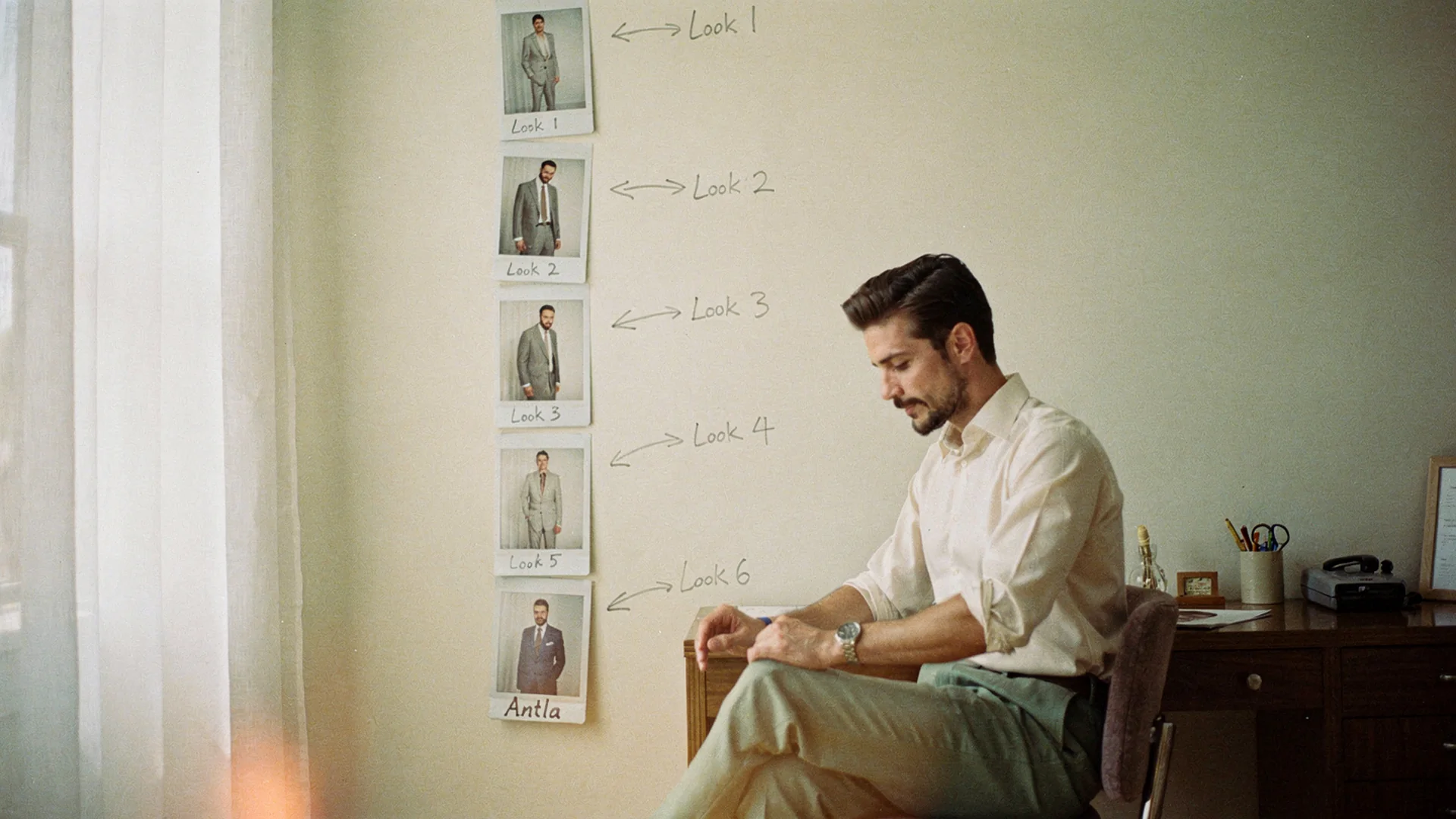
Returns economics usually beat headline conversion stats when you rank try-on benefits by what finance feels first. Film-grain editorial in mid-century Antla style, for merchants whose fashion brands outlast trend cycles.
Why This Order Differs From Generic Roundups
Vendor marketing puts conversion first because it is easy to demo. Returns reduction belongs at the top for most fashion stores because refund logistics, restocking, and lost margin hit faster than incremental revenue from a slightly higher add-to-cart rate.
Engagement metrics matter, but they are a leading indicator, not the destination. Brand differentiation is real yet slow to isolate in attribution. This list ranks by merchant impact: dollars recovered, orders saved, and decisions improved before vanity metrics.
The Seven Virtual Try-On Benefits, Ranked by Merchant Impact
1. Return Rate Reduction
Online fashion returns run high enough to make fit uncertainty a margin problem, and a large share trace back to fit and expectation mismatch, not product defects. Virtual try-on closes the visualization gap before the order ships.
Narvar’s Rethinking Returns research recommends augmented reality and body-aware preview to show how items look on the shopper, not just on a model. That is the mechanism: fewer surprises at the unboxing moment.
Antla merchants have seen returns fall by up to 30% when try-on addresses the main expectation gap on silhouette-sensitive SKUs. For the full evidence stack, read does virtual try-on reduce returns?.
Return reduction also cuts bracketing behavior. When shoppers order two sizes to hedge, you pay shipping twice and often lose one sale entirely. Preview reduces that defensive ordering pattern on categories where drape and proportion drive regret.
2. Conversion Lift Among Try-On Users
Conversion lift is the second-strongest benefit because it shows up in revenue reports quickly, usually within the first pilot month when you compare try-on users to non-users on the same SKUs.
Shopify’s virtual shopping research treats immersive PDP tools as measurable conversion levers, not engagement toys. The lift concentrates among shoppers who were already interested but hesitating on fit.
On women’s product pages especially, Antla stores have seen conversion double for shoppers who complete a preview versus those who do not. That magnitude varies by category, but the pattern is consistent: visualization removes the last blocker for shoppers who were one doubt away from leaving.
Track cohort conversion, not sitewide averages. Sitewide numbers dilute the signal because most visitors never start try-on.
3. Fit Confidence Before Checkout
Fit confidence is the psychological benefit with the clearest commercial tie. It is the shopper’s belief that the garment will look and feel right on her body, not just that she picked the correct size label.
Size charts answer the label. Try-on answers the silhouette. That distinction matters on blazers, midi dresses, wide-leg denim, and anything where proportion drives the purchase decision.
Fit confidence in ecommerce fashion explains how to measure this through behavior signals rather than surveys. Mirror, self, and fit confidence goes deeper on why self-referenced preview changes decision quality compared with model-only photography.
Fit confidence is ranked third because it is the mechanism behind both returns and conversion. It is foundational, but finance rarely budgets for confidence alone. They budget for the metrics it moves.
4. Engagement and Time on Site
Shoppers who interact with try-on stay on the PDP longer. That engagement is a leading indicator that the shopper is doing serious evaluation work, not bouncing after a quick scroll.
Engagement rises to roughly 2-3x longer onsite when shoppers actively preview on Antla stores. Longer sessions correlate with higher intent, but they are not the goal. A shopper who spends six minutes trying on and still leaves is a UX problem, not a win.
Use time-on-page together with try-on start rate and try-on-user conversion. Engagement without downstream conversion means placement or category selection needs adjustment.
5. Shopper Intent and Product Signals
Every try-on session is a signal: which SKUs shoppers are seriously considering, which styles they preview but abandon, and which products generate repeat previews without purchase.
That data feeds merchandising decisions, email retargeting, and inventory planning. A dress with high try-on volume and low conversion may have a fit-note problem. A blazer with low try-on starts but strong conversion may have a visibility problem.
This benefit ranks mid-list because it compounds over time rather than showing up in week-one dashboards. Stores that feed try-on data into weekly merchandising reviews get more from the tool than stores that treat it as a PDP widget only.
6. Marketing Asset Reuse
Try-on outputs can extend beyond the PDP into email flows, social campaigns, and retargeting creative. A shopper-generated preview is more personal than a stock model shot, which can lift click-through on lifecycle messages.
The reuse path works best when your vendor supports shareable outputs and you have consent language covering marketing use. Not every try-on platform makes export easy, so confirm this capability before you build campaigns around it.
This ranks below intent data because it requires additional workflow investment. The benefit is real, but it is a multiplier on existing traffic rather than a standalone revenue driver.
7. Brand Differentiation and Experience
Virtual try-on still separates credible fashion stores from catalog-only competitors in many categories. Google and Vogue Business’s Unfolding AI study documents growing consumer interest in AR try-on, especially among values-driven shoppers who expect richer online evaluation.
Differentiation matters more as the technology becomes common. Today it can be a genuine edge in occasionwear and premium categories. Tomorrow it may be table stakes, similar to free returns was a decade ago.
It ranks last here not because it is unimportant, but because it is the hardest to isolate in attribution and the slowest to prove in incremental revenue tests. Lead your business case with returns and conversion. Treat differentiation as strategic positioning, not the primary ROI lever.
Which Benefits Show Up First vs Later
Week one to four: Engagement lift and try-on start rates appear first. Conversion lift among try-on users usually follows within the first pilot month if placement and category selection are right.
Month two to three: Return-rate shifts become visible in fulfillment data, especially on categories with high fit-related refund tags. Bracketing reductions often appear in the same window.
Quarter two and beyond: Intent signals, marketing asset reuse, and competitive differentiation compound as you integrate try-on data into merchandising rhythms and lifecycle campaigns.
Benefits by Store Profile
High-AOV occasionwear: Return reduction and fit confidence deliver the fastest payback. One wrong dress before a wedding is a full-margin loss.
Mid-market daily fashion: Conversion lift and engagement metrics often lead because traffic volume generates try-on cohorts quickly.
Basics-heavy catalogs: Benefits are real but muted. Prioritize silhouette-sensitive SKUs before rolling try-on across forgiving categories.
For the adoption decision framework, see AI virtual try-on for Shopify. For the try-on capability itself, review Antla virtual try-on.
Frequently Asked Questions
What is the biggest benefit of virtual try-on for fashion stores?
For most fashion merchants, return rate reduction is the highest-impact benefit because fit-related refunds carry direct logistics and margin cost. Conversion lift among try-on users is usually the second-strongest and fastest to measure in a pilot.
How quickly do virtual try-on benefits appear?
Engagement and try-on usage metrics appear within the first week. Conversion lift among try-on users often shows within 30 days. Return-rate changes typically need 60 to 90 days of order and refund data to read clearly.
Do virtual try-on benefits apply equally to all product categories?
No. Silhouette-sensitive categories like dresses, tailored pieces, and occasionwear see stronger returns and conversion impact than forgiving basics. Pilot on categories where flat photos create the most doubt.
Can virtual try-on benefits justify the cost for a small Shopify brand?
Yes, when you pilot on high-return SKUs and measure try-on users against non-users. A single category with measurable return reduction or conversion lift often covers monthly SaaS cost faster than sitewide averages suggest. For real pricing bands across the market, see virtual try-on software cost.
Continue Exploring Try-On for Fashion
- Psychology of virtual try-on in fashion ecommerce for why self-preview changes purchase decisions
- Which fashion categories need virtual try-on to prioritize SKUs before a full rollout
- Virtual try-on reduces returns before checkout for the mechanism behind return-rate gains
About the author: Aaron is the founder of Antla. After years of frustrating returns, never looking like the supermodels on product pages, he set out to make fashion personal by helping shoppers see themselves in the outfits they want to buy. He ranks benefits by what finance signs off on, not what demos well.
Pick five SKUs where returns hurt and conversion hesitates. Run a 60-day pilot, compare try-on users to everyone else, and let the ranked benefits above tell you whether to expand. Antla on the Shopify App Store is built for fashion brands that want that measurement path without a custom rebuild.