

Why Vision Dominates Fashion Purchase Decisions (Research)
Visual saliency and attention research explain why fashion shoppers decide from images first. Merchant tactics for Shopify PDPs and virtual try-on placement.

Your shopper does not read the size chart first. They scan the hero image, judge silhouette in under a second, and either lean in or bounce. That sequence is not impatience. It is how the visual system prioritizes information when buying fashion online.
Merchandisers often over-invest in adjective-heavy descriptions while under-investing in what the eye actually uses to decide. Research on visual saliency and consumer choice shows that attention is scarce, fast, and predictive of purchase. For Shopify fashion brands, the implication is blunt: if the PDP loses the visual decision, no amount of footer copy recovers it.
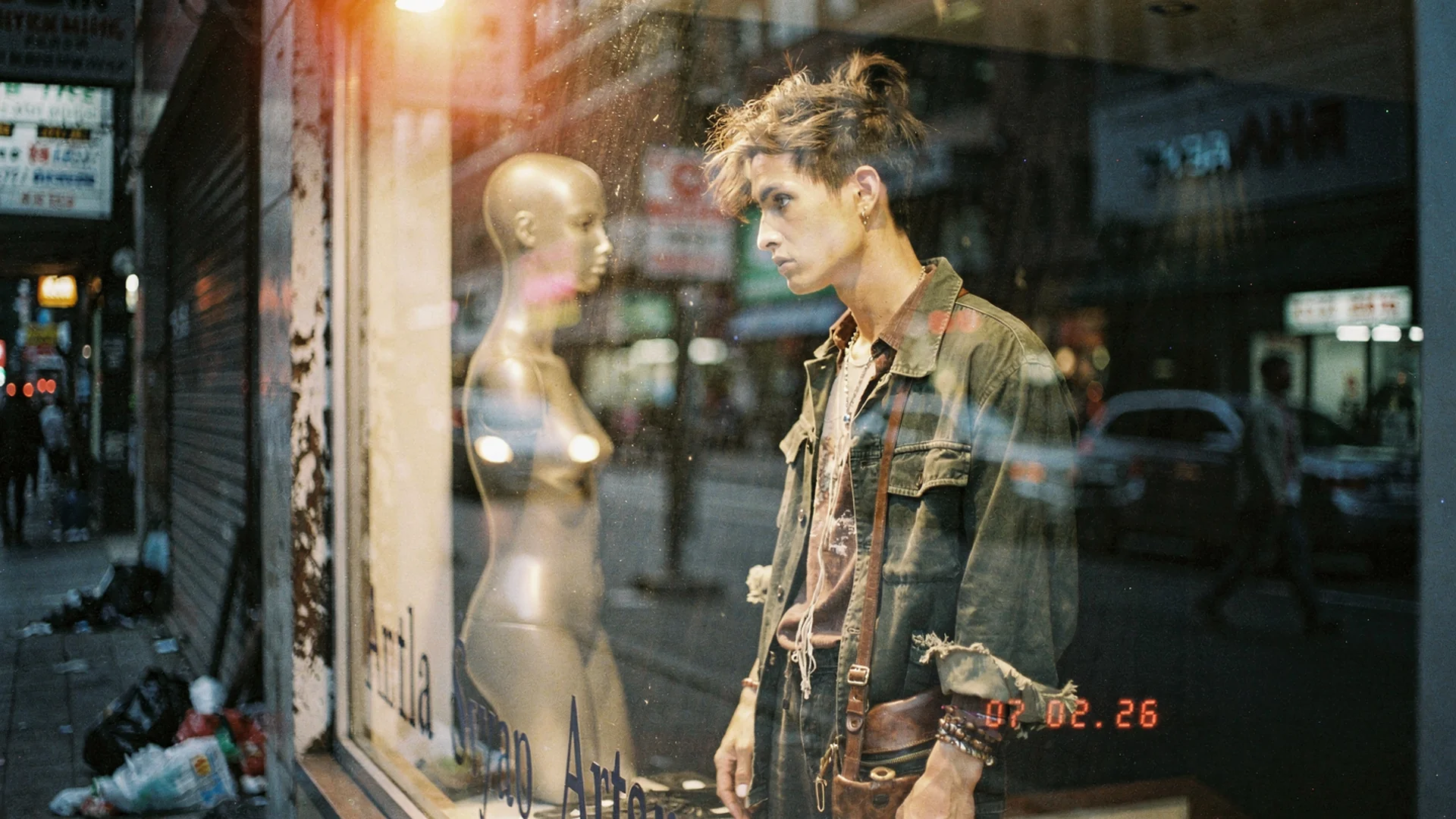
Attention lands on salient product imagery first. Fashion ecommerce must win that moment before size charts or reviews get a fair hearing.
What Is visual decision making in fashion shopping?
Visual decision making in fashion shopping is the process by which shoppers use product imagery, contrast, and salient visual features to form purchase intent before or alongside reading specifications. In apparel, where fit and silhouette are seen rather than listed, the visual channel often dominates deliberation.
What Visual Saliency Research Shows
Milosavljevic, Navalpakkam, Koch, and Rangel published a landmark study in the Journal of Consumer Psychology on how visual saliency maps to value and choice. Using eye-tracking and rapid choice tasks, they demonstrated that visually salient options capture attention and increase choice probability, even when shoppers report comparing attributes consciously.
Fashion PDPs are a sequence of saliency battles:
- Hero image vs thumbnail row vs sticky buy box
- Model skin tone and body type vs shopper self-image
- Pattern and color contrast vs background clutter
- Video motion vs static gallery fatigue
When the hero model does not resemble the shopper, saliency still fires, but the brain tags the image as someone else. The shopper must mentally transplant the garment. That extra step costs conversions.
Eye-tracking studies on consumer attention (including Clement et al. on visual fixations and choice) reinforce that duration and order of looking predict selection. Merchants rarely see this data on their own stores, but the pattern repeats across categories: what gets looked at gets bought, assuming trust and price are within range.
From Store Shelf To Shopify Gallery
In physical retail, packaging contrast and shelf position drive saliency. Online, you control fewer environmental cues but more pixels per SKU.
| In-store saliency lever | PDP equivalent |
|---|---|
| Eye-level placement | First screen hero on mobile |
| Package color block | Background separation in photos |
| Facings count | Number of on-body angles |
| Mannequin styling | Complete outfit context |
| Mirror moment | Virtual try-on self-preview |
The last row is the online substitute for the fitting-room mirror. Without it, vision still dominates, but it dominates on the wrong body.
Why Copy Loses The Race (But Still Matters)
Fabric composition paragraphs matter for care, ethics, and filter shoppers. They rarely rescue a PDP that failed visually in the first three seconds.
Strong merchants treat copy as confirmation, not simulation:
- Vision answers: Do I want to look like this?
- Copy answers: Is this fabric right for summer travel?
- Reviews answer: Did people like me keep it?
- Size charts answer: Which label should I order?
When vision fails, shoppers over-weight reviews and bracket sizes. That shows up in support tickets and return reasons. Connect to visual working memory and size uncertainty and why size charts fail on Shopify fashion.
Category Examples Where Vision Wins First
Wide-leg trousers: The shopper judges leg line and proportion from photos before inseam numbers register. See rise and length denim fit for fit variables vision must carry.
Structured blazers: Shoulder line reads instantly. Our shoulder structure and outerwear fit guide lists what photography must show.
Swim and bodysuits: Coverage and transparency are visual trust problems. Read coverage and transparency on Shopify.
Jewelry: Scale on the face is purely visual. Why shoppers want to see earrings on themselves applies the same vision-first logic at accessory scale.
Merchant Tactics: Design PDPs For The Eye
1. Separate salient hero from informational gallery
Use the hero for the single strongest on-body angle. Put fabric macro shots and detail crops in secondary positions so they do not compete with silhouette.
2. Match model diversity to customer reality
If your repeat buyers cluster in mid-size bodies, a single straight-size model creates saliency without recognition. Shoppers look, but do not self-insert.
3. Add self-referenced preview where simulation fails
Antla virtual try-on lets shoppers upload a photo and preview the garment on themselves. Try-on users on Antla stores often show 35% higher conversion on average and roughly 2-3x longer product-page engagement, which is consistent with vision finally running on the correct body.
4. Audit mobile contrast and load order
Processing fluency overlaps here: blurry, slow, or crowded galleries reduce trust. See processing fluency on fashion PDPs.
5. Align ads with PDP saliency
If your ad creative shows movement and full-length context, do not land shoppers on a flat lay crop. Visual dissonance between ad and PDP breaks the saliency chain.
Baymard apparel research documents chronic PDP weaknesses in fashion. Treat their benchmarks as a vision checklist, not a score to gamify.
Virtual Try-On As Visual Decision Support
Try-on is not a replacement for photography. It is the moment vision becomes self-referenced. The shopper’s face, shoulders, and torso enter the saliency map.
That shift matters for:
- Dresses where waist placement differs by body
- Tops where neckline balance is personal
- Outerwear where shoulder width defines polish vs slouch
- Color choices where skin undertone changes harmony
Pair try-on with honest limits in copy: preview shows approximate drape and placement; size still comes from your chart. Virtual try-on vs size charts explains the division of labor.
Returns When Vision Lied By Omission
Returns citing “not as pictured” or “did not suit me” are often vision failures, not warehouse errors. Virtual try-on reduces returns before checkout models the economics. See also the psychology of virtual try-on overview.
Antla customers in women’s apparel especially report conversion doubling on some PDPs when try-on resolves the visual decision that model photos could not. Results vary by category, but the mechanism is vision corrected before payment.
Measurement: What To Track
Compare cohorts, not vanity session counts:
- Try-on start rate on hero SKUs
- Time on page for try-on vs non-try-on users
- Add-to-cart and conversion by cohort
- Return reasons tagged visual vs size vs quality
Try-on data for merchandising decisions covers operationalizing those signals.
Frequently Asked Questions
Why does vision dominate fashion purchase decisions?
Visual saliency guides attention and choice faster than deliberate attribute comparison. Shoppers judge silhouette, proportion, and color from images first. Research by Milosavljevic et al. in the Journal of Consumer Psychology links salient visuals to increased choice probability.
How should Shopify merchants apply visual saliency research?
Prioritize a clear hero image, mobile-first contrast, model diversity that matches your buyers, and self-referenced try-on when shoppers cannot insert themselves into model photos. Align ad creative with PDP imagery so the visual story continues.
Does product copy still matter if vision dominates?
Yes. Copy confirms fabric, care, and use case after the visual hook. It rarely substitutes for failed silhouette communication. Use copy for specs and trust, vision and try-on for simulation.
Can virtual try-on fix poor photography?
Try-on supplements photography; it does not replace accurate color, fabric detail, or construction shots. Best results combine strong galleries with self-preview on high-hesitation SKUs.
About the author: Aaron is the founder of Antla. After years of frustrating returns and never looking like the models on product pages, he built Antla so Shopify fashion shoppers can preview garments on themselves before checkout. He treats hero image order as decision architecture, not a creative afterthought.
When shoppers decide from the gallery first, give them a self-preview. Install Antla on Shopify and try virtual try-on on your highest-hesitation dresses.