

Why Shoppers Want to See Earrings on Themselves Before Buying
Why shoppers want earring preview online: face shape, metal tone, occasion anxiety, and how Shopify virtual try-on with Antla closes the gap before checkout.

Earring shoppers rarely admit the full truth in a product review. They write “pretty” or “not for me” when the real issue was scale, balance, or metal tone against their skin. They wanted to see the pair on their own face before spending $80 or $800, and the PDP only showed a model with different bone structure and lighting.
That gap is not vanity. It is risk management. Earrings sit in the most visible jewelry zone. They frame the face in every mirror check, video call, and photograph. When preview is missing, shoppers either abandon the cart or order multiple sizes and styles to bracket their uncertainty, which becomes your return problem later.
This article explains the psychology behind “see earrings on myself online” searches, why face shape and metal tone matter, how occasion anxiety shapes hesitation, and how virtual try-on on Shopify gives merchants a practical answer without pretending to replace material specs or allergy disclosures.
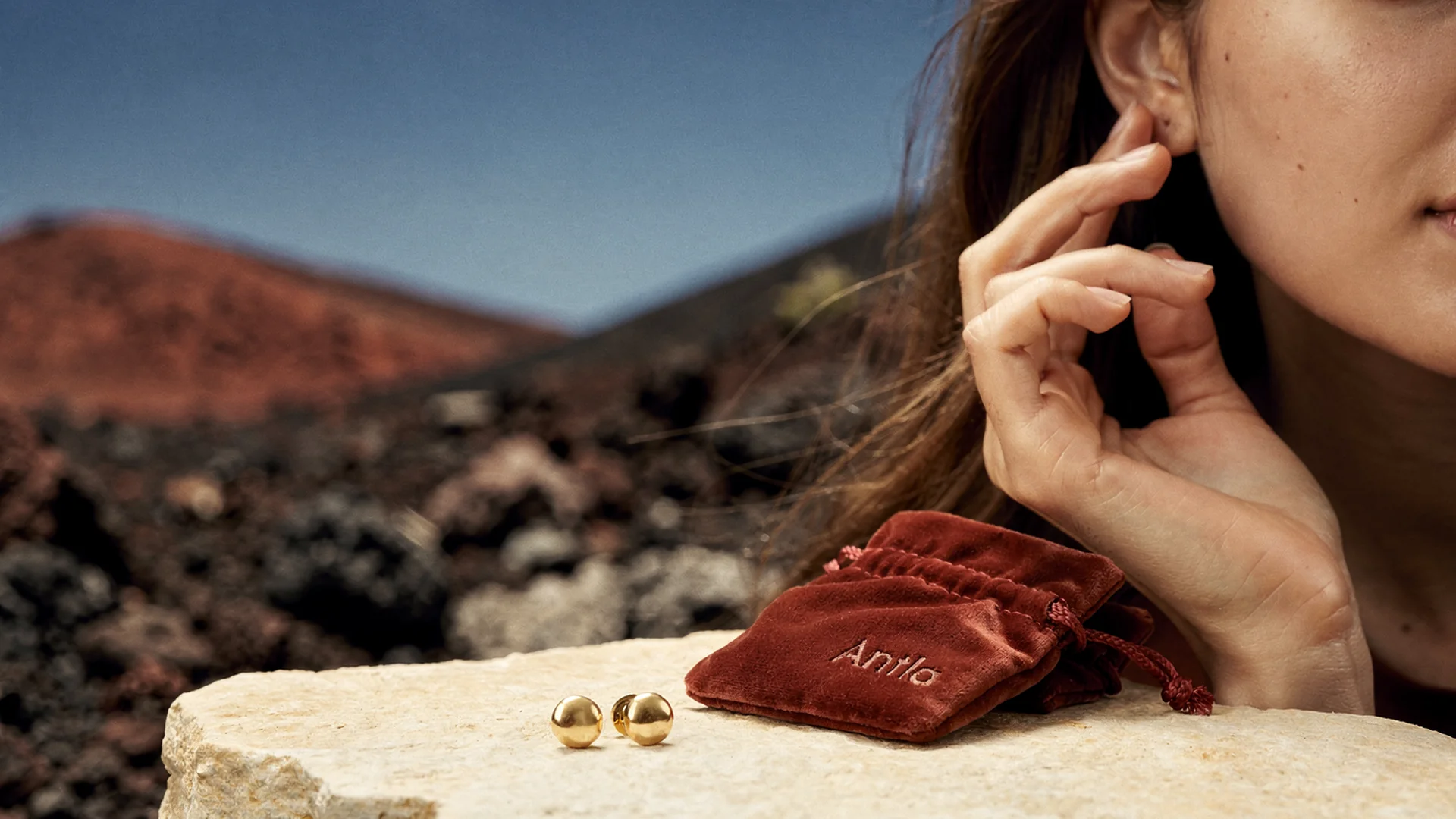
Earring purchases stall when shoppers cannot judge scale and balance on their own face, not only on a studio model.
The Visibility Problem: Earrings Are Always On Display
Unlike a ring hidden half the day or a necklace tucked under a collar, earrings sit in peripheral vision constantly. Shoppers know this intuitively. They imagine coworkers glancing during meetings, dates noticing asymmetry, and photos capturing a mismatch they cannot unsee.
That visibility raises the stakes of a wrong purchase:
- Daily wear pieces must feel natural, not costume-like
- Statement hoops must read intentional, not accidental
- Office-appropriate studs must disappear enough to pass dress codes
- Event earrings must photograph well without overpowering the face
Baymard’s accessories research documents how product imagery shapes trust. For earrings, trust requires personal context that catalog shots rarely supply.
Virtual try-on with Antla Accessories funnel lets shoppers upload a selfie and preview studs, hoops, drops, and climbers on their actual ears before checkout. That addresses look and scale. It does not replace karat weight, post type, or nickel content in your spec table.
Face Shape And Proportion Anxiety
Most jewelry brands avoid explicit “face shape” marketing because it feels dated. Shoppers still perform that math silently. They ask whether a long drop elongates an already oval face, whether wide hoops widen a round face, or whether a tiny stud disappears on a strong jawline.
Common internal questions include:
- Will these hoops look balanced with my hair length and part?
- Does this ear cuff look edgy or awkward on my ear anatomy?
- Will the drop point hit at a flattering spot on my neck?
- Do mismatched sizes look intentional on my asymmetrical lobes?
Without preview, shoppers rely on mental simulation, which fails under uncertainty. Business of Fashion technology reporting notes rising shopper demand for digital tools that reduce guesswork in high-touch categories. Earrings sit squarely in that trend.
Try-on does not need to label face shapes on the PDP. It lets the shopper answer proportion questions visually in seconds. That is why searches for “see earrings on myself online” spike before holidays and wedding seasons.
Connect category depth to virtual try-on for earrings on Shopify and hoop vs stud earring preview.
Metal Tone, Skin Undertone, And Lighting Fear
Gold is not one color. Silver is not neutral on every skin tone. Plated fashion jewelry introduces another layer: will this read cheap under office fluorescents or warm under restaurant light?
Shoppers hesitate because:
- Yellow gold can clash with cool undertones or ash hair
- Rose gold can look pink or copper depending on complexion
- Rhodium-plated silver can look stark or elegant based on contrast
- Mixed metal sets create outfit pairing anxiety
Studio photography uses controlled lighting that flatters the piece, not the buyer. The shopper imagines bathroom mirror light at 7 a.m. and doubts the purchase.
Virtual try-on renders the earring on the shopper’s uploaded photo, preserving much of their natural skin context. It is not a metallurgy lab. It is a confidence shortcut that reduces “looked different in person” returns when tone was the real issue.
Pair preview with honest metal descriptions and care notes. Return to the jewelry virtual try-on hub for evaluation criteria across categories.
Occasion Anxiety: Office, Wedding, Gift, And Everyday
Earring purchases often carry a job-to-be-done beyond adornment. The shopper buys for a specific scene in their calendar or someone else’s.
Office and professional settings: Shoppers fear hoops that read too casual or crystals that read too loud on Zoom.
Weddings and events: Buyers want photogenic balance without competing with necklines or hairstyles already chosen.
Gifts: Purchasers cannot try on behalf of the recipient and hesitate unless the brand offers strong imagery or preview links.
Everyday uniform dressing: Minimalist shoppers want confirmation that a small upgrade still feels like them.
Occasion anxiety shows up as long session times, saved carts, and support questions that start with “would this work for…” Virtual try-on shortens that loop by letting shoppers see the piece in their own context immediately on the PDP.
For broader conversion framing, read Shopify PDP conversion optimization. The fashion playbook transfers when you swap garment fit for facial proportion.
Social Proof Is Not Enough For Earrings
Reviews help, but earring reviews are noisy. A five-star review from someone with piercings, hair, and style unlike the buyer carries limited transfer. UGC galleries help taste discovery but still show other people’s faces.
Merchants often stack:
- Model photography on diverse faces
- UGC reels and static grids
- Size references in millimeters
- Comparison shots next to coins or fingers
Those assets remain valuable. They set catalog truth. They do not replace personal preview when the shopper’s question is specifically about themselves.
Antla merchants report about 35% higher conversion on average among shoppers who use try-on versus those who do not, with two to three times longer engagement on earring PDPs. That pattern suggests preview resolves real hesitation rather than adding friction.
What Shoppers Think Try-On Will Tell Them
When shoppers click “see on me,” they expect answers to a short list:
- Is the scale right for my face and hairstyle?
- Does the metal tone work with my skin in this photo?
- Does the style match the occasion I have in mind?
- Will I still like this in my usual mirror, not only in the render?
They do not expect try-on to measure lobe thickness, verify hypoallergenic certification, or confirm shipping dates. Clear PDP copy should set that boundary.
Disclaimer: Virtual try-on shows look, scale, and placement on the shopper’s photo. Post length, gauge, and material specs still belong in your product details.
Merchant Implications For Shopify Earring Stores
If return reasons cluster around “smaller than expected,” “too big for my face,” or “color not as pictured,” visualization is likely underinvested relative to photography spend.
Practical rollout steps:
- Export return and exchange reasons for top earring SKUs
- Identify styles with high browse-to-cart but low conversion
- Enable Antla Accessories funnel on five hero earrings with known hesitation
- Place try-on near primary imagery on mobile
- Measure try-on cohorts for two to four weeks before expanding
Implementation detail lives in virtual try-on for earrings on Shopify. Fashion merchants evaluating vendors should read best virtual try-on for Shopify fashion and AI virtual try-on in ecommerce.
Returns And Bracketing Behavior
When preview is missing, shoppers bracket. They order two hoop sizes, three metal tones, or a stud and drop pair intending to return half. That behavior inflates gross sales and destroys net margin after return processing.
Try-on targets bracketing before checkout. Merchants using Antla have seen return reductions up to 30% when the dominant gap was visual expectation, aligning with virtual try-on reduces returns before checkout.
Jewelry-specific returns modeling appears in jewelry returns and virtual try-on.
Marketing And Merchandising Angles
Psychology insights should shape copy, not only widget placement.
- Use invite copy that mirrors shopper language: “See these on your ears before you order.”
- Email flows can deep-link to try-on on abandoned earring PDPs
- Paid social creative can emphasize personal preview over another model shot
- Merchandising can promote “try before you gift” on popular present SKUs
Shopify fashion ecommerce trends highlight experiential PDP features as differentiation for independent brands. Preview is experiential without requiring a store appointment.
Common Mistakes When Addressing Earring Hesitation
Relying on millimeter specs alone. Dimensions help. They do not resolve face proportion fear.
Hiding try-on below gallery dots on mobile. Earring research is mobile-heavy.
Using only one model demographic. Diversity in photography plus personal preview beats either alone.
Implying allergen safety from a render. Material disclosures stay in specs.
Launching every earring at once. Hero SKU testing produces cleaner cohort data.
Where Earring Preview Fits In The Cluster
This psychology piece supports category guides across cluster 10:
- Virtual try-on for earrings on Shopify
- Hoop vs stud earring preview
- Virtual try-on for jewelry hub
- Stackable jewelry virtual try-on when ear stacks matter
Frequently Asked Questions
Why do shoppers search to see earrings on themselves online?
Earrings are highly visible and personal. Shoppers want to judge scale, balance, and metal tone on their own face before spending. Virtual try-on on Shopify answers that need with a photo upload preview before checkout.
Does face shape matter for earring purchases?
Shoppers often evaluate proportion silently, even when brands do not market by face shape. Preview lets them see balance on their own features instead of guessing from a model photo.
Can virtual try-on show metal tone against my skin?
Try-on renders the piece on your uploaded photo, which helps judge metal tone in your natural context. It does not replace karat, plating, or material specs in the product description.
Will earring try-on reduce returns?
When returns stem from scale or look mismatches, preview before checkout can reduce those orders. Antla merchants report up to 30% return reduction when visualization closes the main expectation gap.
Where To Go Next
- Jewelry virtual try-on hub
- Virtual try-on for earrings on Shopify
- Hoop vs stud preview guide
- Virtual try-on reduces returns before checkout
- Antla virtual try-on features
About the author: Aaron is the founder of Antla. After years of frustrating returns and jewelry that never looked right on product pages, he built Antla Accessories so shoppers can preview earrings, rings, and bracelets on themselves before checkout on Shopify.
Earring hesitation showing up in returns? Enable Antla on Shopify and read the jewelry virtual try-on hub for rollout guidance.