

Rise and Length Denim Fit Problems on Shopify
Reduce denim returns from rise and inseam mismatch on Shopify. Guide to fit anxiety, bracketing, size charts, and virtual try-on for jeans and bottoms.

Denim returns on Shopify rarely fail because the shopper could not find a number on a size chart. They fail because rise, inseam, and leg shape interact on their body in ways flat photography hides.
A mid-rise jean that lists a 30-inch waist still sits differently on a long torso vs a short one. A 28-inch inseam that looks cropped on the model may puddle on someone else. Shoppers respond by bracketing two sizes and two lengths, then returning half the order.
Rise and length fit uncertainty is its own problem lane. It covers jeans, chinos, tailored shorts, and any bottom where where the garment sits matters as much as the labeled size.
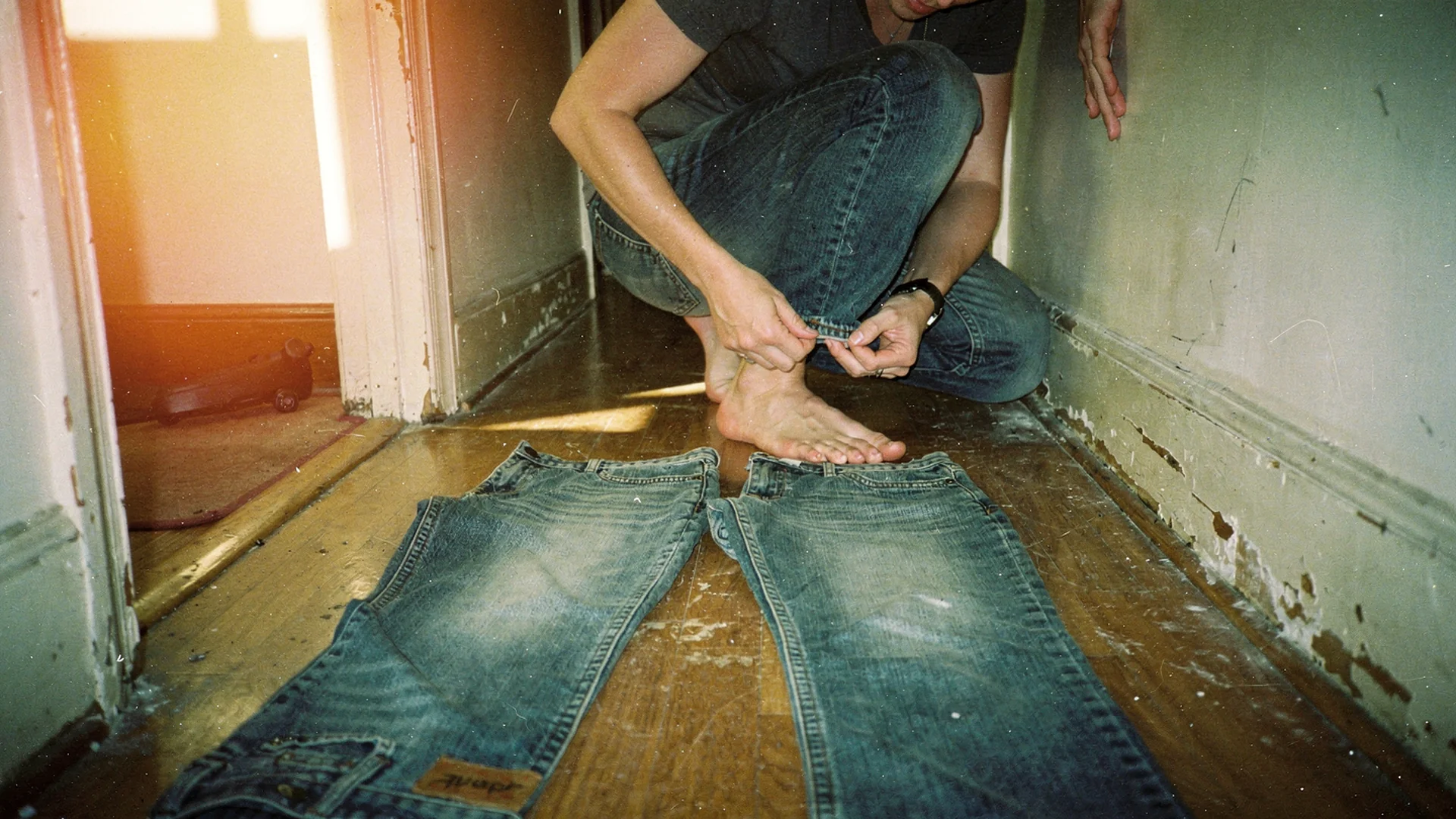
Inseam and rise need leg context, not just a grid number.
Rise And Length Are Not Size Chart Problems Alone
Body measurement charts tell shoppers how wide to measure. They do not show:
- Where the waistband will land relative to the navel
- Whether a long rise gapes at the back
- How a 32-inch inseam breaks on their leg
- Whether cropped length clears the ankle bone
Denim PDPs often show one inseam on a 5’10 model. Petite and tall shoppers must guess. That guess becomes a multi-unit order.
Why size charts fail on Shopify fashion stores covers the body-vs-garment gap. Denim is the category where that gap hurts most often.
Return Language To Watch For
Tag analysis should surface phrases like:
- “Too tight in the rise”
- “Gaped at the back waist”
- “Inseam too short or long”
- “Stacked weird at the ankle”
- “Ordered two lengths, kept neither”
Those reasons differ from pure silhouette returns covered in silhouette fit uncertainty on Shopify fashion. Wide-leg denim can have both problems. Prioritize the reason that dominates your tags.
Merchant Diagnostics Table
| Signal | Likely issue | First fix |
|---|---|---|
| High bracketing on one SKU | Rise or length guess | Try-on plus inseam model note |
| Returns cite gapping | Rise mismatch | Garment rise measurement in copy |
| Returns cite pooling hem | Inseam too long | Multiple inseam variants or clear model height |
| Mobile drop-off on size picker | Too many combos | Default inseam guidance by height band |
| Reviews mention hemming | Length expectation gap | On-body photos at multiple heights |
PDP Upgrades Before Try-On
Improvements that cost little:
- List garment rise and inseam, not only body ranges
- State model height and worn inseam in every denim hero image caption
- Show front and side on-body shots for stack height
- Link to a hemming policy if you offer it
Photography still has limits. Read product photography vs AI virtual try-on for when preview layers help.
Virtual Try-On For Denim And Tailored Bottoms
Try-on helps when it shows waist placement and hem break on the shopper without requiring imagination.
Practical rollout:
- Start with your top revenue jean and one chino SKU
- Enable on mobile first, where denim browsing concentrates
- Track bracketing rate, not only conversion
- Compare return reasons at 30 and 60 days
Virtual try-on reduces returns before checkout frames the economics. The cost of bracketing in online fashion quantifies multi-size orders.
For vendor selection, see best virtual try-on for Shopify fashion and Shopify theme compatibility for try-on.
Antla On Denim PDPs
Denim brands on Antla often report bracketing drops when shoppers preview hem height before ordering two inseams. Try-on users on Antla stores average a 35% conversion lift vs non-users on the same PDPs, with 2-3x longer engagement while shoppers compare rise placement.
Return tags citing length or rise have moved up to 30% lower on hero SKUs after try-on rollout, especially when paired with clearer garment measurements in copy.
Antla installs without code on standard Shopify themes. Selective SKU enablement lets you test one fit block before expanding across washes. 80+ five-star reviews and 100+ fashion merchants reflect category-specific focus rather than generic AR demos.
Chinos, Shorts, And Beyond Denim
The same rise-and-length physics applies to:
- Tailored chinos with mid and high rise options
- Shorts with inseam variants
- Cargo and utility pants with knee placement
Do not split these into separate SEO templates. Use fit guidance sections inside this lane and link from category pages.
If structure matters more than inseam, for example on a pleated wool trouser with crease placement, cross-read shoulder and outerwear structure only when returns mention waistband gaping combined with leg line, not shoulder pitch.
Benchmarks And Prioritization
Denim often sits near the top of category return benchmarks. Consolidated data lives in fashion returns by category benchmarks for Shopify.
Use the which categories need virtual try-on hub to confirm denim is Tier 1 for your catalog mix before you invest in swimwear or outerwear lanes.
Implementation Sequence For Lean Teams
Week 1: Audit top 10 denim SKUs for return tags and bracketing
Week 2: Add model height and garment inseam to PDP copy
Week 3: Enable try-on on three hero SKUs via no-code virtual try-on setup
Week 4: Review try-on cohort metrics and expand one wash group
Tie results to Shopify PDP conversion optimization for fashion so you do not optimize try-on in isolation.
Frequently Asked Questions
Why do jeans have high return rates on Shopify?
Rise placement, inseam length, and leg shape vary by body proportions in ways flat photos and body size charts do not show. Shoppers bracket sizes and lengths, then return pairs that sit wrong at the waist or hem.
Can virtual try-on show inseam and rise on denim?
Fashion try-on tools built for apparel show hem break and waist placement on the shopper’s photo, which addresses length and rise anxiety better than charts alone. Pair with garment measurements and model height notes for best results.
Should I create separate SEO pages for every denim fit type?
No. Rise and length fit physics belong in one merchant playbook with examples inside the article. Split URLs only when you have unique GSC demand and proprietary data, not for template swaps.
How does Antla help denim merchants specifically?
Antla offers Shopify-native, no-code try-on on selected SKUs with reporting by try-on user cohort. Denim brands use it to reduce bracketing and length-related returns while measuring conversion lift on hero fits.
Related Guides
The silhouette and benchmarks playbooks sit in the same cluster hub. Cluster 05 covers vendor evaluation and ROI when you move from diagnostics to tooling.
About the author: Aaron is the founder of Antla. After years of frustrating returns, never looking like the supermodels on product pages, he set out to make fashion personal by helping shoppers see themselves in the outfits they want to buy. Denim returns were one of the first fit problems Antla merchants asked him to solve.
Denim driving returns? Review the virtual try-on feature page, then test hero inseams after you update rise notes on the PDP.