
AI Product Pages for Fashion Ecommerce: What Works in 2026
AI product pages for fashion ecommerce: structured fit blocks, verified copy workflows, FAQ seeds, and visualization layers that reduce returns on Shopify PDPs.

Most AI product page pitches sound the same: click generate, publish, scale ads. On a fashion PDP, that workflow creates a different problem. You get fluent adjectives where shoppers needed rise, hip ease, lining behavior, and how the shoulder sits on a narrow frame.
AI product pages for fashion ecommerce are product detail experiences where machine-assisted drafting, structured fit data, FAQ generation, and optional visualization layers combine to answer body-specific questions before checkout. The AI part is not magic copy. It is faster assembly of facts merchandisers already know, organized so humans, Google, and AI assistants can extract truth.
This guide teardowns what works on Shopify fashion PDPs in 2026, what fails, and how visualization closes the gap charts leave open. Return to the 2026 fashion AI trends hub when you need the wider map.
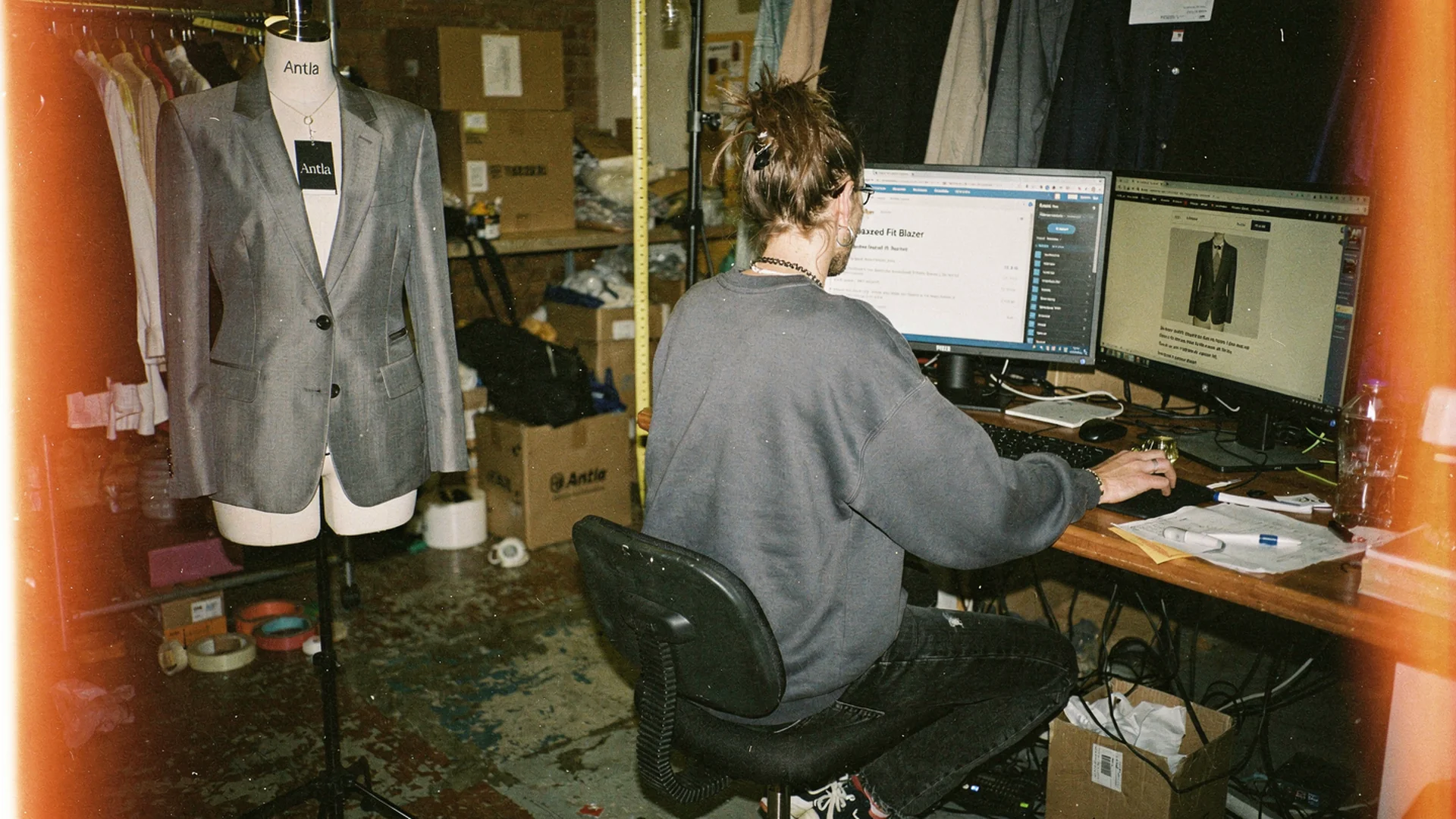
Intelligent PDPs combine verified fit attributes, extractable FAQs, and optional try-on when photography alone cannot answer the mirror question.
The PDP Job In Fashion
A fashion product page is a decision system. Shoppers ask:
- Will this length read office-appropriate on my height?
- Does the fabric cling or skim?
- How much ease is in the hip versus the waist?
- Will the neckline gap when I lean forward?
- Can I layer this under a coat without bulk?
Baymard’s apparel UX research shows photography and copy fail when they skip measurable behavior. AI helps when it encodes behavior, not mood words.
What Works: Structured Inputs, Human Verification
Works:
- Fit attribute schema per category (rise, inseam, shoulder width, hem, lining)
- AI first drafts from verified attributes you edit
- FAQ seeds from real support tickets
- Comparison tables between silhouettes you stock
- Linked photo reviews on body types you serve
Fails:
- One-click publish without merchandiser review
- Invented stretch or opacity claims
- Generic size adjectives (“true to size”) without garment measurements
- Duplicate AI copy across colorways with different fabric mills
Google’s helpful content guidance rewards specificity. Product structured data should mirror what the visible PDP says.
Block Types For AI-Extractable PDPs
Build these adjacent to or inside PDP templates:
| Block | Purpose | Fashion example |
|---|---|---|
| Definition | Category clarity | ”Wide-leg linen trouser for warm climates” |
| Fit facts | Body decisions | Rise 11in, leg opening 22in, lined pockets |
| Movement note | Behavior | ”Fabric holds shape; minimal stretch” |
| Layering note | Occasion | ”Sits flat under cropped jackets” |
| Care impact | Expectation | ”Linen softens; expect relaxed drape after wash” |
The GEO spoke in this cluster explains why extractable blocks help AI citations. Cluster 04’s fashion product pages that convert before ads covers pre-ads discipline.
AI Copy Workflow Merchants Actually Use
- Merchandiser fills structured fit sheet per SKU.
- AI drafts description, bullets, and meta from sheet.
- Editor verifies every fabric and fit claim.
- Support lead adds two FAQs from last month’s tickets.
- Publish with structured data and internal links to fit guides.
Repeat weekly on hero SKUs, not once per season on the whole catalog.
Photography Plus AI: Division Of Labor
Photography sets aspiration and scale. AI copy encodes behavior charts skip. Visualization answers the mirror question.
Product photography vs AI virtual try-on from cluster 03 explains cooperation, not competition.
When bracketing concentrates on a hero dress silhouette, add try-on after copy and reviews stabilize. Antla integrates with Shopify themes without code rewrites.
Engagement rises to roughly 2-3x longer onsite when shoppers interact with try-on on fit-sensitive pages. Antla’s merchant data puts conversion lift at 35% on average for try-on users when visualization was the blocker. Returns can fall by up to 30% when preview aligns expectation before checkout.
Size Charts Are Inputs, Not Answers
AI size recommendation tools map body measurements to labels. They fail when charts lack garment ease or when shoppers do not know their measurements.
Read why size charts fail on Shopify fashion stores and virtual try-on vs size charts before you expect copy or charts alone to fix denim returns.
Our comparison guide AI size recommendation vs virtual try-on helps you place each tool on the PDP.
Reviews And UGC As AI Grounding
Photo reviews give AI copy and models social proof to cite. They also tell you which claims to fix.
If three reviews say “gapes at the waist,” your AI bullets should not say “snug waist hold.” Update the fit sheet, regenerate, and patch FAQs.
Photo reviews for fashion brands covers UGC structure.
Mobile PDP Constraints
Most fashion browsing is mobile. AI blocks must scan:
- Short fit bullets above the fold
- Expandable FAQ accordions
- Try-on entry that does not bury add-to-cart
- Honest variant availability
Shopify PDP conversion optimization connects layout to outcomes.
When Not To AI The PDP Yet
Skip AI generation if:
- You have fewer than five verified fit attributes per hero SKU
- Return reasons are policy or shipping, not fit
- Photography is outdated versus current stock
- You have not read return tags in ninety days
Fix truth, then automate assembly.
Returns And Engagement Metrics
Track per hero SKU:
- PDP conversion rate
- Try-on engagement rate if live
- Return rate by reason code
- Time on page versus catalog median
Product page engagement and conversion quality explains how to read engagement without vanity metrics.
NRF returns research reminds you evaluation-layer improvements hit P&L faster than top-of-funnel tricks alone.
Integration With Broader AI Stack
PDP intelligence sits mid-stack:
- Upstream: GEO guides and discovery content
- Mid: PDP blocks, reviews, try-on
- Downstream: Email and WhatsApp recovery from cluster 06
Read AI tools for Shopify fashion merchants for the full map and AI for fashion brands for rollout order.
Category Teardown Examples
Wide-leg denim: Lead with rise, hip ease, inseam, leg opening, rigid versus stretch recovery. AI should never promise stretch that rigid denim lacks.
Satin midi skirt: Hip ease, cling factor, lining opacity, walk stride behavior, waistband comfort seated.
Structured blazer: Shoulder line, torso length, button stance, lining slip, layering bulk under coats.
Each category gets different blocks. That variation is why templated adjective generators fail.
Frequently Asked Questions
What are AI product pages in fashion ecommerce?
They are PDPs that use machine-assisted drafting and structured fit data to answer body-specific questions, plus optional visualization. Human verification keeps fabric and fit claims honest.
Can AI write fashion product descriptions safely?
Yes, when descriptions are generated from verified fit attributes and edited by a merchandiser. Unsafe workflows publish generic or invented claims that increase returns.
Should I add virtual try-on to every AI product page?
Prioritize try-on on high fit-variance categories where returns and bracketing concentrate. Copy and try-on cooperate; neither replaces honest measurements and reviews.
How do AI product pages help GEO?
Extractable fit blocks, FAQs, and structured data give AI assistants facts to cite. Link PDPs to category guides so models can traverse your site.
What is the fastest win for Shopify fashion PDPs?
Structured fit bullets and two ticket-sourced FAQs on ten hero SKUs. Measure conversion and returns for four weeks before expanding AI tooling.
Internal Reads For PDP Merchants
- Generative engine optimization for fashion
- Best virtual try-on for Shopify fashion
- Virtual try-on pricing and ROI
About the author: Aaron is the founder of Antla. After years of frustrating returns, never looking like the supermodels on product pages, he set out to make fashion personal by helping shoppers see themselves in the outfits they want to buy. He frames PDP AI as an editor’s assistant, because unverified stretch claims become return tags in two weeks.
Test AI drafts on one hero SKU this week, then add Antla on Shopify if mirror questions still block add-to-cart on that silhouette.