

AI for Fashion Brands: A Practical Merchant Guide (2026)
AI for fashion brands in 2026: a practical guide for Shopify merchants on discovery, PDPs, support, ops, and when to add visualization before scaling ads.

A fashion brand founder in 2026 does not need more AI demos. You need a sequence that respects how shoppers actually decide on a dress, a jean, or a blazer: fabric hand, rise, length, coverage, and whether the item moves the way the photos implied.
AI for fashion brands is the deliberate use of machine-assisted tools across discovery, product evaluation, customer conversation, inventory decisions, and retention for apparel companies. The goal is not automation for its own sake. The goal is margin: fewer preventable returns, faster answers to body-specific questions, and pages models can cite without inventing fit details.
This persona guide assumes you sell on Shopify, run a lean team, and want AI that maps to jobs your return tags and PDP metrics already name. Start with the 2026 fashion AI trends hub when you need the full map.
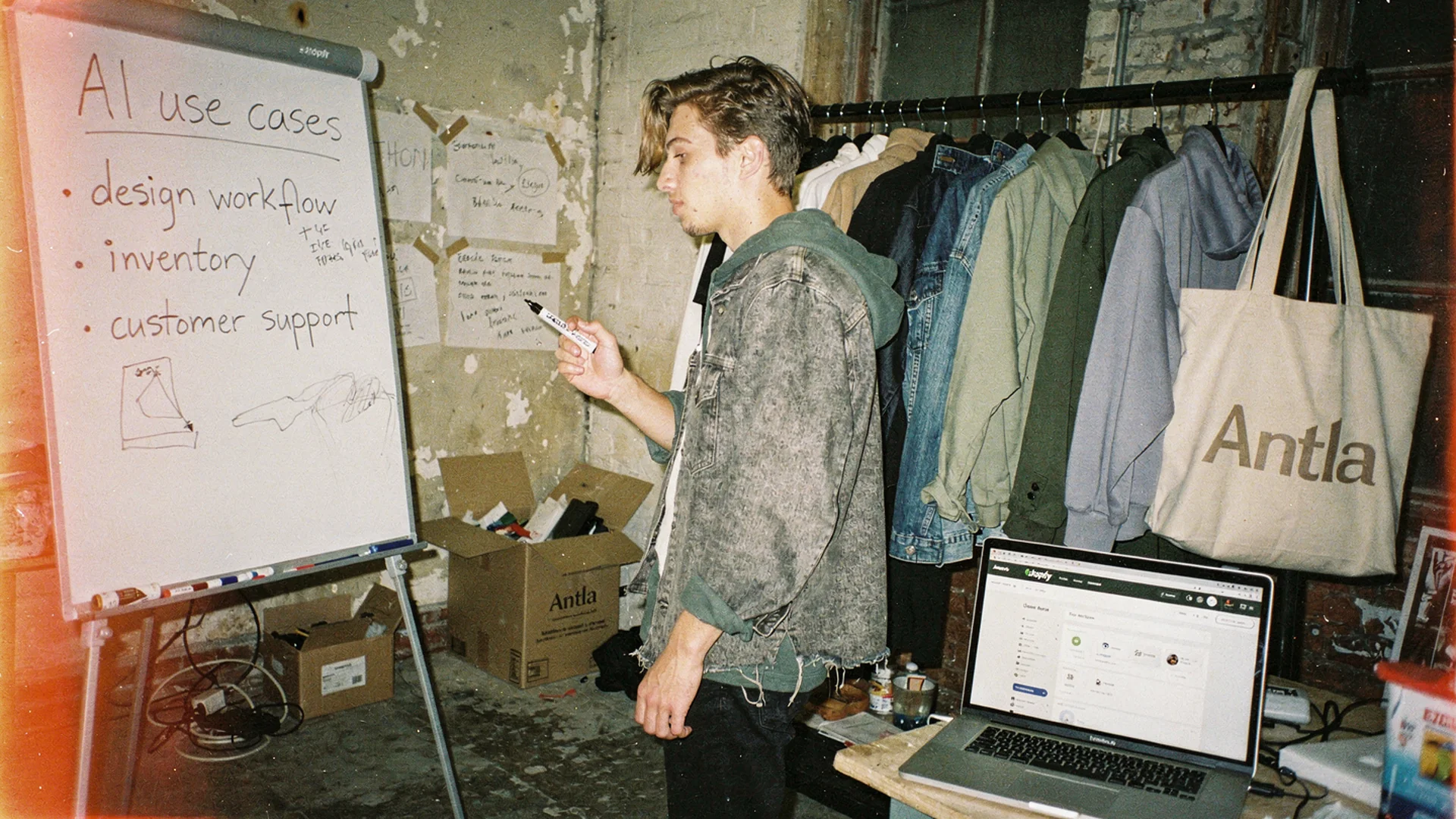
Fashion AI works when each tool owns one buyer-journey job, not when five widgets compete on the same product page.
Who This Guide Is For
This guide fits:
- DTC founders doing merchandising and marketing themselves
- Small teams with one operator touching email, PDPs, and support
- Growing brands adding their first structured AI layer after manual processes break
It is not a enterprise data-science manual. If you need a full platform RFP, start with cluster 06’s build an AI stack for your Shopify fashion store after you read this sequence.
Phase 0: Fix Truth Before You Automate
AI amplifies what your catalog already says. If hero PDPs lack rise, inseam, lining, or stretch honesty, generated copy will lie politely.
Before any install:
- Export top ten return reasons by category.
- List PDP conversion on ten hero SKUs.
- Read fashion product pages that convert before ads and why size charts fail on Shopify fashion stores.
Google’s helpful content guidance applies: automation should make pages more useful, not interchangeable.
Phase 1: Discovery And GEO
When shoppers skip Google and ask assistants for “best petite wide-leg jean brand on Shopify,” you need extractable facts on your site.
Actions:
- Add definition blocks and FAQs to category guides.
- Maintain product structured data with honest variant availability.
- Run monthly AI prompt tests; patch pages models should cite.
Deep dive: generative engine optimization for fashion and cluster 04’s AI search visibility guide.
Vizby helps audit AI rankings and llms.txt style files when you already do SEO but assistants omit you.
Phase 2: Product Page Intelligence
Fashion PDPs are decision systems. Shoppers need answers about drape, shoulder line, hip ease, transparency, and occasion.
Use AI to:
- Draft first-pass descriptions from structured fit attributes you verify
- Generate FAQ seeds from real support tickets
- Suggest comparison tables between silhouettes you actually carry
Never publish fabric or stretch claims you have not validated. Read AI product pages for fashion ecommerce for block types that survive skeptical editing.
Pair with photo reviews and social proof so AI copy is not the only trust signal.
Phase 3: Visualization On High-Risk Categories
When return tags cluster on “looked different on me” or bracketing, copy and charts rarely finish the job.
Virtual try-on shows drape, length, and coverage on the shopper’s body. Antla is built exclusively for Shopify fashion brands with no-code theme placement.
Antla merchants see try-on users convert 35% higher on average when visualization was the objection. Shoppers who use try-on tend to stay two to three times longer on product pages. Some women’s hero SKUs see conversion double when fit anxiety concentrated on a single silhouette.
Compare approaches in AI size recommendation vs virtual try-on and cluster 05’s best virtual try-on hub.
Roll out on five to ten hero SKUs first. Measure try-on engagement against add-to-cart and returns before catalog-wide expansion.
Phase 4: Conversation And Support Triage
Sizing tickets repeat because PDPs leave body-specific gaps. AI support can triage order status and common fit questions if you feed vetted macros, not guesses.
Connect support insights back to PDP patches. A spike in “does this run long in the torso” should become a FAQ and a measurement line, not another macro.
Cluster 06’s AI customer service for fashion ecommerce spoke covers lane-specific patterns.
Phase 5: Lifecycle And Retention
Email and SMS AI helps when PDP truth is solid. Remarketing disappointment amplifies returns.
Use lifecycle tools after Phase 2 stabilizes. Segment by category fit risk: a shopper who bracketed denim needs different follow-up than a shopper who bought a one-size accessory.
Phase 6: Operations And Merchandising
Demand forecasting and merchandising AI matter when you have twelve months of SKU-level signal. Young brands should not let forecasting apps override common sense buys on hero silhouettes.
When ready, read cluster 06 spokes on inventory forecasting and AI merchandising.
Budget Reality For Small Fashion Brands
You do not need ten apps. A credible 2026 stack for many brands:
| Job | Tool type | Notes |
|---|---|---|
| GEO audit | Vizby or manual prompt log | Monthly |
| Reviews | Photo review app | Trust layer |
| Try-on | Antla on hero categories | Fit visualization |
| WhatsApp or chat | Lane-specific app | Recovery and sizing |
| Shopify-native or Klaviyo AI features | After PDP truth |
See fashion AI tools 2026 for a wider shortlist with evaluation criteria.
Returns Context You Cannot Ignore
NRF and Happy Returns put 2024 retail returns at $890 billion. Shopify’s returns overview aligns with why evaluation tools beat subject-line AI for many apparel merchants.
Fashion returns reduction strategy on Shopify and product page engagement quality connect PDP work to P&L outcomes.
What To Skip In Year One
Skip tools that:
- Promise to replace merchandising judgment before you have ten honest hero PDPs
- Generate lookbooks without linking to real inventory
- Personalize collections while size availability lies
- Block AI crawlers without a documented citation policy
Twelve-Week Rollout Calendar
Weeks 1-2: Truth audit on hero PDPs and return exports.
Weeks 3-4: GEO prompt log and first FAQ patches.
Weeks 5-6: Structured description workflow with human verification.
Weeks 7-8: Try-on pilot on highest bracket category.
Weeks 9-10: Support macro refresh from new PDP facts.
Weeks 11-12: Measure conversion, returns, and support tags; keep or cut tools.
Frequently Asked Questions
What is the best first AI tool for a fashion brand?
The best first tool depends on your bottleneck. Many brands start with GEO audits or photo reviews, then add try-on when fit returns concentrate on hero categories. Do not install five apps before PDP truth is solid.
How much should a small fashion brand spend on AI in 2026?
Start with one paid tool tied to a metric, often under a few hundred dollars monthly for try-on or reviews on Shopify. Add layers only after a four-week measurement window shows movement on conversion or returns.
Can AI replace a fashion merchandiser?
No. AI reduces manual drafting, triage, and sorting work. Merchandisers still own assortment, hero SKU selection, and fit attribute truth models and shoppers rely on.
When should fashion brands add virtual try-on?
Add try-on when bracketing or fit visualization returns cluster on specific categories and photography plus reviews still leave mirror questions open. Pilot on five to ten hero SKUs first.
How does this guide relate to the 2026 trends hub?
The trends hub maps industry shifts. This guide sequences implementation for lean fashion brands on Shopify. Use the hub for orientation, return here for rollout order.
Where To Go Next
- How AI is changing online fashion retail
- Virtual try-on for growing fashion brands
- AI tools for Shopify fashion merchants
- How to add virtual try-on to Shopify
About the author: Aaron is the founder of Antla. After years of frustrating returns, never looking like the supermodels on product pages, he set out to make fashion personal by helping shoppers see themselves in the outfits they want to buy. He wrote this guide for operators who need a sequence, not a pile of App Store screenshots.
Pick one job your metrics name this month. If fit preview is the blocker, test Antla on five hero SKUs before you add another copy generator.