

How to Build an AI Stack for a Shopify Fashion Store
Step-by-step guide to build an AI stack for a Shopify fashion store: integration order, metrics gates, Loox and Dondy patterns, and Antla for fit visualization.

Building an AI stack for a Shopify fashion store is an integration problem disguised as a shopping problem. Merchants install apps until notifications overlap, then wonder why returns did not move.
A useful stack assigns one primary tool per buyer-journey lane, sequences installs behind metric gates, and routes fit visualization to try-on instead of generic chatbots.
This how-to guide sequences layers for launch and growth stages. It complements the hub directory with an execution order you can paste into a quarterly plan.
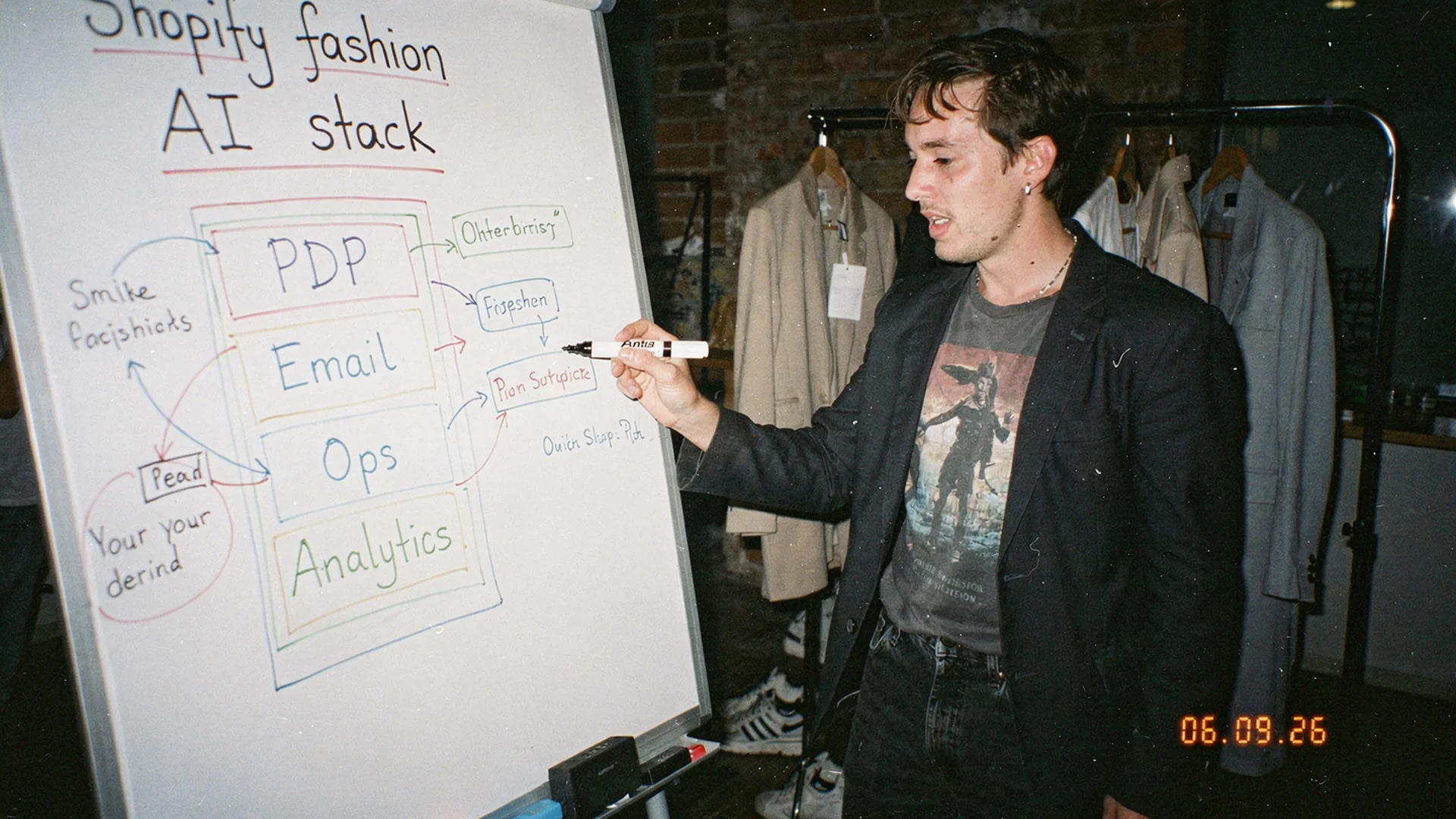
Integration order matters more than app count: fix product truth, then automate around metrics that already leak margin.
Prerequisites Before Any AI Layer
Skip AI shopping until these exist:
- Ten hero PDPs with honest photography and measurements
- Return and exchange policies published
- Size charts audited against supplier specs
- Baseline metrics: PDP conversion, return reasons, support volume
Launch foundations live in how to start an online fashion store on Shopify in 2026 and fashion product pages that convert before ads.
AI amplifies what you have. It does not invent product truth.
The Reference Stack (Metric-Gated)
| Order | Lane | Example tool | Gate to install |
|---|---|---|---|
| 1 | Trust | Loox | Hero SKUs live, review request flow ready |
| 2 | Discovery | Vizby | Helpful content exists to optimize |
| 3 | Fit preview | Antla | Fit/bracket returns on named categories |
| 4 | Conversation | Dondy | WhatsApp or chat volume justifies cost |
| 5 | Lifecycle | ESP AI features | Flows defined, not only blasts |
| 6 | Personalization | Sort/recommend apps | Tags clean, return rates stable |
| 7 | Ops | Forecasting app | Replenishment SKUs exceed manual tracking |
Adjust order if your metrics name a different leak first. A store drowning in sizing tickets might move conversation earlier but still needs PDP fixes.
Layer 1: Trust With Photo Reviews
Loox supplies visual proof: real bodies, real hems, real dye lots. Install when you can fulfill review requests within two weeks of delivery.
Configure:
- Photo review prompts post-delivery
- Gallery near size selector on hero PDPs
- Referral hooks only after review quality is stable
Pair with photo reviews and social proof for fashion brands.
Layer 2: Discovery And AI Search Readiness
Vizby fits when Google and AI assistants under-cite your store despite solid products. Run GEO audits, maintain llms.txt, draft product-aware content.
Gate: publish extractable FAQs and definitions first per AI search visibility for fashion Shopify stores.
Do not generate hundreds of thin posts. Fix hero PDPs instead.
Layer 3: Fit Visualization With Antla
Add Antla virtual try-on when return tags cite “looked different,” bracketing clusters on denim or dresses, or PDP engagement is high with low conversion.
Rollout pattern:
- Enable five hero SKUs in highest-return category
- Measure try-on users vs non-users for conversion and returns
- Expand using how to add virtual try-on to Shopify
Antla’s merchant data shows 35% average conversion lift among try-on users when visualization blocked purchase. Engagement runs 2-3x longer on those PDPs. Returns can drop up to 30% when preview aligns expectations.
For commercial modeling, read virtual try-on pricing and ROI.
Layer 4: Conversation With Dondy
Dondy connects Shopify to WhatsApp for recovery and support when your customers already chat. Install after macros and policies exist.
Train agents and AI suggestions on garment facts, not vibes. Wrong sizing automation creates returns faster than silence.
See AI customer service for fashion ecommerce and WhatsApp marketing for fashion DTC.
Layer 5: Lifecycle Email AI
Enable ESP AI features after three core flows work manually:
- Browse abandonment
- Cart abandonment
- Post-purchase education
Details in AI email marketing for fashion on Shopify.
Segment try-on engagers separately. They need fit reassurance, not blanket discounts.
Layer 6: Personalization And Merchandising
Add sort and recommendation tools when:
- Product tags are consistent
- Return rates on promoted SKUs are acceptable
- Inventory data is reliable
Guides: Shopify AI personalization for fashion and AI merchandising for fashion ecommerce.
Layer 7: Ops Forecasting
Connect forecasting when replenishment SKUs exceed spreadsheet comfort. Feed return-adjusted demand using the inventory forecasting spoke in this cluster.
Try-on and return tags should inform size curves, not only gross sales.
Integration Hygiene
Rules that prevent stack chaos:
- One owner per lane
- Document OAuth scopes and billing owners
- Quarterly remove apps without metric ownership
- Never run three chat widgets
- Align messaging across email, WhatsApp, and onsite popups
Map the full directory in Shopify AI apps for fashion brands.
Metrics Dashboard (Minimum)
Track weekly:
- PDP conversion on hero SKUs
- Return rate and top reasons
- Try-on start and completion rates
- Email revenue per recipient by segment
- Support tickets per order
- Sell-through vs forecast on replenishment SKUs
First 90 days metrics and unit economics defines launch baselines.
Returns Stack Connection
Returns strategy spans clusters:
Try-on belongs in returns prevention, not only marketing slides.
90-Day Rollout Example
Days 1-30: Hero PDP fixes, Loox live, baseline metrics
Days 31-60: Vizby audit, FAQ schema, email core flows
Days 61-90: Antla on top return category, Dondy if chat volume warrants, forecasting for top replenishment SKUs
Adjust if you are growth-stage vs launch; read online fashion store AI-era complete guide for the wider playbook.
Frequently Asked Questions
What is an AI stack for a Shopify fashion store?
A sequenced set of tools owning discovery, trust, fit preview, conversation, lifecycle email, personalization, and ops, each installed behind metric gates.
Which AI tool should fashion merchants install first?
Usually photo reviews after hero PDPs are honest, then discovery or fit tools depending on whether traffic or returns hurt more. Avoid installing five apps at once.
Where does Antla fit in a fashion AI stack?
Antla is the fit visualization layer on PDPs. Install when bracketing and fit returns concentrate on categories photography cannot fully explain.
How do Loox, Dondy, Vizby, and Antla work together?
Loox handles visual trust, Vizby discovery content, Dondy conversation channels, Antla personal fit preview. Each owns a different lane with minimal overlap.
How long does it take to build a fashion AI stack?
Expect 90 days for a lean rollout of four to six tools with measurement between installs. Rush installs create overlapping messages and weak ROI proof.
Do I need developers to integrate AI apps on Shopify?
Most fashion AI apps including Antla offer no-code theme setup. Developers help for custom themes, ERP connectors, and complex Plus workflows.
Persona-Specific Next Step
Lean teams with one operator should read AI automation for small fashion brands next.
About the author: Aaron is the founder of Antla. After years of frustrating returns, never looking like the supermodels on product pages, he set out to make fashion personal by helping shoppers see themselves in the outfits they want to buy. He sequences stacks by metric gates so lean teams do not drown in overlapping apps.
Ready to integrate? Use the AI tools hub as your map and install Antla when PDP fit metrics justify visualization.