

How AI Is Changing Online Fashion Retail
How AI is changing fashion retail: discovery, PDP evaluation, returns economics, and what Shopify merchants should expect from 2024 through 2026 and beyond.

Online fashion retail did not change overnight when ChatGPT went mainstream. It changed in layers: how shoppers discover brands, how they interrogate fit on a phone screen, how support tickets cluster, and how returns show up as a line item that merchandising meetings can no longer wave away.
AI is changing online fashion retail by shifting discovery toward AI citations, product evaluation toward structured fit truth and visualization, operations toward demand signal tools, and post-purchase toward faster triage. The shift is not “robots replace stylists.” It is margin defense through clearer PDPs and fewer preventable returns.
This thought-leadership piece names the shifts with merchant evidence, not futurism slides. Pair it with the 2026 fashion AI trends hub for tactical spokes.
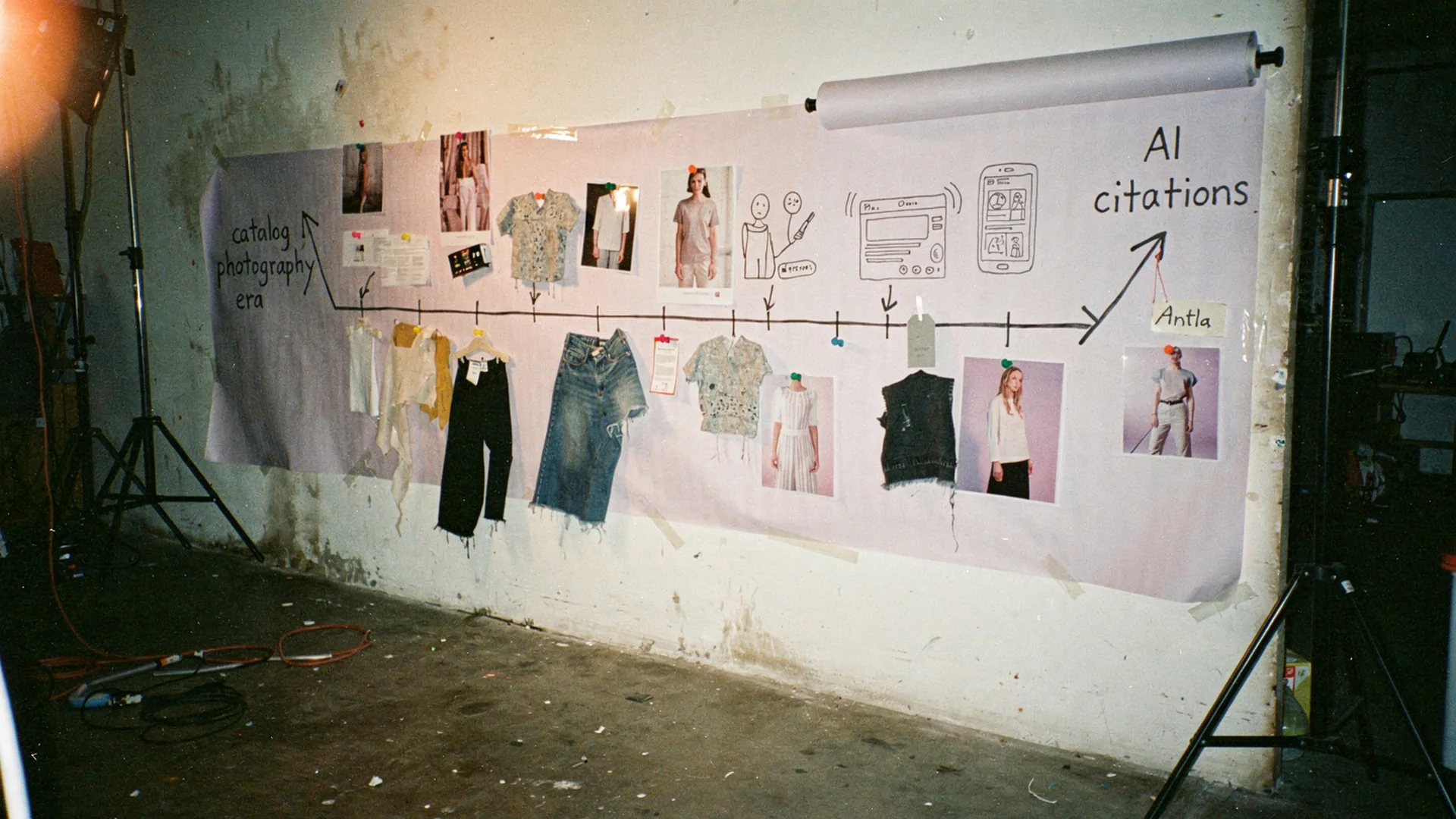
The retail shifts that stick show up in return reasons and AI citation logs, not only in vendor keynote titles.
From Search Lists To AI Recommendations
For two decades, fashion discovery meant ten blue links and Instagram ads. In 2026, a growing share of consideration starts in AI assistants: “Which Shopify brand explains petite inseam honestly?” “Best modest swim with coverage detail?”
That move rewards extractable fit facts, not adjective piles. Brands optimizing only for legacy SEO can rank while remaining uncited in AI answers.
Generative engine optimization for fashion and AI search visibility for fashion Shopify stores document the merchant response.
From Static Photography To Decision Systems
The product page used to be a gallery plus size chart. AI-era PDPs are decision systems: structured fit bullets, ticket-sourced FAQs, photo reviews on real bodies, optional try-on.
Baymard’s apparel research always treated PDPs as evaluation environments. AI accelerates assembly of those environments when merchandisers verify outputs.
Read AI product pages for fashion ecommerce and fashion product pages that convert before ads.
From Bracketing To Preview
Bracketing, ordering multiple sizes “just in case,” was the silent tax on online apparel. AI visualization pushes preview before checkout: drape, length, coverage on the shopper’s body.
The cost of bracketing in online fashion quantifies the symptom. How virtual try-on reduces returns explains prevention logic.
Antla focuses on Shopify fashion preview. Across Antla merchants, try-on users average a 35% conversion lift when visualization was the objection. Returns can fall by up to 30% when preview aligns expectation before the package ships.
Cluster 05’s best virtual try-on hub compares implementation choices.
From Generic Support To Fit-Aware Triage
Support queues filled with “I’m 5’4, will this maxi pool at the ankle?” AI triage helps when macros encode verified PDP facts, not when chatbots improvise fabric behavior.
The shift pushes brands to close the loop: tickets become FAQ patches, FAQs become fit sheet updates, fit sheets feed AI copy workflows.
Cluster 06’s AI customer service for fashion ecommerce covers operational patterns.
From Gut Buys To Signal-Assisted Allocation
Ops AI helps mature brands allocate by silhouette and color, not only by last year’s spreadsheet. Young brands should not confuse forecasting dashboards with taste.
When signal exists, cluster 06’s inventory forecasting spoke applies.
From One-Size Marketing To Styling Adjacency
Styling assistants and outfit builders raise AOV when PDP truth supports them. The failure mode is recommending items your size charts cannot defend.
AI styling assistants for fashion ecommerce evaluates when adjacency helps.
Returns Economics Still Anchor The Story
Every technology shift ultimately meets the returns ledger. NRF and Happy Returns estimated $890 billion in 2024 retail returns. Shopify’s returns overview tracks how merchants respond with policy and evaluation investments.
Fashion returns reduction strategy on Shopify connects strategy to tactics.
What Is Not Changing
Merchandising judgment still picks hero silhouettes. Photography still sets brand mood. Fabric sourcing still determines hand and drape. AI does not replace those. It reduces friction around them.
Shopify’s conversion benchmarks frame trust and clarity as enablers, not substitutes, for creative and commercial decisions.
Three Merchant Archetypes In 2026
Launch-stage brands should read cluster 04’s online fashion store AI-era guide before stacking apps.
Growing DTC brands should follow AI for fashion brands rollout phases.
Lean operators should use AI tools for Shopify fashion merchants as a directory, adding one job per month.
2026 Through 2028: Reasonable Bets
Bet on:
- GEO maintenance as a monthly habit
- Verified PDP intelligence on hero SKUs
- Visualization on high fit-variance categories
- Ticket-to-FAQ feedback loops
Skeptical of:
- Full autopilot merchandising without data
- Styling layers on weak PDP truth
- Blocking all AI crawlers while expecting citations
Practical Next Step
Pick one shift tied to a metric you already track. Discovery citations, PDP conversion, bracketing rate, support tags, or return mix. Open the matching spoke in this cluster rather than installing a generic “AI suite.”
Frequently Asked Questions
How is AI changing fashion retail in 2026?
AI shifts discovery toward assistant citations, PDPs toward structured fit truth and visualization, support toward fit-aware triage, and ops toward signal-assisted allocation. Margin impact shows up through clearer evaluation and fewer preventable returns.
Will AI replace fashion buyers and merchandisers?
No. AI reduces manual drafting, sorting, and triage work. Buyers and merchandisers still own assortment, hero SKUs, and fit truth shoppers rely on.
What is the biggest AI risk for online fashion brands?
Publishing unverified fit and fabric claims at scale. That increases returns and erodes trust in AI answers citing your pages.
How should Shopify merchants respond to AI-driven discovery?
Maintain helpful SEO fundamentals, add GEO extractable blocks, run monthly AI prompt tests, and patch pages models should cite. See our GEO fashion guide.
Does virtual try-on still matter as copy AI improves?
Yes. Copy cannot show drape and length on the shopper’s body. Try-on addresses the mirror question photography leaves open, especially on dresses, denim, and swim.
Where should I start if I only read one more guide?
Start with the 2026 fashion AI trends hub for the map, then AI for fashion brands for rollout order tied to your team size.
Continue the Fashion AI Cluster
About the author: Aaron is the founder of Antla. After years of frustrating returns, never looking like the supermodels on product pages, he set out to make fashion personal by helping shoppers see themselves in the outfits they want to buy. He wrote this as a merchandiser-facing narrative, because trend decks rarely mention return tags or shoulder-line tickets.
Use the shifts below to pick one metric to move this quarter. When evaluation is the leak, install Antla on Shopify on hero SKUs before you scale another discovery tool.